New York – July 14, 2025
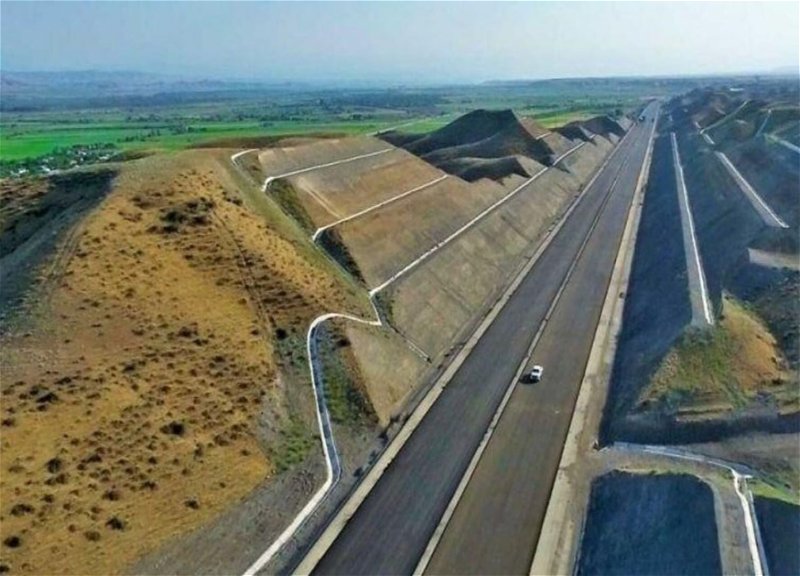
The United States has proposed taking over operational control of the Zangezur Corridor — a disputed 32-kilometer stretch linking Azerbaijan to its exclave Nakhchivan via southern Armenia — in a bid to move forward stalled peace negotiations between Armenia and Azerbaijan.
U.S. Ambassador to Turkey Tom Barrack confirmed the offer during a press briefing in New York, stating that the U.S. is willing to lease the corridor for 100 years and hand its day-to-day management to a private American firm, which would serve as a neutral operator. “They are arguing over 32 kilometers of road, but this is no trivial matter,” said Barrack. “And so here’s what happens: America steps in and says, ‘Okay, we’ll take it. Lease us the 32 kilometers for 100 years, and everyone can use it,’” he told reporters.
The Zangezur Corridor — a project agreed in principle as part of the 2020 Nagorno-Karabakh ceasefire deal — remains a key unresolved issue. Azerbaijan has long sought a direct transit route through Armenia’s Syunik Province, while Yerevan insists that any such corridor must remain under Armenian jurisdiction.
Ambassador Barrack’s comments mark the first public confirmation that Washington is pushing for an internationalized solution involving a commercial intermediary. The plan, as reported by Horizon Weekly, aims to lower tensions and remove a primary obstacle to a lasting treaty between the two Caucasus neighbors.
Reactions from regional players have been cautious. Azerbaijan and Turkey are said to support the plan in principle, viewing it as a means of ensuring long-promised connectivity. Armenia has not issued a formal response, but domestic commentators warn of possible sovereignty implications.
Analysts note that the U.S. offer could be part of a larger strategy to expand American influence in the South Caucasus, especially as Russian leverage continues to wane amid the ongoing war in Ukraine. “This may be the beginning of an American-backed governance mechanism in a historically contested region,” said political scientist Gagik Israyelyan in an interview with Charter97.
Tensions over the corridor were expected to ease after recent peace talks in Abu Dhabi, where progress was reportedly made on border demarcation and diplomatic recognition. But the transit issue remains unresolved, according to JAMnews, which reported rising concern over Russia’s fading role and Iran’s opposition to Western involvement.
As the region awaits official responses, one thing is clear: the 32-kilometer corridor may soon be the centerpiece of a new geopolitical equation — one shaped not only by regional players but by Washington’s increasingly hands-on approach.