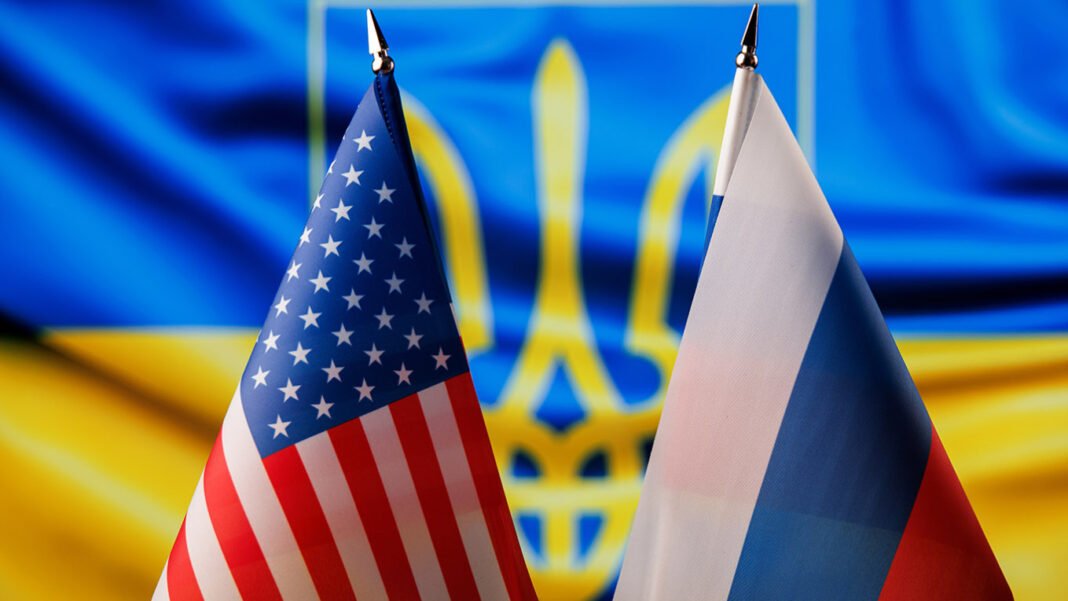
Reports that the Trump administration is conducting secret negotiations with Russia on a new framework to end the war in Ukraine landed overnight like a diplomatic thunderclap, Caliber.Az, reports.
The story, first published by Axios and sourced to both U.S. and Russian officials, claims the White House is circulating a 28-point peace draft, inspired by Trump’s “success” in brokering calm in Gaza.
According to the report, the plan touches on four pillars:
a ceasefire in Ukraine, security guarantees for Kyiv, European security architecture, and the future of U.S. relations with both Moscow and Kyiv.
What makes the story even more striking is the cast of negotiators. Trump’s special envoy, Stephen Witkoff, is said to have spent three days in Miami this October in intensive talks with Kirill Dmitriev, a key Kremlin emissary close to Vladimir Putin. Dmitriev’s sudden visit to the U.S. raised eyebrows at the time, especially after Trump abruptly cancelled his planned meeting with Putin in Budapest. Now, if the Axios reporting is accurate, the pieces fall neatly into place: the public theatrics of confrontation masked a quiet, strategic convergence.
Not a rupture – a recalibration
The emerging picture suggests that the rifts between Washington and Moscow, however dramatic in the media, are mostly tactical. At the strategic level, both sides appear to be searching for a landing zone – one that ends the war, resets relations, and stabilizes the global balance that both capitals claim to want.
And here lies the uncomfortable truth: Russia enters these talks with more resources, more men, and more leverage than Ukraine, especially after two grinding years in which Western aid has slowed and Ukrainian manpower has sharply declined. If Trump is drafting a plan, it is likely to reflect Moscow’s red lines far more than Kyiv’s ambitions.
For Putin, any settlement must come with something he can sell to Russians as a victory – territorial gains, ideally with administrative coherence.
That is why many observers suspect the Trump plan may involve Kyiv withdrawing its forces from the remaining Ukrainian-held areas of Donetsk oblast, allowing Russia to reach the region’s internal administrative boundary. The compromise for Moscow, compared to its maximalist demands in 2022–2023, might be dropping its insistence on formal, legal recognition of the region’s annexation – and instead accepting a de facto freeze along the new line.
Such a freeze would allow the Kremlin to claim success, consolidate control, and regroup. But it would also require time. Which is likely why Russian forces are now escalating pressure along the entire front, from Kharkiv to Kherson, trying to engineer local crises that stretch Ukrainian defenses thin and enable a breakthrough.
Meanwhile in Kyiv – a different kind of pressure
While Russia escalates militarily, Kyiv faces a simultaneous assault from another direction: corruption investigations launched by agencies close to the U.S. intelligence community. The timing is conspicuous. Ukrainian opposition parties are calling for full government resignation, a blow Zelensky can scarcely afford.
The Ukrainian president urgently needs a symbolic, morale-boosting success. With no prospect of a military turnaround, speculation in Kyiv is growing that Ukraine’s security services may attempt a high-risk strike deep inside Russia to restore momentum.
But such moves carry enormous danger. Any bold Ukrainian operation inside Russian territory could give Moscow the pretext to escalate dramatically – including through intensified strikes on Ukraine’s energy grid, which is already under severe attack. With winter setting in, the humanitarian consequences would be devastating. Another corruption scandal on top of that could provoke domestic unrest.
A coordinated squeeze on Zelensky?
Taken together, the signals suggest that Washington and Moscow may be jointly – though quietly – preparing the political ground for Zelensky’s removal from the equation.
It is hard to imagine the current Ukrainian president signing a Trump-brokered peace plan. His political legitimacy rests entirely on his promise of resistance and eventual victory. A ceasefire that cedes territory – even de facto – would be politically fatal.
For that reason, any end to the war almost automatically implies Zelensky’s departure, whether forced by opposition pressure, public disillusionment, or a managed transition encouraged by Western partners.
Zelensky’s last options
Despite this, Zelensky has no choice but to keep playing. Today he arrived in Turkey to “activate negotiations” on prisoner exchanges with Russia – a process frozen since October. Tomorrow, he is scheduled to meet American military officials in Kyiv.
The timing is not accidental. Something is shifting in the architecture of the conflict. And it is shifting fast.
The coming weeks may bring the clearest signal yet: whether the U.S., Russia and Ukraine are edging toward a ceasefire framework – and whether the West still sees Zelensky as the right man to sign it.
For now, one thing is unmistakably clear: the war’s diplomatic endgame has begun. And Kyiv may not be the side defining its terms.