Baku/Kyiv, September 17, 2025
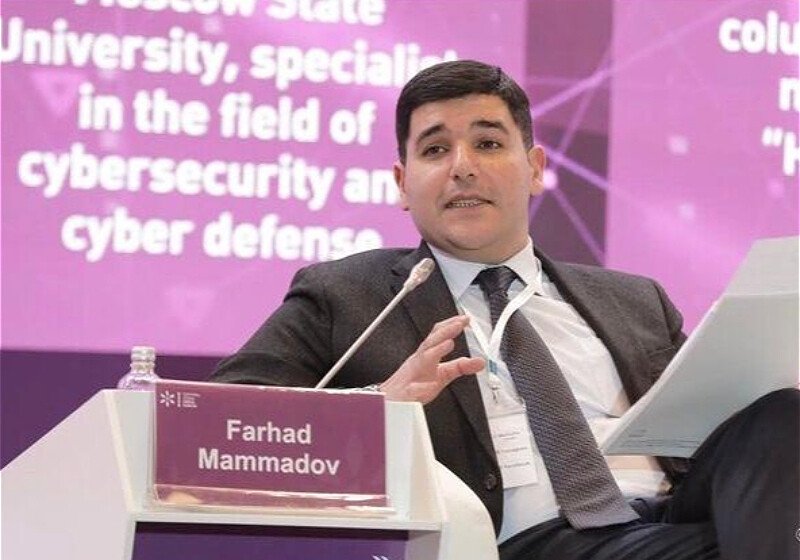
Political analyst Farhad Mammadov, former director of the Center for Strategic Studies under the President of Azerbaijan, says the South Caucasus is entering a decisive phase in which regional states – not outside powers – must retain the “deciding advantage” over outcomes.
Speaking on the YouTube channel Daily Europe Online, he argued that the U.S.-backed “Trump Route for International Peace and Prosperity” (TRIPP) has injected operational momentum into reopening east-west transport, but the architecture of peace remains driven primarily by Azerbaijan and Armenia.
Symbols, signals, and a shifting narrative
Mammadov called Yerevan’s recent removal of Mount Ararat from official insignia “symbolic” – a step toward aligning national imagery with the geography of today’s Republic of Armenia and reducing irritants with neighbors. He connected such choices to clauses in the draft peace treaty that obligate both sides to avoid supporting separatist structures.
After August 8: peace “de facto,” process de jure
Since the August 8 White House meeting and joint declaration by the Azerbaijani and Armenian leaders, Mammadov says the framework of de facto peace has emerged, even if the peace process continues.
Crucially, he stresses agency: Washington’s role grew because Baku and Yerevan invited U.S. participation on the transport track; other files remain bilateral and are advancing – most notably border delimitation/demarcation.
He credits Trump’s personal engagement with dampening harsh rhetoric from Russia and Iran and drawing in EU attention – citing the EU special representative’s site visits to Nakhchivan and Armenia to scope connectivity investments.
Zangezur/TRIPP: timelines and alternatives
On the core connectivity question, Mammadov forecasts that the competitive window for land corridors in Eurasia points to 2028–2030 as the period when routes must be up and running.
He says Armenia now recognizes that “the train is leaving” – hence the race to finalize the legal base for operations. Parallel spurs – the Nakhchivan – Kars railway entirely through Turkey and an Iranian branch – were planned with those timelines in mind.
Beyond labels, he argues, infrastructure itself is a strategic asset: having track and legal regimes in place creates options when market conditions align, much as the Baku – Tbilisi – Kars corridor did after years of underuse and upgrades.
Why Azerbaijan didn’t force the corridor
Pressed on why Baku avoided a military solution for Zangezur, Mammadov said use of force would have undercut Azerbaijan’s broader strategy – integration with European markets, long-horizon investments by SOCAR, and a reputation for finishing projects without open-ended “frozen” problems. Those goals, he noted, are incompatible with the image of an aggressor state.
Energy, Europe, and a changing media climate
With EU–Russia energy ties unlikely to recover in the medium term, Europe’s market remains “structurally attractive,” even as the green transition proceeds. U.S. LNG alone cannot meet demand, he said, ensuring a role for Azerbaijani oil and gas.
Mammadov also observed that the wave of anti-Azerbaijan narratives in Western media has ebbed, attributing it partly to a drying up of funding streams behind NGO-media ecosystems that once amplified such content.
He challenged European actors – especially France – to explain to Armenian audiences why political recognition signals from past years never translated into durable outcomes, culminating in the dissolution of the OSCE Minsk Group.
Russia – Ukraine war, NATO, and Europe’s calculus
On the broader security picture, Mammadov called recent drone incursions into Poland and Romania a deliberate Russian effort to probe NATO’s Article 5 red lines and pressure Europe.
Paradoxically, he argued, this strategy accelerates European rearmament, creating two strong defense poles – the U.S. and an increasingly capable EU – hardly in Russia’s long-term interest.
He sees no near-term basis for Ukraine talks absent thorough pre-arrangements and warned that a leader-level summit without groundwork would be politically risky for all sides.
Georgia and non – interference
Reacting to Western commentary about coercive measures against Tbilisi, Mammadov criticized calls to “change governments” from abroad and welcomed a renewed preference for non-interference.
He urged both the EU and Georgia to recalibrate: Europe should pause punitive instincts; the Georgian government should modernize its positioning rather than simply rejecting past alignments.
The bottom line
The South Caucasus, he concluded, is in a transformation phase. One result – the restoration of Azerbaijan’s territorial integrity – is complete. The remaining pillars – Azerbaijan – Armenia peace, Armenia – Turkey normalization, and opening of regional communications – are moving, but success depends on Baku, Yerevan, and Tbilisi coordinating closely so that no external power gains decisive leverage over the region’s future.

