Azerbaijan.US
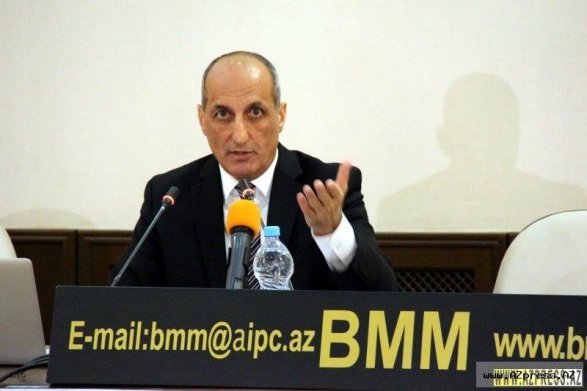
Former Azerbaijani finance minister Fikret Yusifov has sharply criticized the growing reliance on fines, penalties, and rising payments as a tool for managing economic and social challenges, warning that such measures cannot replace structural reforms.
Speaking in a recent interview, Yusifov argued that attempts to boost budget revenues primarily through fines are fundamentally misguided.
“If the goal is to balance the budget by increasing penalties and compulsory payments, this is not a solution,” he said, calling the approach short-sighted and potentially counterproductive.
According to Yusifov, higher fines are often justified as a way to restore order, enforce discipline, and encourage compliance with the law. However, when these measures are introduced without addressing deeper issues – such as job creation, income growth, and social mobility – they risk fueling public frustration rather than improving governance.
“In such conditions, fines and tariff increases become a political instrument,” he noted. “When people struggle to afford basic expenses, even economically justified price hikes can easily turn into sources of social tension.”
Yusifov emphasized that the problem is not the existence of penalties themselves. High fines are common worldwide, including in developed economies. He cited the United States as an example, where penalties for violations such as littering can reach thousands of dollars. The difference, he argued, lies in income levels and trust in institutions.
“Strict rules work when people have sufficient financial capacity and believe the system is fair,” he said. “Without that foundation, financial pressure becomes a substitute for real policy.”
The former minister also criticized what he described as an overreliance on social benefits instead of sustainable economic opportunities. Rather than expanding welfare payments, he argued, authorities should focus on creating conditions that allow citizens to earn independently – particularly in rural areas.
As an example, Yusifov pointed to agriculture, stressing the importance of guaranteed market access for farmers. “People must be confident that if they work the land for a year, they will be able to sell their products and recover their costs,” he said. “Otherwise, effort turns into loss.”
Summing up his position, Yusifov warned that fines and penalties cannot compensate for the absence of systemic reforms.
“The key question is not whether fines are necessary,” he concluded. “It is how to build an economy where rules are respected because people can afford to live within them.”