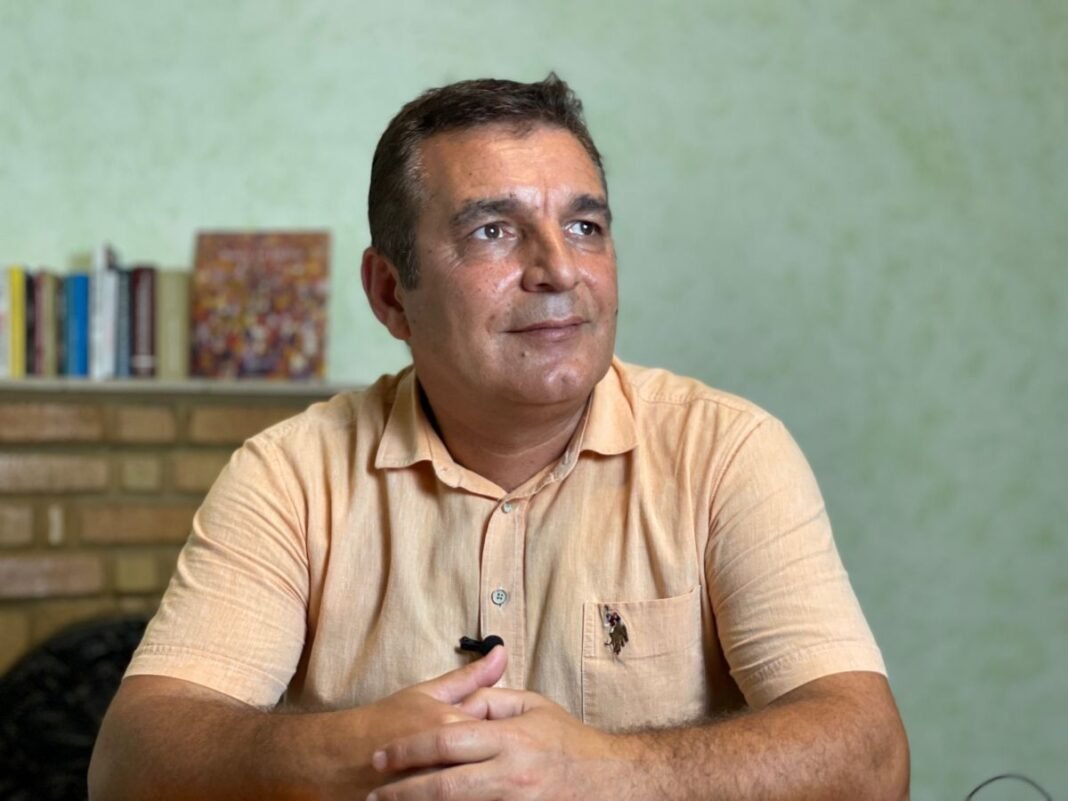
Azerbaijani economist Natig Jafarli has criticized the government’s long-standing policies in tourism and agriculture, arguing that sectors once declared national priorities have instead suffered systemic decline.
In a Facebook post, Jafarli recalled that years ago the government named tourism and agriculture as key growth engines expected to generate foreign currency inflows. According to him, however, policy decisions in both areas have produced the opposite outcome.
He pointed in particular to the continued closure of Azerbaijan’s land borders, saying it is incompatible with any serious tourism development strategy.
“Declaring tourism a priority while keeping land borders closed without clear justification is fundamentally contradictory,” Jafarli wrote.
He noted that compared to 2019, the number of foreign visitors to Azerbaijan in 2024 was nearly halved – a trend he described as clear evidence that border restrictions are harming not only tourism revenues but also the broader economy and public sentiment.
Sharp Decline in Livestock, Rising Meat Prices
Jafarli also highlighted deepening problems in the agricultural sector, especially livestock farming, which he described as historically one of the country’s strongest and most widespread economic activities.
According to official data cited by the economist, Azerbaijan had 8.09 million sheep and goats in January 2021. By October 2025, that number had fallen to 6.76 million – a decline of 1.33 million animals, or 16.4 percent.
At the same time, consumer prices have risen sharply. The average price of lamb increased from 11.9 manats per kilogram in January 2021 to 18.7 manats by August 2025, based on official figures.
Growing Dependence on Imports
The contraction of domestic livestock production has been accompanied by a surge in meat imports.
In the first ten months of 2025, Azerbaijan imported 291.16 tons of frozen lamb, a 65 percent increase year-on-year. Most of the imports – 244.66 tons – came from Mongolia, while an additional 46.5 tons were delivered from Somalia starting in October.
Jafarli also noted a sharp rise in imports of live sheep. Between January and October 2025, Azerbaijan imported 289,000 live sheep from Russia and Georgia – an 89 percent increase compared to the same period last year. These imports resulted in an estimated $31.4 million outflow of foreign currency.
“The Problem Is the Economic Model”
According to Jafarli, a key issue lies in structural differences between Azerbaijan’s economic system and those of neighboring countries.
He pointed out that many of the live sheep imported from Georgia are raised by ethnic Azerbaijanis living there – communities that successfully maintain livestock, supply local markets, and export to Azerbaijan.
“The same people are able to do this in Georgia but not in Azerbaijan,” Jafarli wrote. “The difference is the economic system. Georgia manages incentives. Azerbaijan tries to manage people.”

