By Azerbaijan.US Editorial Board
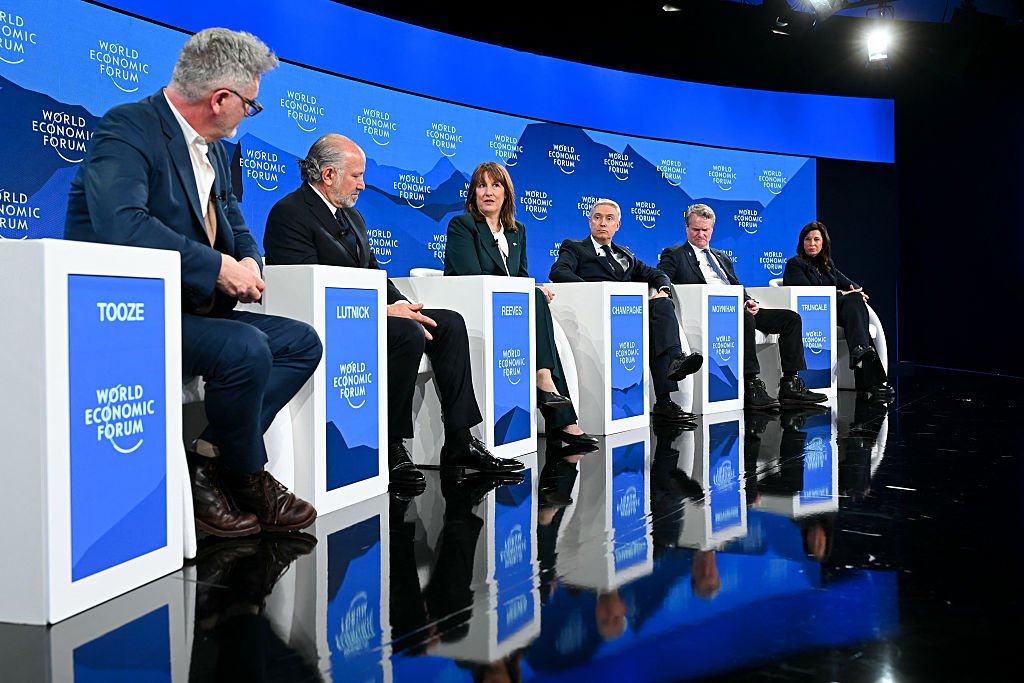
The latest World Economic Forum in World Economic Forum’s annual meeting in Davos marked more than another round of elite networking. It signaled a clear shift in global power dynamics – one in which the United States moved decisively to reclaim strategic leadership and reshape the architecture of global governance.
Despite the forum’s official emphasis on cooperation, Davos 2026 unfolded under unmistakable American dominance. This was evident not only in the scale of U.S. participation but also in the political tone. Observers noted that the gathering increasingly resembled a political summit rather than an economic forum, with Washington setting the agenda and framing the debate.
American journalists described Donald Trump as the “elephant in the room” – a presence impossible to ignore, capable of reshaping the environment with every move. His blunt critique of Europe as a “problematic continent” underscored a deeper reality: the era of automatic transatlantic consensus is fading, replaced by a more transactional, power-based order.
This shift reflects a broader transformation in international relations. The rules-based framework that defined the post–Cold War period is increasingly giving way to a system where influence, leverage, and strategic initiative matter more than legal norms. Davos made that transition explicit.
Against this backdrop, Azerbaijan’s positioning stood out. In an interview on the sidelines of the forum, President Ilham Aliyev argued that the world has entered a new geopolitical era – one in which every state must calibrate its strategy to its real capabilities rather than abstract principles. Azerbaijan’s multi-vector foreign policy, balancing regional pragmatism with global engagement, reflects that logic.
Aliyev’s Davos agenda highlighted two parallel tracks: global capital integration and geopolitical signaling.
On the economic front, meetings with executives from BlackRock, Global Infrastructure Partners, Brookfield Asset Management, and J.P. Morgan reinforced a key message: Azerbaijan is no longer merely a recipient of foreign investment. Through its sovereign wealth fund, the country is increasingly acting as a capital exporter, channeling billions of dollars into international infrastructure and energy projects. This marks a quiet but important evolution in Azerbaijan’s role within the global financial system.
Energy remained central to these discussions – both traditional hydrocarbons and renewables. While acknowledging long-term diversification goals, Aliyev openly raised the possibility of a “second oil boom,” arguing that Azerbaijan has already demonstrated its ability to convert resource revenues into sustainable non-oil growth. The message was clear: energy wealth, if managed strategically, remains a geopolitical asset rather than a liability.
The political dimension of Davos proved even more consequential. For the first time, the presidents of Azerbaijan and Armenia participated in the same panel not as adversaries, but as leaders of neighboring states navigating a post-conflict reality. Symbolically, this marked a departure from decades of confrontation and hinted at a fragile but real shift toward regional normalization.
More controversially, Washington used Davos to advance the idea of a new international “Peace Council” – a body designed to bypass the paralysis of existing institutions, particularly the UN Security Council. Unlike the veto-driven UN model, decisions within this proposed structure would be taken by majority vote, with ultimate validation resting in U.S. hands.
Several countries, including Azerbaijan, have already endorsed the initiative. Others have not. Russia and China, both permanent members of the UN Security Council, have adopted a cautious wait-and-see approach. Their hesitation is strategic: joining such a framework would amount to de facto recognition of American leadership in shaping a new global order.
This is the central geopolitical question emerging from Davos 2026. If Moscow and Beijing eventually participate, the world moves closer to an institutionalized, U.S.-centered system – not purely unipolar, but clearly hierarchical. If they resist, parallel structures and deeper fragmentation become inevitable.
Davos revealed that the long-discussed “new world order” is no longer an abstract concept. The United States is no longer waiting for consensus; it is acting. The coming months will determine whether major powers adapt to this reality or attempt to counter it. Either way, Davos 2026 marked the end of global hesitation and the beginning of a far more assertive geopolitical phase.