Azerbaijan.US
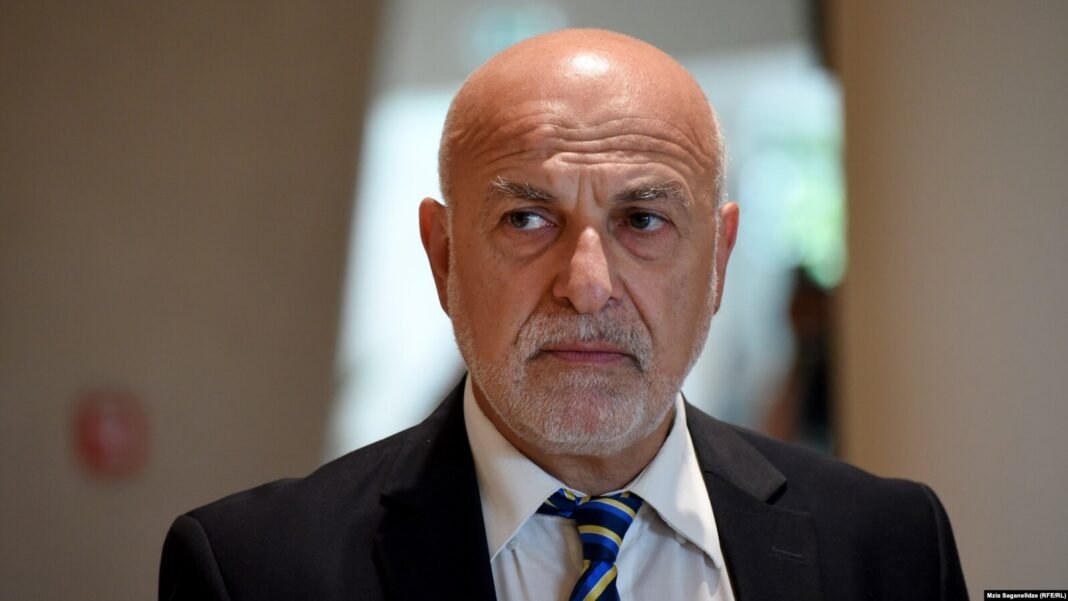
The 2026 World Economic Forum in Davos highlighted a decisive shift in the architecture of Euro-Atlantic security, with Europe increasingly recognizing its responsibility alongside the United States, according to veteran diplomat Valery Chechelashvili.
Speaking during a live discussion, Chechelashvili said the forum reflected a broader transition away from a US-centric security model toward a more balanced partnership in which Europe plays a stronger and more autonomous role. This recalibration, he argued, is inseparable from Ukraine’s position in the current security landscape.
“Supporting Ukraine is no longer just about defending its sovereignty,” Chechelashvili said. “Ukraine has become a core element of European security itself.”
He noted that Ukraine now possesses the most battle-hardened and capable army on the European continent, a factor that fundamentally alters how future security arrangements must be designed. Any credible European defense system, he said, is impossible without Ukraine’s military capacity and experience.
Chechelashvili also pointed to a change in Washington’s tone. While former U.S. President Donald Trump’s rhetoric often unsettles European leaders, his approach has had an unintended effect: forcing Europe to confront its own strategic complacency. “Europe has been shaken out of its comfort zone,” he said, adding that this has made the transatlantic partnership more balanced rather than weaker.
At the same time, Davos exposed growing uncertainty about new global initiatives, including the idea of a U.S.-led “Peace Council.” Chechelashvili expressed skepticism about the structure and sustainability of such a body, questioning how it would function beyond a single U.S. administration and how decisions would be made among unequal participants.
“The concept remains vague,” he said. “Without clear rules, procedures, and long-term guarantees, it risks becoming a fragile political construct rather than a durable international mechanism.”
Turning to the South Caucasus, Chechelashvili noted that Azerbaijan and Armenia are increasingly being treated as part of broader regional stabilization efforts, while Georgia risks strategic marginalization due to strained relations with both the European Union and the United States. He warned that inconsistent foreign policy and rhetorical confrontations with Western partners could further isolate Tbilisi at a moment when regional connectivity and diplomacy are becoming more important.
Despite the uncertainty, Chechelashvili said Davos confirmed one key trend: the global security order is being reshaped in real time. Europe is stepping into a more serious role, Ukraine has become indispensable to continental defense, and old assumptions about power distribution are rapidly eroding.
“The old model is no longer working,” he concluded. “What replaces it will depend on who is prepared to take responsibility – and who is not.”