Azerbaijan.US
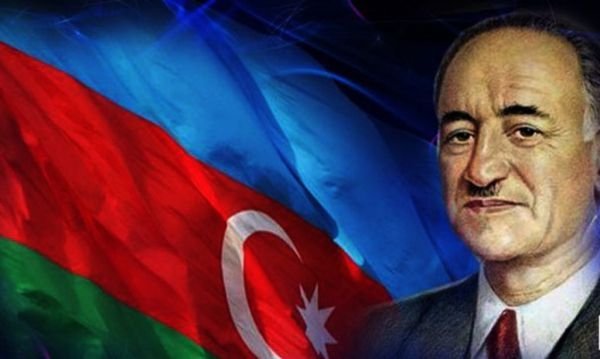
Today marks the 142nd anniversary of the birth of Mammad Amin Rasulzade, the founding ideologue of Azerbaijan’s first republic and one of the most influential political figures in the country’s modern history.
Rasulzade was born on January 31, 1884, in the village of Novkhani near Baku, then part of the Russian Empire. Raised in a religious family, he received both traditional and secular education – a combination that would later shape his political worldview and intellectual independence.
From an early age, Rasulzade gravitated toward journalism and political activism. In his late teens, he was already writing about language, identity, and social justice, arguing that national consciousness and education were inseparable. His first published articles focused on preserving the native language and resisting cultural assimilation – themes that would define his life’s work.
In the early 1900s, Rasulzade was active in socialist and social-democratic circles and became one of the founders of the Muslim Social Democratic organization Hummet. During this period, he collaborated with revolutionary figures in the Caucasus and lived under constant police surveillance. His political activity forced him into exile more than once, including periods in Iran and the Ottoman Empire, where he edited newspapers and participated in constitutional movements.
By the mid-1910s, Rasulzade had emerged as the leader of the Musavat Party, transforming it from a small underground group into a mass political force. He used journalism as a political tool, editing newspapers that openly demanded civil rights, national autonomy, and democratic governance for Muslims of the South Caucasus.
The turning point came in 1918. As chairman of the National Council, Rasulzade played a central role in proclaiming the independence of the Azerbaijan Democratic Republic – the first secular, parliamentary republic in the Muslim world. On May 28, 1918, independence was formally declared, and later that year, Azerbaijan held its first parliamentary session.
At the opening of parliament, Rasulzade delivered the words that would become his political legacy:
“Once raised, the flag will never fall.” The phrase evolved into a national slogan and remains one of the most quoted lines in Azerbaijani political history.
The republic lasted less than two years. In April 1920, following the Bolshevik takeover, Rasulzade was arrested. He narrowly avoided execution and was later released, but refused all offers to cooperate with Soviet authorities. Choosing exile over compromise, he left the country and never returned.
For the next three decades, Rasulzade remained one of the most active voices of Azerbaijani political emigration. He lived and worked across Europe and the Middle East, publishing newspapers, founding political organizations, and advocating for Azerbaijan’s independence on international platforms. Over his lifetime, he authored more than 1,000 articles, essays, and books on politics, history, and culture.
Even in exile, Rasulzade rejected alliances that conflicted with his principles. During World War II, he refused to cooperate with Nazi Germany after it declined to recognize Azerbaijan’s independence – a decision later described by historians as one of his most consequential political choices.
In his later years, Rasulzade settled in Turkey, where he continued writing and mentoring younger intellectuals. In 1953, he traveled to the United States and addressed Azerbaijanis via Voice of America, marking the anniversary of independence.
Mammad Amin Rasulzade died in Ankara on March 6, 1955. He was buried there, far from his homeland. Decades later, his legacy was officially restored in independent Azerbaijan, with state-level commemorations and anniversaries recognizing his role in the country’s history.
Today, Rasulzade is remembered not only as a politician, but as a symbol of principled leadership – a man who consistently chose independence, democracy, and national dignity over power and compromise.

