Baku, September 17, 2025
Azerbaijan plans to raise defense and security spending to AZN 8,714.8 million in 2026, a 3.8% increase versus the approved forecast for 2025, opening room to modernize weaponry, deepen industrial cooperation, and accelerate technology transfer while hedging regional risks.
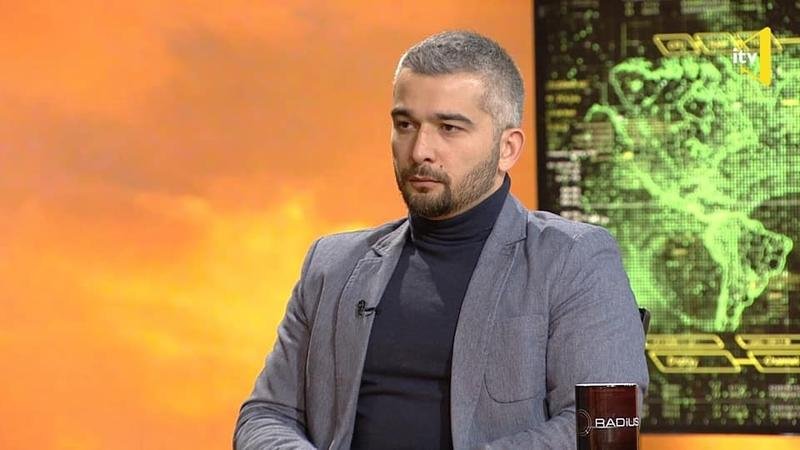
In an interview with Minval Politika, military analyst Tamerlan Vagabov called the move “absolutely justified,” citing an uptick in regional threat perceptions – from Armenian rearmament to the need to consolidate control in Karabakh and tighten border monitoring. He argued that hydrocarbon-backed revenues (with a total state budget near AZN 41.5bn) allow Baku to absorb the increase without widening the deficit.
Vagabov has served in senior roles across Ukraine’s Interior Ministry and defense sector, and in Azerbaijan’s MFA, Interior and Economy ministries, as well as coordinating a counter-terrorism project at Interpol’s General Secretariat in France.
Why now
The allocation, he said, is also about supply-chain diversification and localization to reduce foreign dependence. Azerbaijan’s defense industry blends “Soviet reliability, Turkish mobility, and Israeli precision,” he noted, and targeted funding can maximize the return on each manat invested.
NATO track & force modernization
Vagabov expects extra funding to re-energize IPAP cooperation with NATO—from buying interoperable radars to joint training (he cites air-operations courses held in May 2025) – and to speed standardization across the force. Priority upgrades he highlighted include:
UAV/ISR capacity and counter-UAS air defense
Cyber defense
C4ISR digitization and VR-enabled logistics/training
Selective platform retrofits (e.g., T-72 enhancements)
By his estimate, these steps could raise tactical flexibility by 20–30% while aligning legacy platforms with Western procedures.
Industrial priorities & R&D
Vagabov argues the domestic defense-industrial complex needs 25–35% of the defense budget – about AZN 2–3bn annually – for R&D in microelectronics, additive manufacturing, and anti-drone systems, where imports still account for ~65–70%. The ~AZN 318m top-line increase implied for 2026 could be a catalyst for:
launching local UAV production lines
formal technology-transfer partnerships
hiring 500+ engineers
reducing vulnerabilities by 15–20% (his estimate)
Done right, he said, pairing legacy factories with high-tech startups can push Azerbaijan toward greater self-reliance and open export niches worth $500m+ over time.
External partnerships
The larger budget should strengthen existing vectors, he added:
Turkey: cooperation on ATAK helicopters and Bayraktar upgrades (discussions spotlighted at IDEF 2025)
Israel: air-defense solutions and optics/sensors for armored platforms
Pakistan: trilateral formats linked to KAAN fighter development and light-infantry kits
He framed this as calibrated balancing – integrating multiple “schools” of defense technology while preserving diplomatic maneuverability.
The takeaway
Proponents say a bigger, targeted budget can:
Modernize UAV/C-UAS, IADS, cyber, and C4ISR portfolios
Deepen industrial capacity via co-production and local design
Hedge evolving risks in a volatile regional environment