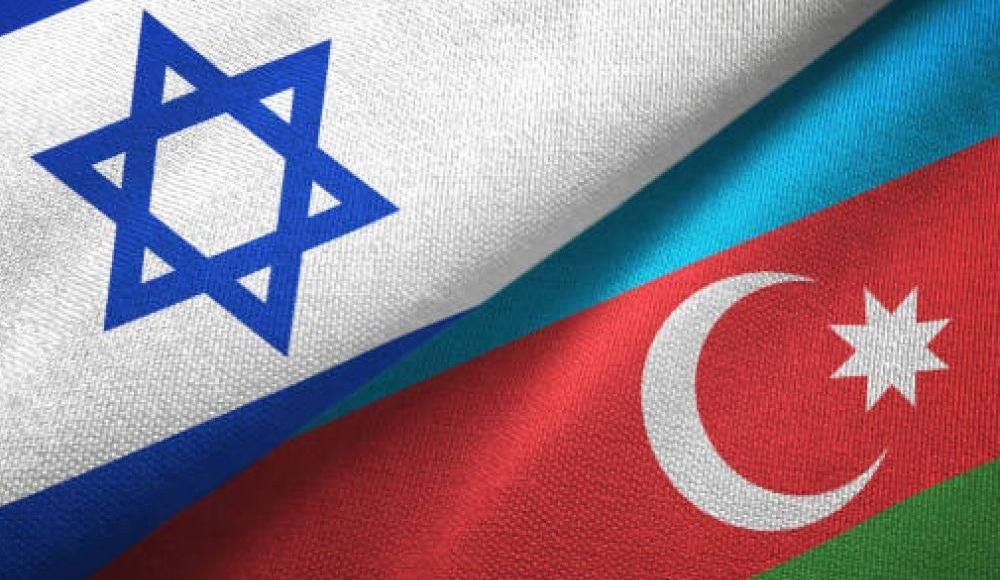
By Azerbaijan.US Editorial Board
The global conversation about Jewish life in the Muslim world usually gravitates toward the same tired narratives – conflict, instability, and deep cultural divides.
Yet one country stands as a quiet but unmistakable exception. Azerbaijan, a predominantly Muslim, secular republic on the Caspian Sea, is home to one of the oldest, safest, and most continuously thriving Jewish communities on earth.
This is not a recent political achievement, nor a PR-driven initiative. It is a historical reality, spanning two millennia.
Azerbaijan may be the only Muslim-majority nation where Jews have never faced pogroms, legal discrimination, or institutional hostility. And in an era marked by rising anti-Semitism worldwide – including in Western democracies – that fact alone should command international attention.
A 2,000-Year Story of Coexistence – Not Conflict
Jewish presence in the Caucasus dates back to antiquity. Mountain Jews settled in what is now Azerbaijan long before the rise of modern nation-states. Their descendants live today in Krasnaya Sloboda, the world’s only all-Jewish town outside of Israel. Synagogues operate freely. Jewish schools educate openly. Families keep centuries-old traditions without fear.
To understand how extraordinary this is, one must remember how rare uninterrupted Jewish life is across the Middle East. Azerbaijan stands out precisely because it defies the region’s patterns – not through force, but through cultural instinct.
This is a country where:
Jewish doctors and scientists shaped the national healthcare system.
Jewish merchants helped build Baku’s first oil boom.
Jewish soldiers fought and died defending Azerbaijan’s sovereignty.
Jewish musicians, writers, and intellectuals became pillars of national culture.
Azerbaijan never perceived Jews as “outsiders.” They were – and remain – part of the nation’s fabric.
A Partnership Rooted in Trust, Not Transaction
This deep historical coexistence laid the foundation for the modern Azerbaijan–Israel relationship – one of the most stable, mutually beneficial, and strategically important partnerships in Eurasia.
Israel relies heavily on Azerbaijani oil, which has played a central role in the country’s energy security for nearly two decades. Azerbaijan, in turn, benefits from Israel’s cutting-edge technology, agriculture, and defense capabilities.
It is a relationship built not on dependence, but on complementarity:
Azerbaijan supplies energy.
Israel delivers high technology and innovation.
Both cooperate closely against regional threats – particularly those emanating from Iran.
Unlike many political alliances that fluctuate with elections or ideology, this one is anchored in mutual respect and shared strategic interests.
Security Cooperation That Redefined the Region
Azerbaijan is one of Israel’s most important security partners. Over the past decade, their cooperation has transformed how small states deter larger, aggressive neighbors.
Israeli technology strengthened Azerbaijan’s ability to defend its borders, protect critical infrastructure, and modernize its military. Azerbaijan’s stability, in turn, contributes to Israel’s security by limiting the influence of extremist networks and state actors that threaten both nations.
And contrary to caricatures in certain regional media, this partnership is not directed “against” any nation. It is a defensive alignment – a response to real dangers that neither country can ignore.
The Humanity Behind the Politics
It is tempting to analyze Azerbaijan–Israel relations solely through geopolitical lenses. But the human story is just as important.
Jewish residents describe Azerbaijan as a place where they can wear a kippah openly, celebrate Shabbat publicly, and move through daily life without anxiety. These are simple freedoms Jews lost in many countries – including, ironically, some Western ones where anti-Semitism again rises.
Azerbaijan does not just tolerate its Jewish citizens. It embraces them.
When Azerbaijani Muslims ask their Jewish neighbors to join Novruz celebrations, or when Jewish families invite Muslim friends for holiday dinners, this is not coexistence – it is community.
A Model the World Should Acknowledge
As the international conversation grows increasingly polarized, the Azerbaijan–Jewish story offers a rare example of what multiculturalism can look like when it is not imposed, politicized, or commercialized.
It is built on mutual respect, shared hardships, and a collective memory deeper than politics.
And in an age where religious tension, radicalization, and xenophobia dominate headlines, the Azerbaijani model deserves recognition – not as an anomaly, but as a potential blueprint.
In the End, It’s Simple
Why is Azerbaijan one of the safest places in the world for Jews?
Because, for 2,000 years, the people of this land made a quiet but powerful moral choice:
accept difference, honor tradition, and see neighbors as human beings, not categories.
That choice shaped the country’s identity.
That identity shaped its alliances.
And those alliances today help stabilize one of the world’s most fragile regions.
It is a story the world has overlooked – but no longer should.