By Azerbaijan.US Editorial Board
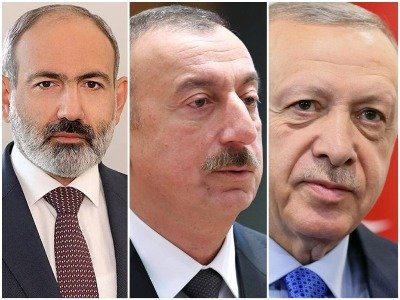
A recent wave of commentary in the Armenian press reveals a deep, almost instinctive anxiety over the possibility of Turkish President Recep Tayyip Erdoğan and Azerbaijani President Ilham Aliyev visiting Yerevan.
Local columnists speculate whether these leaders would “behave as guests” or “as if they were in Western Azerbaijan,” turning a hypothetical diplomatic visit into a scene of national panic.
This reaction says far more about Armenia’s internal psychology than about regional politics. It exposes a society still trapped in its own defensive myths – where reconciliation feels like surrender, and dialogue is perceived as danger.
Fear Masquerading as Dignity
For many in Armenia’s political and media circles, the very idea of peace sounds like humiliation. Decades of isolation and wartime trauma have fostered a mentality where any handshake with a neighbor is viewed as a betrayal of national pride.
One columnist even compared peace efforts to “feeding a crocodile,” suggesting that talking to stronger neighbors inevitably leads to being devoured. But true dignity does not come from fear — it comes from confidence.
A nation secure in its identity does not need to treat every negotiation as a trap.
The Comfort of Hostility
The Armenian press often recalls Soviet times with nostalgia, quoting the famous line by Azerbaijani poet Samad Vurghun: “We didn’t live next to each other – we lived in each other.”
Yet instead of seeing this as a model of coexistence, such commentaries use it as a lament – a story of loss, not a lesson in renewal.
They ignore the new realities of the South Caucasus: transport corridors, cross-border energy networks, and trade routes that could bring prosperity to all.
Instead, the narrative returns to old grievances, portraying Armenia as a fragile victim surrounded by untrustworthy powers.
A Leadership Divided from Its Own Society
Prime Minister Nikol Pashinyan recently said there were “no significant obstacles” to opening the Armenian–Turkish border or establishing diplomatic ties with Ankara.
Yet his own commentariat met that statement with sarcasm: “Did Erdoğan agree to that?”
That question captures the country’s dilemma. Armenia’s government publicly speaks of peace, but much of its political class still fears it.
As a result, every gesture of normalization is filtered through suspicion, as though reconciliation itself were an act of national weakness.
A Choice Between Fear and the Future
In the changing geopolitics of the region – where new transport and energy projects are redrawing maps and priorities – Armenia risks isolating itself once again, not because of foreign pressure, but because of its own fear.
Peace is not an act of submission. It is an act of maturity – the ability to move forward without rewriting history or denying wounds, but without being hostage to them.
Armenia today faces a simple choice: remain imprisoned by the psychology of threat, or join the future its neighbors are already building.
The door to that future is open. But to walk through it, Yerevan must first stop seeing every outstretched hand as a weapon.

