Azerbaijan.US
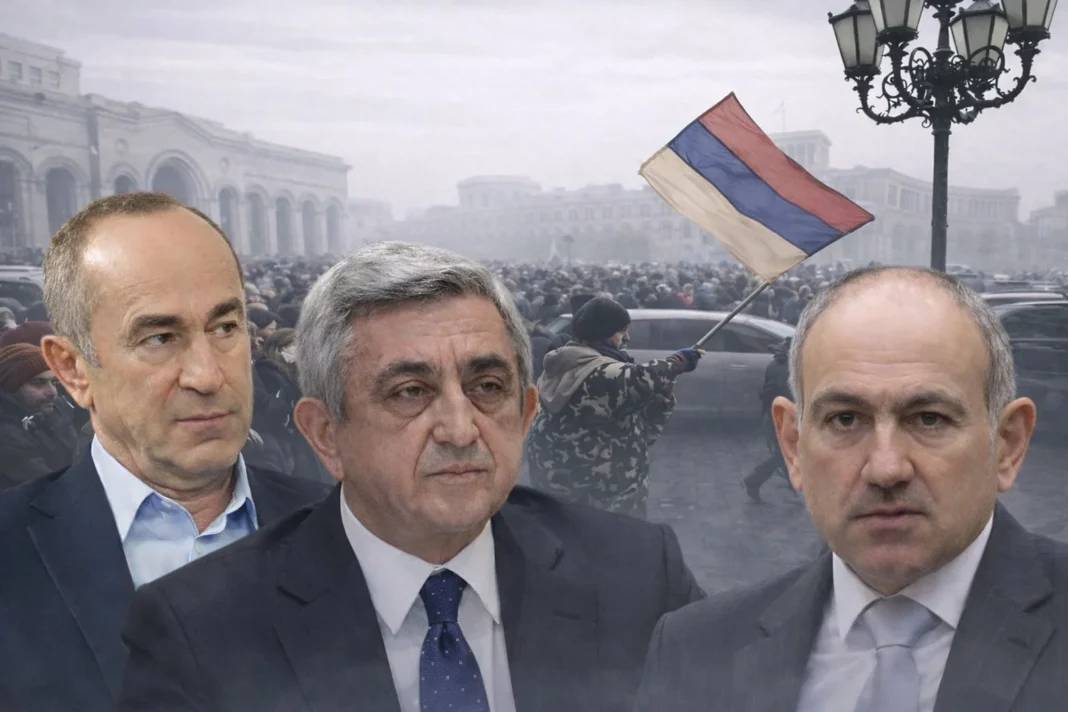
Political tensions are intensifying in Armenia ahead of the upcoming elections, as opposition forces explore the possibility of uniting against Prime Minister Nikol Pashinyan. While the opposition remains fragmented, recent statements suggest renewed efforts to consolidate what is often described as a revanchist camp.
Former president Robert Kocharyan has emerged as the most vocal proponent of a broad opposition bloc. Speaking at a recent press conference, Kocharyan argued that despite ideological differences, opposition groups share similar rhetoric on key issues, creating conditions for coordination and a unified electoral front.
Observers note that the initiative is less about ideological convergence and more about political positioning. Kocharyan appears intent on rallying disparate forces around his own leadership, seeking to reassert himself as the central figure of the opposition ahead of the vote.
The key question remains whether such a strategy can realistically challenge Pashinyan’s grip on power.
Commenting on the situation, political analyst Gabil Huseynli expressed skepticism that a strong coalition can form around Kocharyan and fellow former president Serzh Sargsyan, figures commonly associated with Armenia’s pre-2018 political elite.
According to Huseynli, much of Armenian society continues to associate that period with corruption, economic stagnation, and political decay. By contrast, he argues, Pashinyan’s tenure – despite setbacks – has brought structural changes, including new jobs and industrial activity.
Foreign policy is another factor shaping voter sentiment. Analysts point out that under Pashinyan, Armenia has moved toward normalizing relations with both Azerbaijan and Turkey, opening the door to a potential peace agreement, border reopening, and broader regional integration.
“Pashinyan lost the war, but he won the election that followed,” Huseynli noted, arguing that this outcome reflects a deeper shift in public priorities away from confrontation and toward stability.
Against this backdrop, experts doubt that Armenian voters will rally around forces advocating a return to old confrontational policies. While opposition maneuvering may intensify in the coming months, many analysts believe the revanchist narrative has limited appeal beyond its traditional base.
For now, Armenia’s pre-election landscape appears polarized but uneven – with the opposition seeking unity, and the incumbent betting that society will choose continuity over a return to the past.