Azerbaijan.US
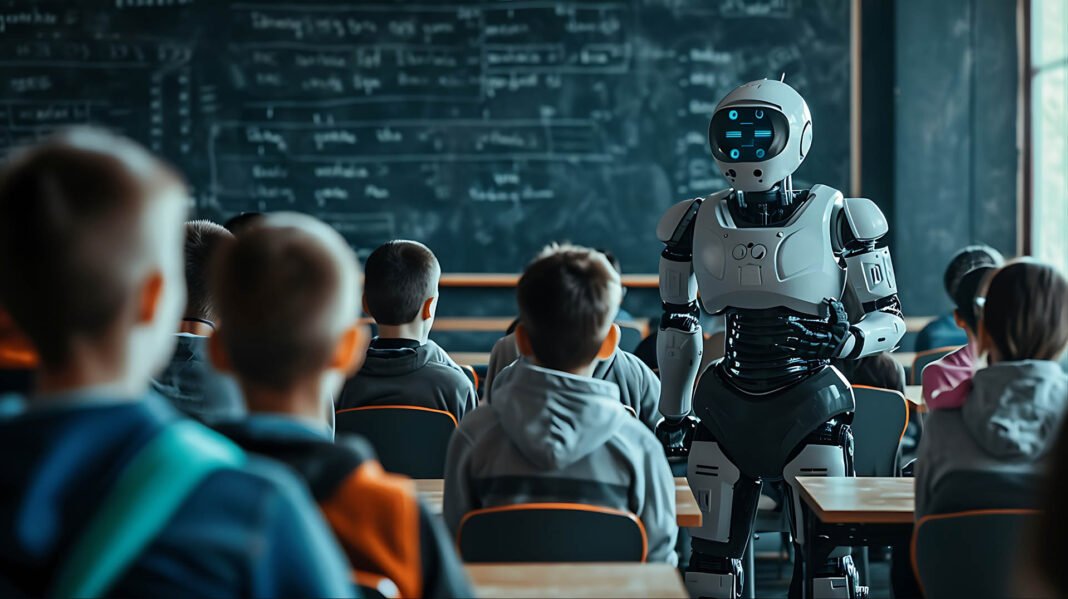
Several schools and lyceums in Azerbaijan have begun using AI-powered robot teachers as part of the classroom experience, marking a new step in the country’s approach to educational technology.
The robots do not replace human teachers. Instead, they operate alongside them, helping conduct lessons, ask students questions, analyze comprehension levels, and provide interactive support during class. In some classrooms, both the teacher and the robot jointly manage the lesson.
Students say the presence of a robot makes lessons more engaging, especially in subjects like English. Children practice vocabulary, respond to questions, and stay more involved throughout the class. At the same time, most students openly admit they still prefer learning from a human teacher.
Teachers view the technology as a practical assistant rather than a competitor. Robots help with presentations, supplementary materials, and explanations, particularly when introducing new topics or reinforcing complex ones. Educators say this allows them to focus more closely on individual students.
The robot systems are also designed to detect when a student may be struggling – based on pauses, eye movement, hesitation, or difficulty answering questions – enabling timely clarification and simpler explanations.
School administrators stress that traditional education remains intact. Human teachers continue to carry full responsibility for instruction, while robots serve only as a support tool to enhance efficiency and engagement.
According to school leadership, the main goal is to speed up classroom interaction, simplify learning, and make lessons more appealing to students. The novelty of a robot in the classroom naturally draws attention and encourages participation, sometimes even creating an emotional connection between students and the technology.
Artificial intelligence and educational robots may signal the beginning of a new era in learning – but in Azerbaijan’s classrooms, the human teacher remains irreplaceable.