By Marrahim Nasib
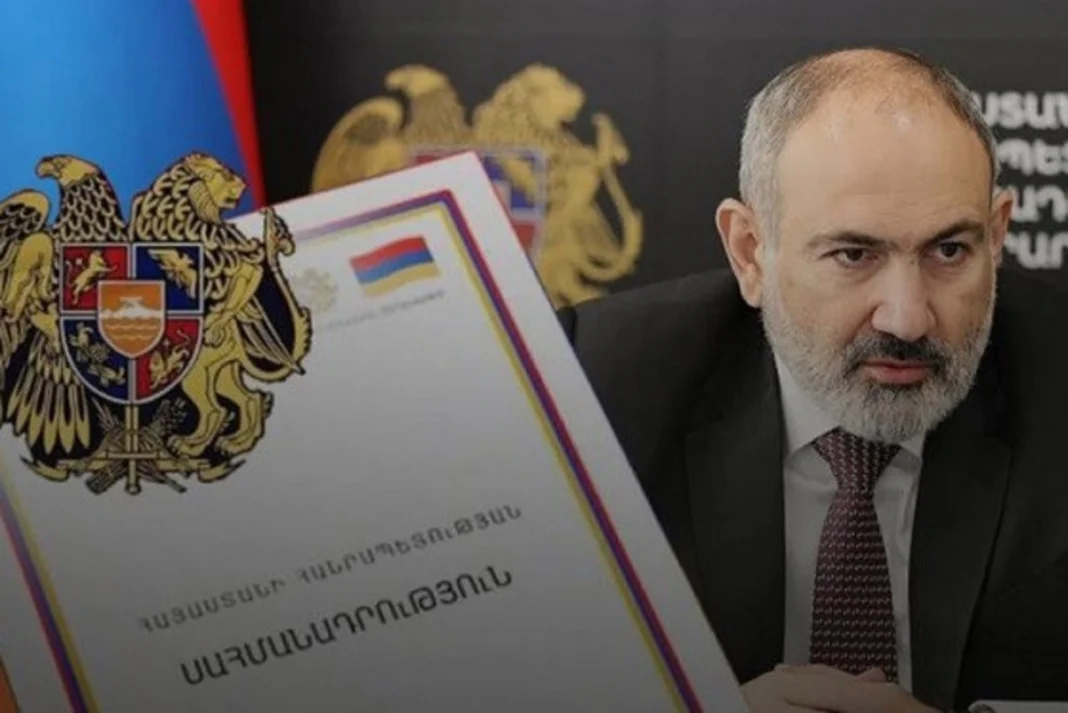
Recent days have seen a sharp intensification of debates in Armenia around potential amendments to the country’s Constitution. Prime Minister Nikol Pashinyan, in his latest statements, acknowledged the need for change, arguing that a new constitution must reflect modern challenges, current political realities, and — most significantly — should no longer be based on the country’s Declaration of Independence.
This marks a potentially major shift, as Armenia’s current Constitution references the 1990 Declaration of Independence, which contains explicit territorial claims against Azerbaijan. If that foundational reference is removed, Armenia would, in effect, walk back those claims — a key requirement for a final peace agreement with Baku.
Legal Roadblock to Peace
According to Azerbaijani MP Bahruz Maharramov, a member of the Parliamentary Committee on Legal Policy and State Building, the issue is not merely symbolic.
“The preamble of Armenia’s Declaration of Independence cites the illegal December 1, 1989 decision by the Armenian SSR Supreme Council, which declared Nagorno-Karabakh as part of Armenia. This is one of the rare instances in modern history where a country’s Constitution directly lays claim to the territory of another state”.
He also noted that Armenia’s constitutional territorial claims extend beyond Azerbaijan: “Article 13 of the Constitution, in describing the state emblem, contains territorial claims against Turkey as well.”
This legal backdrop presents a fundamental obstacle to peace. Azerbaijan has repeatedly stated that no peace treaty is possible while Armenia’s Constitution contains these claims. Under Article 6 of the Armenian Constitution, the Constitution holds supreme legal power — no international agreement can override it, nor can Parliament ratify a treaty that contradicts it.
“So while the peace deal may be negotiated and finalized in text, it cannot be legally ratified or enforced under the current Armenian Constitution. That’s why constitutional reform is not optional — it’s essential,” Maharramov stressed.
Constitutional Reform: Only Possible by Referendum
Under Article 111 of Armenia’s Constitution, any such reform can only happen through a nationwide referendum — adding a layer of complexity and political sensitivity to the process.
Still, Maharramov considers Pashinyan’s recent talk of constitutional reform as a positive signal.
“If Armenia truly aims to embrace peace and regional stability, the next Constitution must drop any reference to the Declaration of Independence and exclude territorial claims,” he added.
Trust, or More Rhetoric?
While the rhetoric from Armenia’s leadership seems encouraging, Azerbaijani observers remain cautious. Maharramov pointed out that Pashinyan’s government has made pragmatic statements before, only to contradict them later in practice.
“In the current geopolitical climate, with rising global tensions and polarization, Armenia must realize that clinging to outdated irredentist ideology, like the mythical ‘Armenia from sea to sea,’ offers no future. Instead, the country should seize this historic opportunity for peace, escape its geopolitical dead-end, and begin to build a state based on realistic diplomacy,” Maharramov concluded.
Bottom Line
Until Armenia’s Constitution is amended to reflect the realities of the post-war South Caucasus and drop its territorial claims, a durable peace agreement with Azerbaijan remains legally and politically impossible. The coming months — and possibly a national referendum — could determine the fate of long-term stability in the region.

