Azerbaijan.US
The Arctic is rapidly shedding its image as a frozen periphery and emerging as one of the most contested regions in global politics. Climate change, untapped resources and renewed great-power rivalry are converging at the top of the world – and the stakes are rising fast.
Speaking this week at the World Economic Forum in Davos, Donald Trump once again thrust the Arctic into the spotlight. The U.S. president said Washington has a strong interest in Greenland, while insisting that the island would not be taken by force. Hours later, he hinted at a broader understanding with NATO, prompting unease across European capitals.
The immediate tension subsided. The strategic question did not.
Why the Arctic matters now
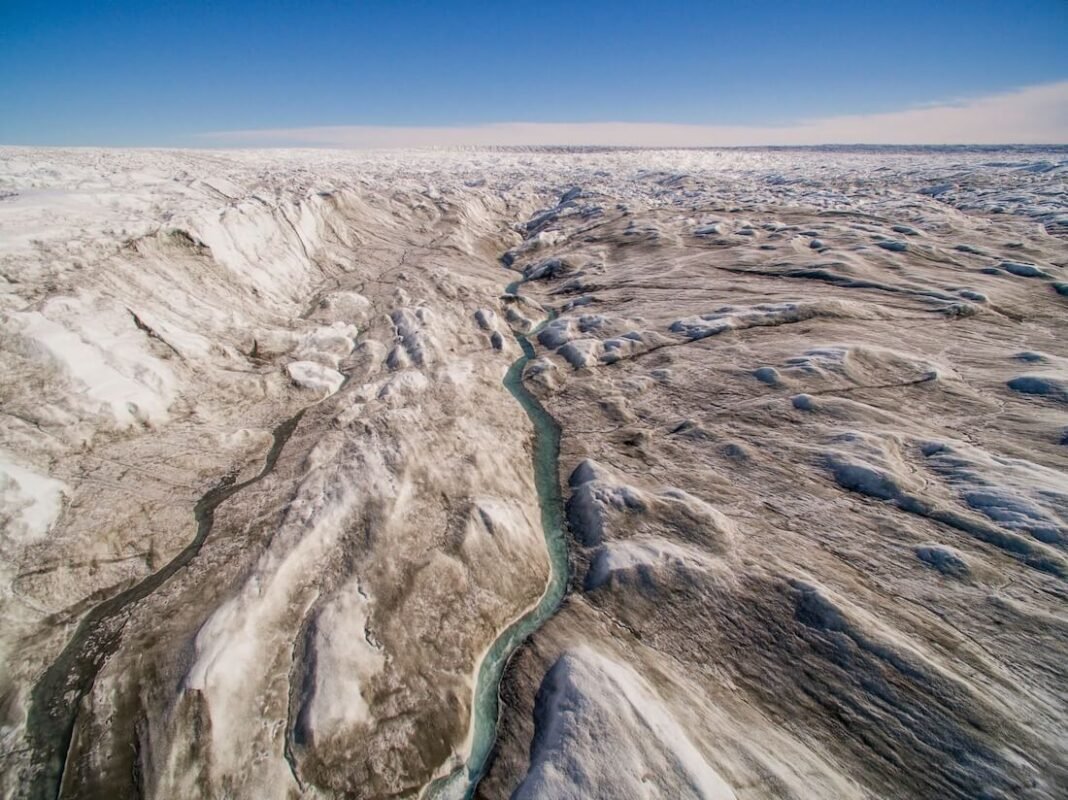
The Arctic is warming faster than any other region on Earth. Since 1979, the area of summer sea ice has shrunk by an estimated 2.6 million square kilometers. As the ice retreats, vast deposits of rare earth elements, oil and natural gas are becoming more accessible – transforming the region into a geopolitical prize.
Eight countries have territory within the Arctic Circle: the United States, Canada, Denmark (via Greenland), Iceland, Norway, Sweden, Finland and Russia. During the Cold War, the Arctic was seen as the shortest route for missile strikes between Washington and Moscow. That logic never fully disappeared.
In the late 1980s, Mikhail Gorbachev sought to demilitarize the region, leading to the creation of the Arctic Council, designed to keep cooperation alive and tensions low.
That framework fractured after Russia’s invasion of Ukraine in 2022. Cooperation with Moscow was frozen, and the Arctic once again began to echo with military activity.
Militarization returns
Russia has expanded its military footprint in the High North, reopening Soviet-era bases and increasing exercises. NATO members, in turn, have stepped up patrols and joint drills. What was once framed as a zone of scientific cooperation is increasingly viewed through a security lens.
Against this backdrop, Greenland has acquired outsized symbolic and strategic importance. Beneath its ice, geologists estimate, lie up to 30 percent of the world’s undiscovered gas reserves and roughly 13 percent of undiscovered oil, along with critical minerals essential for advanced technologies.
Trump has previously floated the idea of acquiring Greenland outright – a proposal dismissed in Copenhagen but not forgotten. This week, he softened his tone, stressing security concerns rather than ownership, and rolled back a proposed 10 percent tariff on countries cooperating economically with Greenland.
Details of any new framework remain unclear. What is publicly known is that Washington is seeking broader military access and a stronger strategic foothold in the Arctic.
Europe’s dilemma
Denmark has reiterated that Greenland’s sovereignty is not up for negotiation, while signaling openness to deeper security cooperation with the United States. European officials, however, privately acknowledge their limited leverage.
Analysts say the U.S. goal is not formal annexation, but long-term dominance – through bases, infrastructure, and influence over supply chains for critical minerals. Europe, divided and cautious, is struggling to respond with a unified strategy.
What comes next
For now, the Arctic remains tense but quiet. No red lines have been crossed. No shots fired.
Yet as the ice melts, competition accelerates. Resources, shipping lanes and military positioning are reshaping the region’s future. The Arctic is no longer just a remote expanse of ice – it is becoming a testing ground for the next phase of global power politics.
Greenland, for the moment, is still off the table. But it remains firmly on the menu.