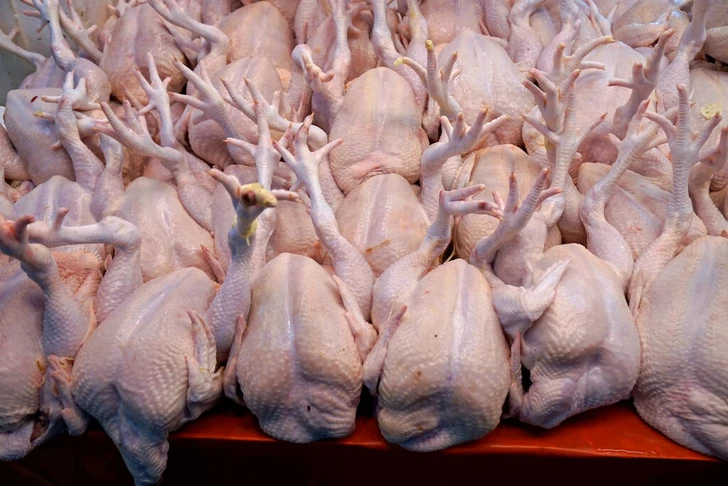
Imported Poultry Storms Azerbaijan’s Market With “3 for 10” Deals

Must read

Baku, September 17, 2025

Azerbaijan’s food market is undergoing a swift shift as imported poultry—especially from Belarus and Ukraine – surges in popularity with bargain pricing and aggressive promotions.

Retailer Abbas Valiyev, who runs an outlet specializing in imported meat, says to KhazarTV, that demand has jumped on the back of steep discounts. “We offer both Ukrainian and Belarusian chickens.

Stay Ahead with Azerbaijan.us
Get exclusive translations, top stories, and analysis — straight to your inbox.

The Belarusian ‘village’ breed is especially popular. Right now we have a special – three birds for 10 manats (previously one bird was 4 manats without discount). Ukrainian chickens are 5 manats each and come in 1-kg packs,” he said, adding that sellers tout the birds as free of chemical additives or injection-based “plumping.”


Prices, volumes, and why imports win

According to the State Customs Committee, January-July 2025 imports exceeded 25,000 tons of meat worth $55 million, with Ukraine, Brazil, and Belarus the leading suppliers. Local retail averages remain notably higher: chicken 6-7 AZN/kg, beef 17–18 AZN/kg, lamb 21–25 AZN/kg.

Customs values imply a blended border price ≈ $2.2/kg (about 3.7 AZN/kg at $1≈1.7 AZN) across all imported meats – well below shelf prices once domestic freight, cold chain, duties/VAT, shrinkage, and retail margins are added. Lower feed and production costs and scale in exporting countries help distributors fund loss-leader promos – like “3 for 10”—that local producers struggle to match.

Beyond poultry: beef and lamb, too

“The shift isn’t only about chicken,” Vəliyev noted. “We sell five–six beef cuts at 12–14 manats – high – quality boneless veal from western Ukraine, plus Brazilian and Indian beef. Whole Mongolian lambs come in for wholesale at 14 AZN/kg. Taste-wise, about 90% of buyers can’t tell local from imported lamb.”

What it means for the market

Consumer benefit now, uncertainty later. Deep discounts lift household purchasing power, but may be time-limited.

Pressure on local farms. Prolonged undercutting could squeeze domestic poultry and livestock producers already hit by high input costs and pasture constraints.

Trust and labeling. As “no additives” claims proliferate, transparent labeling and periodic testing will be key for consumer confidence.

The bottom line

Imports – especially budget poultry – are resetting price expectations and capturing share. Whether this becomes the new normal depends on promo sustainability, exchange rates, and how fast local producers can control costs, raise yields, and differentiate on freshness and provenance.

- Advertisement -spot_img

More articles

- Advertisement -spot_img

Latest article