Baku, September 16, 2025
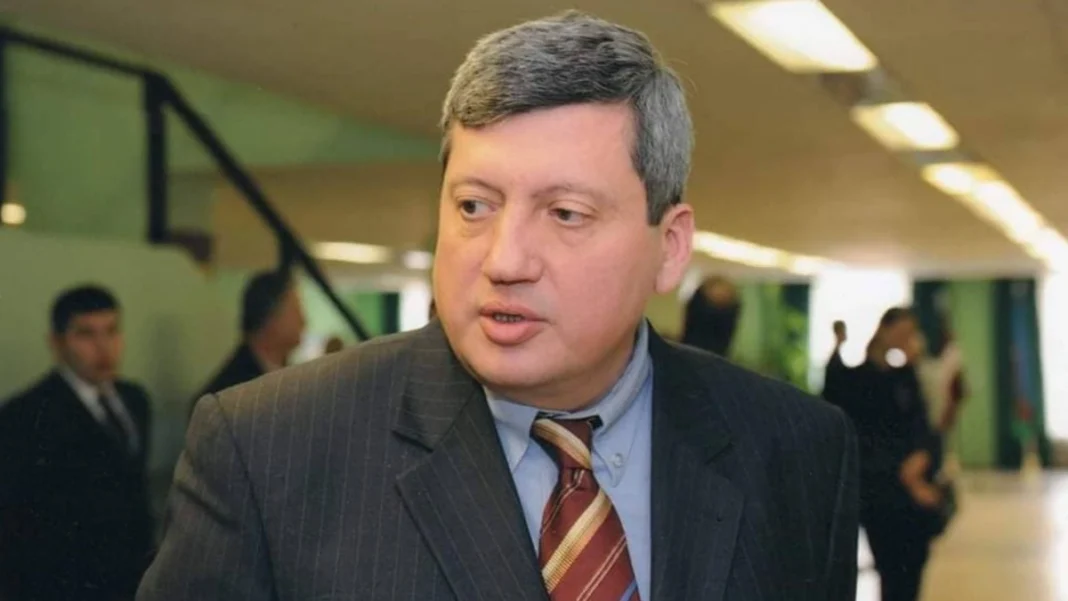
Former Azerbaijani foreign minister Tofiq Zulfugarov says Baku has been pursuing “nonstop diplomacy” since the 2020 war, positioning itself as a key player between competing global power centers.
Speaking to Caliber.Az on YouTube, Zulfugarov highlighted Azerbaijan’s intensive summer of engagements in Abu Dhabi, Washington, and Beijing, which he described as proof of the country’s rising profile.
Karabakh File Closed, New Track Opens
Zulfugarov argued that the Karabakh conflict is over, both politically and institutionally. The dissolution of the OSCE Minsk Group and its affiliated mechanisms, he said, marked the formal end of the international mediation era. What remains on the table is a classic Azerbaijan – Armenia normalization process.
The Zangezur Corridor and the “Trump Route”
At the center of this process stands the Zangezur Corridor, rebranded as the Trump Route for International Peace and Prosperity (TRIPP).
Zulfugarov described the secure link between mainland Azerbaijan and Nakhchivan as a strategic priority long ignored by mediators, but now recognized “at the highest level – in the White House.” He called this visibility “a significant diplomatic success for Azerbaijan.”
The former minister noted progress on border delimitation and demarcation, but said its pace will depend on how the TRIPP corridor is structured and safeguarded. External actors, particularly in Russia and certain circles in Armenia, continue to resist, he added.
Rejecting Talk of U.S. “Control”
Asked whether TRIPP amounts to an American bid for control, Zulfugarov dismissed the notion.
“Every country controls the segment on its own territory,” he said, calling speculation about foreign domination “games of political scientists and populist politicians.”
Shifts With Iran, Strains With Russia
Zulfugarov pointed to positive signals in ties with Tehran, including a cautious thaw in the broader regional context. Relations with Moscow, however, remain difficult. He attributed this to rival factions inside Russia using the South Caucasus issue as leverage.
“Normalization depends on decisions in Moscow, not Baku,” he argued.
TRIPP in the U.S. – China Rivalry
The former diplomat downplayed the idea that the Zangezur Corridor is decisive in the U.S. – China competition. Beijing, he noted, seeks multiple export options – via Russia, Central Asia, Pakistan, and even the Arctic route – rather than relying on a single 42-kilometer link through Armenia.
On Russia – Ukraine and NATO
Turning to Europe, Zulfugarov said Moscow’s strategy has backfired. By provoking NATO and unsettling its neighbors, Russia has accelerated the militarization of the EU, creating “two strong defense poles” – the United States and an increasingly capable Europe.
Middle East Dynamics
Commenting on recent Israeli strikes, including the controversial attack on Doha, Zulfugarov stressed that outcomes in the Middle East hinge less on Israel and more on U.S. backing. Any attempt to make Israel a regional overseer, he warned, would commit it to “endless war.”
Azerbaijan’s Diplomatic Doctrine
For Baku, he said, the guiding principle remains equidistance and equal proximity to major power centers. Azerbaijan has positioned itself as a neutral venue for dialogue, hosting contacts even between adversaries.
“This has become one of the major achievements of Azerbaijani diplomacy,” Zulfugarov concluded.

