Baku, September 16, 2025
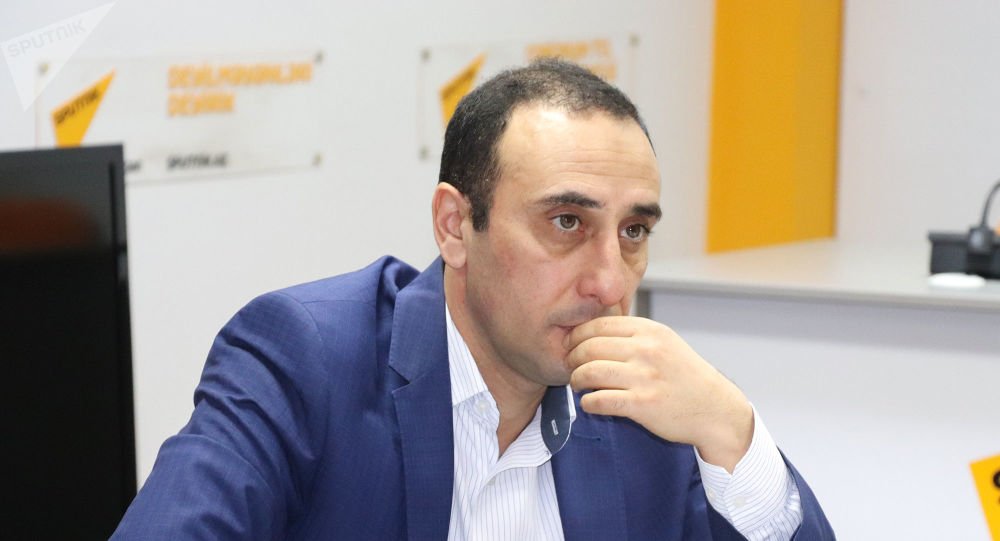
Azerbaijani analyst Rizvan Huseynov outlined a sweeping view of shifting security dynamics from the Middle East to the South Caucasus in an interview with host Ruslan Aysin on the POISTINE YouTube channel, touching on the Qatar crisis, Turkic military drills, the Zangezur corridor, and what he alleges are Russian “hybrid” operations in the region.
Huseynov framed the reported strike on Doha as part of a wider contest whose real impact will be measured by outcomes rather than the incident itself. He argued that Turkey and Egypt will be decisive within the OIC – Arab League format, while Qatar should act as the “locomotive” for Arab coordination. He claimed Turkish intelligence warned Doha shortly before the strike and that key Hamas figures left the venue.
On military alignment, he pointed to the “Endless Brotherhood” exercises involving Azerbaijan, Türkiye, Kazakhstan, Uzbekistan, and Qatar, calling them a rehearsal for broader coordination that could extend to the Eastern Mediterranean, Red Sea, or Persian Gulf. He even floated, as speculation, that Kazakhstan might one day provide a neutral peacekeeping presence on the Golan Heights.
Discussing South Asian dynamics, Huseynov cast Pakistan—the Muslim world’s only declared nuclear power – as the “deep rear” of a wider Turkic – Islamic security architecture, while noting that Islamabad still needs a clearer strategic project linking South and West Asia.
Turning to connectivity, Huseynov said the U.S. side plans a $145 million credit line for Armenia’s section of the Zangezur corridor, projecting that cross-border rail and road links could be operational by late 2026 – 2027. He described a route tying Caspian ports through Karabakh – Zangezur – Nakhchivan to Kars and onward to Trabzon on the Black Sea.
Huseynov alleged that Russia is waging a hybrid campaign against Azerbaijan, Kazakhstan, and Armenia via bot farms and influence operations designed to inflame ethnic and religious divisions. He suggested a possible Russian “trace” in the Khankendi incident – where a suspect allegedly threw grenades and opened fire near a public event – arguing the timing aimed to derail momentum after recent Azerbaijan – Armenia contacts and steps toward Turkey – Armenia normalization.
He also read symbolism into the September 15 meeting between President Ilham Aliyev and Türkiye’s Chief of the General Staff in Shusha/Khankendi, linking it to the Shusha Declaration and the 1918 liberation of Baku by the Caucasian Islamic Army – a message, he said, of allied deterrence.
On Israel, Huseynov criticized remarks by Benjamin Netanyahu about pushing Knesset recognition of the “Armenian genocide,” saying such moves deepen rifts and would align Azerbaijan firmly with Türkiye. Addressing recent airspace incidents over Poland and Romania, he argued they serve to accelerate European rearmament and may nudge the emergence of a more cohesive East European defense core alongside NATO structures.
Looking ahead to a Turkic summit in Baku, Huseynov expects discussion of the situation of Turkic peoples in Russia, suggesting that if Moscow interferes in Azerbaijan’s domestic affairs, Baku can host open debate about minority rights within Russia – linking today’s agenda to the legacy of the 1926 Baku Turkological Congress.

