By Azerbaijan.US Editorial Board
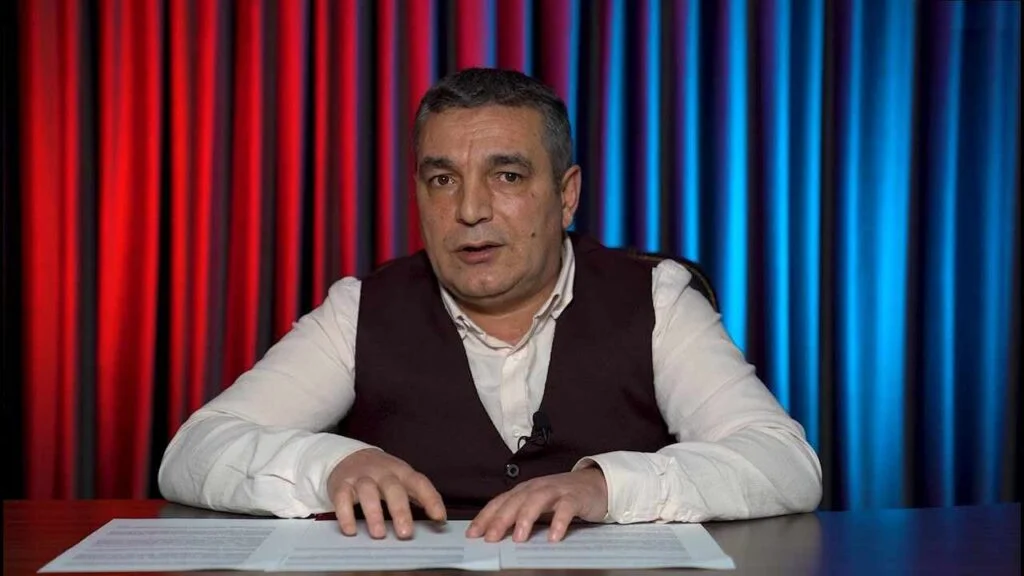
In a recent Facebook post, Azerbaijani economist and REAL Party leader Natig Jafarli challenged several widespread geopolitical myths by posing straightforward questions that expose logical contradictions in global narratives.
His approach offers a useful starting point for a broader analysis of how major powers are misunderstood. Building on those themes, this commentary examines the assumptions that shape debates on China, Taiwan, Russia, Ukraine, and U.S. foreign policy.
Myth #1: “China is the largest threat to the United States and the West.”
Jafarli questioned the notion that China represents a classical geopolitical threat, noting that the term historically implies military conquest or territorial occupation. China has not invaded or forcibly absorbed any state in the modern era.
What Beijing has done is expand economically, technologically, and industrially – something that creates competition, not existential danger.
The real challenge for the West is not Chinese aggression, but Western underperformance. If China’s rise creates competition, the logical response is to compete – not to frame growth as hostility.
Myth #2: “China will attack Taiwan.”
As Jafarli noted, Taiwan’s population is ethnically Chinese, and economic ties between the island and the mainland are extensive:
2024 bilateral trade: $298 billion
China as Taiwan’s largest trading partner
China as Taiwan’s top investor
This is hardly the profile of two imminent adversaries.
While Beijing maintains its long-term goal of unification, its strategy increasingly relies on soft power, economic interconnection, and political influence – not invasion. Jafarli suggested that unification, if it occurs, will likely happen through Taiwan’s electoral process, not through force.
The broader point: economic gravity is often stronger than military coercion.
Myth #3: “If Russia wins in Ukraine, it will attack Europe next.”
Jafarli argued – and international analysts increasingly agree – that Russia’s strategic position is far weaker than its propaganda implies.
If Ukraine survives as a sovereign state, Russia’s maximalist goals are already defeated.
Moscow has struggled to overpower Ukraine for nearly four years. The idea that it could attack NATO borders on fantasy.
Russia today resembles a wounded bear: dangerous, but preoccupied with stabilizing itself. Post-Putin turbulence will absorb Moscow’s attention for years.
The lesson: Europe must remain cautious, but fear-driven narratives obscure the realities of Russia’s military and political limitations.
Myth #4: “Donald Trump is acting in Russia’s interests; his plan benefits Moscow.”
Jafarli critiqued the tendency to label any unconventional U.S. position as “pro-Russian.” Trump’s worldview is transactional and America-centric – sometimes clashing with traditional bipartisan foreign-policy assumptions.
The uncomfortable truth is that neither the United States nor NATO is willing to fight Russia directly, which limits the range of practical options in Ukraine. Jafarli argued that Western policymakers must choose between two realistic paths:
Direct military involvement (unlikely), or
A negotiated structure ensuring Ukraine’s survival and security, often compared to Finland’s Cold War model.
The debate is less about ideology and more about strategic feasibility.
Conclusion: Myths endure when hard questions are avoided
Jafarli’s Facebook post used simple logic to undercut complex global myths. Expanding on those ideas, one conclusion stands out:
the world is less dangerous than the narratives describing it – but far more complicated.
China is rising, but not conquering.
Russia is aggressive, but not omnipotent.
Taiwan is contested, but deeply connected to the mainland.
The West is powerful, but increasingly unsure of its strategy.
Better questions lead to better policies – and fewer illusions.