By Azerbaijan.US Editorial Board
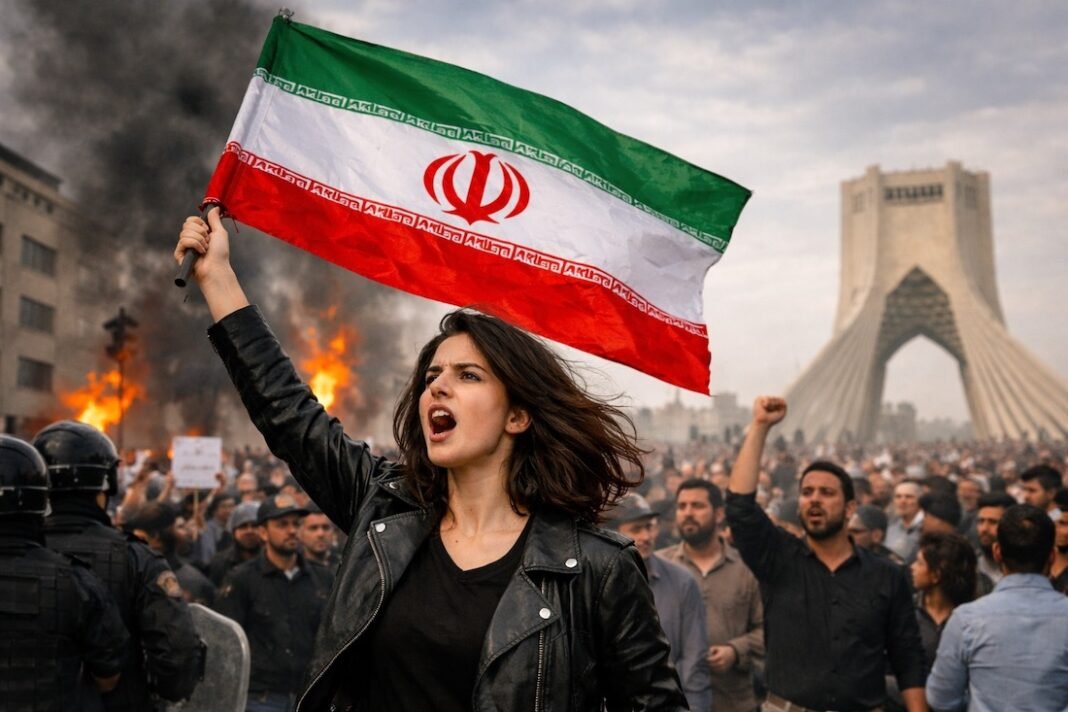
Across Iran, a quiet but powerful expectation hangs in the air. Many protesters are no longer asking whether the system can survive – they are asking when an external blow will finally tip it over. The belief is simple and emotionally compelling: remove the top leadership, and the structure beneath it will collapse.
Washington does not see the situation that way.
This disconnect lies at the heart of the current impasse. Iranian protesters think in terms of justice, punishment, and moral clarity. U.S. policymakers think in terms of stability, manageability, and risk. These logics rarely overlap – and in Iran’s case, they are fundamentally incompatible.
For many on the streets, outside intervention is imagined as a decisive moment: a strike, an assassination, a sudden shock that breaks the regime’s spine. What follows, in this vision, is a natural and almost automatic transition toward something better.
American policy operates on the opposite assumption. Removing a figurehead does not equal resolving a system. In Iran, power is embedded in institutions, legal frameworks, and parallel chains of command. Eliminating one individual without a viable successor architecture creates not liberation, but uncertainty – the most dangerous outcome from a strategic perspective.
This is why Washington’s behavior often appears cynical or passive to Iranian society. The United States is not searching for a moral victory. It is searching for a counterpart. Someone who can deliver guarantees, enforce commitments, and sign agreements that reduce risk. Until such a figure exists, restraint becomes policy.
History weighs heavily here. The region is littered with examples where rapid regime disruption produced prolonged instability rather than reform. These lessons have shaped a doctrine of caution – one that prioritizes predictability over popular enthusiasm.
This gap in expectations produces mounting frustration. Protesters interpret hesitation as betrayal. Policymakers interpret pressure to “do something” as an invitation to repeat past mistakes. Both sides talk past each other, convinced the other simply refuses to understand reality.
Another illusion persists: that foreign powers will step in to “save” a population once repression crosses a certain threshold. In practice, that threshold is far higher than most imagine. States intervene when their interests align with a viable outcome – not when outrage peaks.
As a result, Iranian society waits for an action that may never come, while Washington waits for a political actor that does not yet exist. This stalemate feeds disillusionment on one side and inertia on the other.
Iran’s future will not be decided by a single strike or a dramatic gesture. It will hinge on whether a credible internal force emerges – one capable of translating popular anger into a coherent political alternative. Until then, external actors will continue to hedge, calculate, and delay.
The tragedy is not a lack of sympathy. It is the collision of two worldviews that measure success by entirely different standards.