The geopolitical map of the South Caucasus is shifting faster than at any time since the end of the Cold War. Borders have not formally changed, but the logic of regional influence has.
The outcome of the 2020 war, Russia’s invasion of Ukraine, and the recalibration of American strategy have created a new environment in which Azerbaijan, Georgia, and even Armenia – long constrained by outside forces – are now trying to shape their own security agendas.
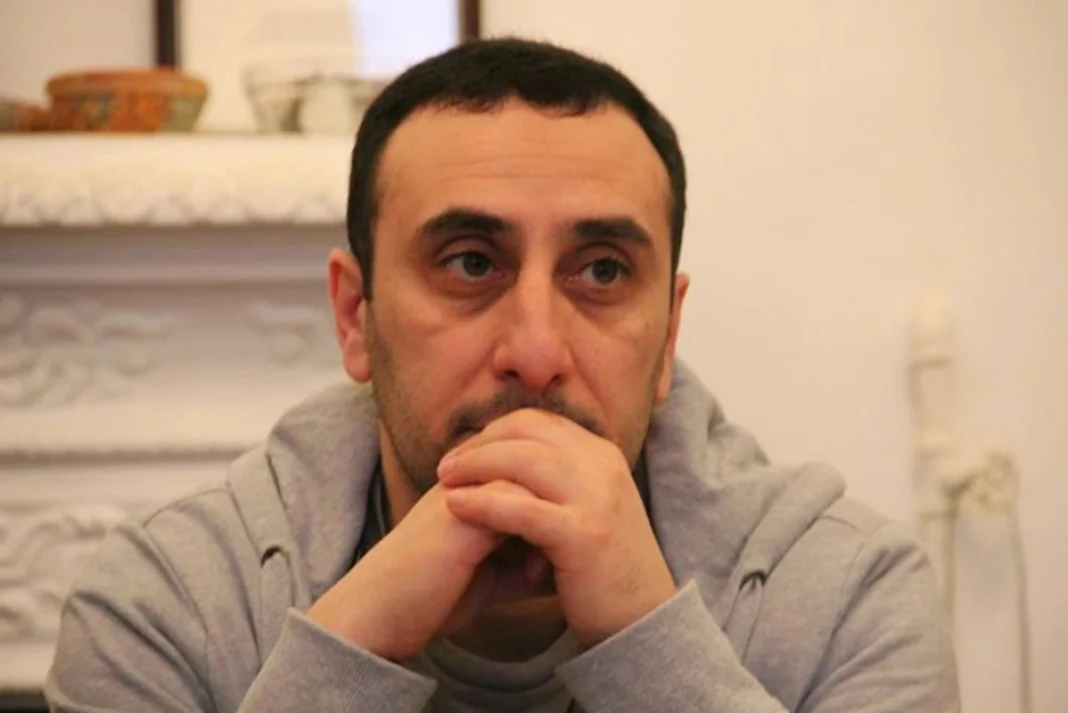
In a recent interview with the YouTube channel News of the Caucasus, analyst Rizvan Huseynov described a region in “geopolitical awakening,” where old hierarchies are collapsing and new networks of cooperation are being tested in real time.
His comments sketched an emerging order in which mid-sized states have more leverage than at any point in the last century, largely because the great powers are distracted, weakened, or redefining their priorities.
Iran’s sudden pragmatism
The most unexpected shift, Huseynov argued, is Iran’s tone toward Azerbaijan. Tehran’s recent diplomatic outreach, including a symbolic visit by Iranian officials to Baku’s Alley of Martyrs, reflects not a newfound warmth but hard necessity. After years of pressuring Azerbaijan on transit routes, energy projects, and border policies, Iran is now confronted with regional realignments it can no longer block.
“New geopolitical realities have forced Iran to moderate its rhetoric,” Huseynov said. “These are not voluntary concessions. Tehran lost many of the leverage points it held during the years of occupation and Russian dominance in the region.”
Key among those new realities: alternative transport corridors, the reshaping of Caspian governance, and the weakening of Russia as a strategic buffer.
Why the 3+3 format remains relevant
The regional platform known as 3+3 – Azerbaijan, Armenia, Georgia plus Turkey, Iran, and Russia – has resurfaced as all three South Caucasus states search for mechanisms that keep larger powers from negotiating over their heads.
Participation, Huseynov noted, is not endorsement. It is self-protection.
“Engaging in 3+3 does not mean agreeing with Russia or Iran,” he said. “It means preventing your rivals from making decisions without you.”
For Azerbaijan, the format provides a venue to push back against efforts to isolate the country diplomatically. For Georgia, it offers a rare table where Tbilisi can balance its Western orientation with pragmatic engagement. For Armenia, the format is uncomfortable but unavoidable – Turkey is central to Yerevan’s future connectivity, and Iran remains a key energy partner.
The Caspian’s quiet crisis
A problem barely visible in political headlines may carry the most lasting geopolitical consequences: the rapid shallowing of the Caspian Sea.
According to Huseynov, the northern basin has lost tens of thousands of square kilometers of surface area. Entire stretches of Russian coastline now look radically altered. This environmental change has military implications as well: Russia’s Caspian flotilla, long a bridge between its Black Sea and Central Asian operational theaters, is losing access to strategic channels such as the Volga–Don waterway.
If the Caspian becomes less navigable, Moscow’s ability to project power in the region erodes further.
Turkey ascendant, Russia constrained
Another key shift is the asymmetry between Turkey and Russia. While Ankara expands its influence through defense cooperation, trade, and normalization with Armenia, Moscow’s position continues to weaken under the weight of the Ukraine war.
“Russia shot itself in the leg and the head,” Huseynov said. “As long as the war continues, Moscow is in a reactive posture. It cannot dominate regional formats.”
Turkey, by contrast, stands to become the only outside actor with relatively positive ties to all three South Caucasus states. If Ankara normalizes relations with Armenia – and that prospect is no longer theoretical – Turkey’s role becomes decisive.
The American pivot and the return of Monroeism
Huseynov pointed to what he sees as the most consequential global shift: the evolution of U.S. national security strategy. Washington is signaling an interest in retrenchment, focusing more on the Pacific and less on Europe.
In practical terms, he argued, the U.S. is shifting from “security first, payment later” to a model where security assistance is offered only when partners pay for it.
This leaves Europe – resource-rich but militarily weak – outside the room where the Ukraine war’s endgame may ultimately be negotiated. And it pushes responsibility for regional security back onto local actors.
For the South Caucasus, this creates both risk and opportunity. Without the American “predictor,” as Huseynov calls it, mid-sized states have more room to maneuver. But they must also be capable of defending their new autonomy.
A region forced to grow up
The discussion ended with a pragmatic conclusion: the South Caucasus is not a primary target for Russian military escalation. But the region cannot rely on that indefinitely.
“The stronger we are militarily and politically, the more respectfully global powers will speak to us,” Huseynov said.
That strength, he argued, will not come solely from defense spending. It will come from dense networks of trade, transit, and mutual dependency – railways, energy links, and cross-border projects that bind the region into a single strategic ecosystem.
For the first time in decades, the architecture of regional security is being designed not in Moscow or Washington but in Baku, Tbilisi, and Yerevan. Whether those capitals can sustain coordination in a world spiraling toward fragmentation remains the open question.

