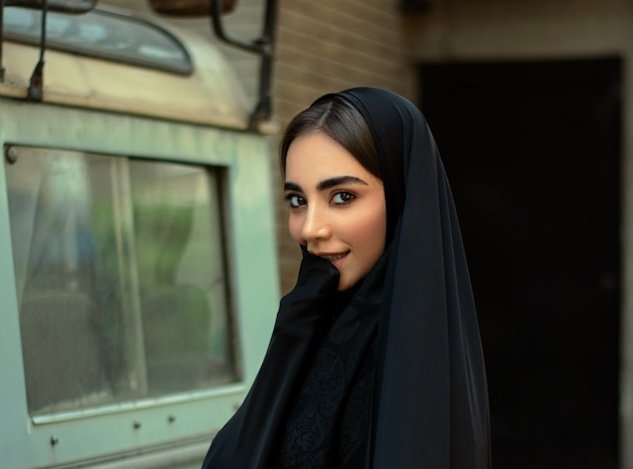
Judging by recent footage from Tehran and other Iranian cities, it’s hard to miss the growing number of women walking the streets with uncovered hair.
As noted by the Telegram channel “Iran, Iran, Iran…,” since the mass protests three years ago-sparked by the death of 22-year-old Mahsa Amini at the hands of the morality police for an “improper” hijab-many Iranian women have abandoned compulsory head coverings altogether. Instead, they now choose their own style, regulating for themselves whether they wear a hijab.
For a while, authorities appeared to look the other way. But on November 15, the government signaled a sharp shift. Gholam-Hossein Mohseni-Ejei, head of Iran’s judiciary, issued an order to immediately toughen measures against what he called the “promotion of improper hijab.” Speaking at a meeting of the High Council of the Judiciary, he urged officials to respond “seriously” to the situation.
Can this new tightening trigger fresh unrest in a society already at peak tension?
Two regional experts shared their assessments with Media.Az.
A Power Struggle Behind the Hijab Debate
According to Serhii Danilov, deputy director of Ukraine’s Center for Middle East Studies, Iran’s internal contradictions have broken into the open. The hijab dispute, he says, is more of an indicator-a proxy battle among rival factions grappling over the country’s future direction.
“The debate reflects deeper issues: the balance between religious and nationalist elements in public life, the effectiveness of state structures, and how much Iran can afford to spend on regional expansion while the living standards of ordinary citizens collapse,” Danilov told Media.Az.
These tensions have sharpened after Iran’s defeat in the 12-day war, the collapse of the so-called “Axis of Resistance,” and a severe economic crisis defined by fuel shortages, electricity cuts, and a worsening water crisis.
Danilov explains that the president’s circle is pushing to minimize confrontation and avoid nationwide unrest-hence the unofficial tolerance toward relaxed hijab rules. But the opposing camp views this as an existential threat, not only to the Islamic Republic’s ideological foundations but to its own place and privileges within the power system.
He notes striking shifts inside Iran’s public space: the rise of Persian nationalism, from the public chanting of the anthem “Oh, Iran” during Ashura at the request of the Supreme Leader, to the unveiling of a monument to Shapur I-symbols once sidelined as un-Islamic. For parts of the clergy and the IRGC, this looks like the start of a major redistribution of influence, with the risk of losing both power and revenue. Their pushback, he argues, will be fierce.
A “Release Valve” Is Closing
Israeli Iran expert Michael Borodkin, author of the Telegram channel Oriental Express, believes that authorities intentionally allowed social norms to loosen in recent months.
“Many women dress in European style, with hair fully uncovered. There are numerous videos of concerts and parties where men and women dance together-openly violating Iran’s strict laws,” Borodkin noted.
According to him, the regime let people “release steam” as Iran faced defeat by Israel, skyrocketing inflation, crumbling energy infrastructure, and extreme drought.
But this tolerance was never ideological-it was tactical.
“Conservative officials were never comfortable with this. Now they’re demanding to tighten the screws again. It’s a very plausible scenario, because nothing in the nature of the regime has fundamentally changed,” Borodkin said.

