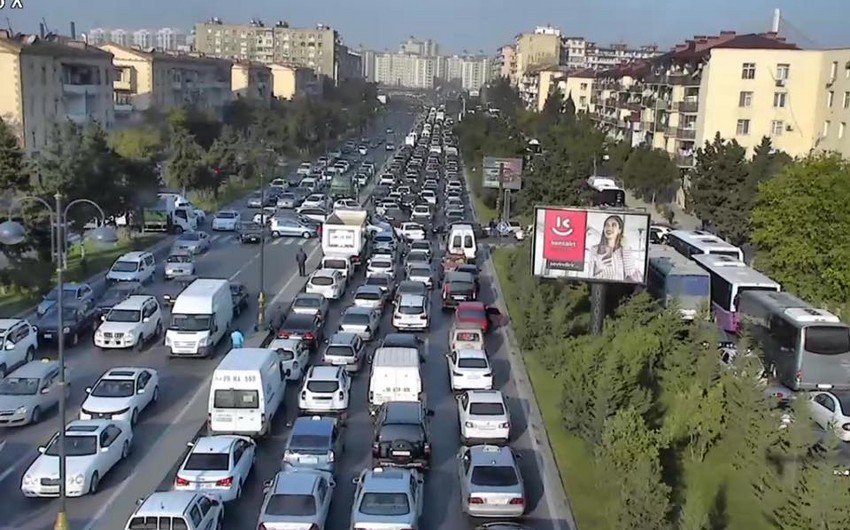
Traffic congestion in Baku is often blamed on familiar causes: aging infrastructure, insufficient parking, and a rapidly growing number of cars.
But according to transport systems expert Rauf Agamirzayev, one major driver of the problem is far less visible – and far more systemic.
Speaking to BAKU.WS, Agamirzayev said the capital’s traffic overload is closely linked to outdated administrative culture, which continues to force thousands of people into unnecessary daily trips across the city.
“Every day, residents leave home just for a signature, a short explanation, a confirmation, or a simple request – even though these services are already digitized and do not require physical presence,” he explained.
Agamirzayev argues that the real impact of digital services on reducing congestion is enormous, but Azerbaijan still uses them mostly as formality rather than as functioning, decisive tools.
“As long as digital channels don’t become real mechanisms for execution, no expansion of road capacity or new transport lines will reduce congestion to the level we need,” he said.
According to the expert, much of Baku’s internal mobility is driven not by necessity, but by administrative procedures that could easily be handled remotely.
“A citizen must be able to solve their issue without leaving home or work – through a phone call, WhatsApp, official correspondence, or an online chat. These channels exist, but in many cases the person is still directed to show up in person. This wastes time, drains nerves, and increases the city’s transport load,” Agamirzayev noted.
He stressed that the problem is not a lack of digital tools, but how they are actually used.
“Formally, we have moved away from old administrative habits, but many elements of that mindset still remain,” he said.
What Real Digitalization Requires
Agamirzayev outlined several steps he says could reduce traffic faster – and cheaper – than any new roads:
provide services immediately – “let’s resolve it here,” rather than “come in person”;
make online channels functional, not symbolic;
modernize management culture within institutions;
embrace digital services both technically and ideologically.
“Thousands of people travel across Baku every day for one document,” he added.
“If these administrative habits change, unnecessary trips will drop sharply – and the city will feel the difference on the roads.”

