Azerbaijan.US
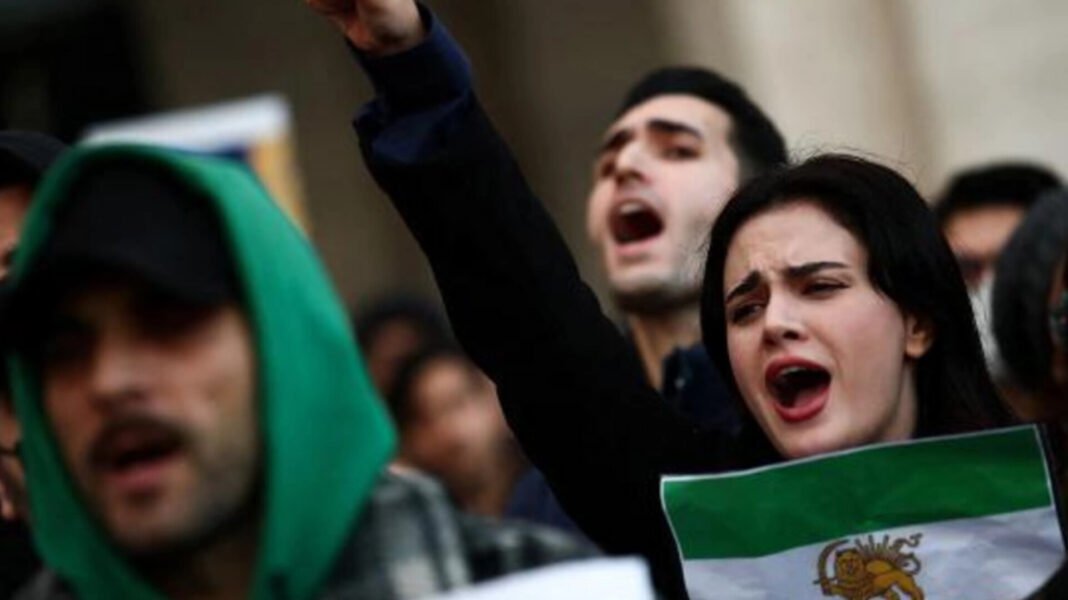
Large-scale anti-government protests continue across Iran, marked by violent clashes between demonstrators and units of the Islamic Revolutionary Guard Corps (IRGC). What began on December 28 as protests by shop owners over currency depreciation and rising living costs has since evolved into a broader movement challenging the political system in Tehran.
Casualty figures remain disputed. Iran’s National Security Council claims more than 3,100 people have been killed, while the U.S.-based Human Rights Activists News Agency (HRANA) reports at least 4,519 deaths, the majority of them protesters, along with security personnel, minors, and bystanders.
Iranian authorities insist that “terrorist elements” and foreign intelligence services are involved in the unrest, while the United States and several other countries have sharply condemned the use of force against demonstrators. Tensions between Washington and Tehran continue to escalate.
Against this backdrop, a key question has emerged: why have Iran’s ethnic Azerbaijanis – despite their large numbers – remained largely absent from the current wave of protests?
Political analyst Mahammad Asadullazade, speaking to Patrul.az, argues that this absence is not accidental.
According to him, Iranian Azerbaijanis are deliberately keeping their distance from the protests due to both historical experience and present-day calculations.
“These protests are concentrated mainly in Tehran. Azerbaijani communities understand that external actors were involved in radicalizing the movement, with the aim of provoking foreign – particularly U.S. – military intervention,” he said.
Asadullazade notes that Azerbaijanis have historically played a decisive role in Iran’s political upheavals, including the 1979 revolution, but gained little in return.
“They were a key force during the revolution, yet they received no real political or cultural gains. That experience has made them cautious and pragmatic,” he explained.
Estimates suggest that up to 40 million ethnic Azerbaijanis live in Iran, giving them substantial demographic and political weight. However, the analyst believes their current neutrality has also limited the ability of opposition forces – including monarchist groups – to capitalize on the unrest.
In his view, the lack of visible Azerbaijani participation reflects not passivity, but strategic restraint.
“For any mass mobilization to occur, there must be leadership and coordination. At the moment, Iranian Azerbaijanis lack a unified political center and a clear leadership structure capable of articulating goals and managing risks,” Asadullazade said.
Until such conditions emerge, he argues, Azerbaijanis in Iran are likely to maintain a wait-and-see approach – avoiding spontaneous protests that could expose their communities to disproportionate repression without delivering tangible outcomes.

