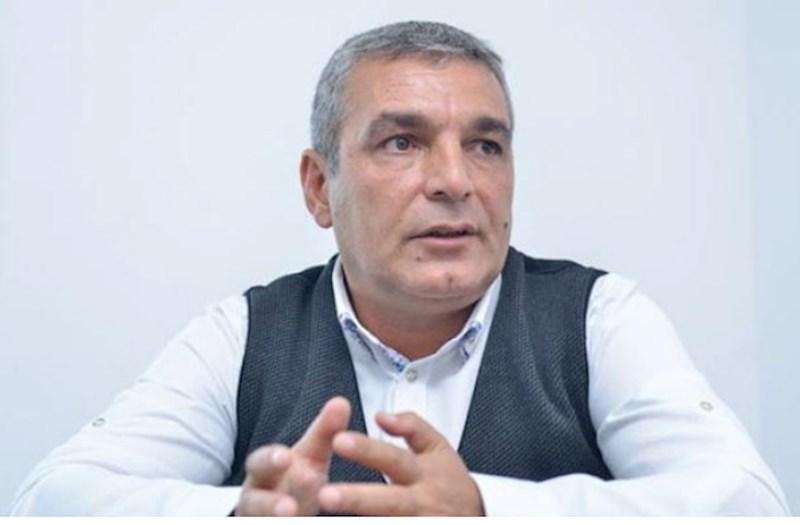
Economist Natig Jafarli has outlined areas where Azerbaijan’s government could reduce spending amid declining budget revenues, warning that current fiscal policy risks deepening economic stagnation.
In a Facebook post, Jafarli noted that Azerbaijan has seen a downward trend in revenues over the past five years, driven mainly by falling oil production and lower oil prices compared to previous periods.
Instead of boosting economic activity and supporting small and medium-sized businesses, the government, he argues, has relied on increasing taxes, fees, and fines to compensate for shrinking revenues.
“The economy is not growing, the pace of value creation has slowed, and revenues are falling. The government’s response has been to raise the tax burden, which produces the opposite effect – economic activity contracts even further,” Jafarli wrote.
He stressed that cutting social spending should not be considered, as such expenditures are already limited. Instead, attention should be directed to other major budget items. According to him, two categories alone account for around 30% of total budget spending in the 2026 draft budget: defense and national security (8.7 billion manats, or 21%) and the judiciary, law enforcement agencies, and the прокуратure (3.55 billion manats, or 8.6%).
While acknowledging the importance of a strong army and security sector, Jafarli said the current regional situation creates room for optimization. With the peace process with Armenia advancing and the risk of renewed conflict remaining low, he believes Azerbaijan could reduce military spending by 20-30%, relying more on diplomacy and international partnerships.
He also addressed spending on law enforcement, particularly the police, arguing that reducing personnel numbers while increasing salaries for remaining officers could generate 10–15% savings, while also improving relations between police and the public.
Overall, Jafarli estimates that Azerbaijan could cut budget expenditures by 3–4 billion manats. Such savings, he argues, would allow the government to ease pressure on businesses and citizens, shifting from higher taxes toward temporary tax and customs relief for small and medium-sized enterprises. Any short-term revenue gaps could be covered by the State Oil Fund.
“The most real threat facing the country today is economic contraction and rising social problems,” Jafarli concluded. “The solution lies in economic growth and a fundamental shift in the government’s current policy.”

