BAKU — September 2, 2025.
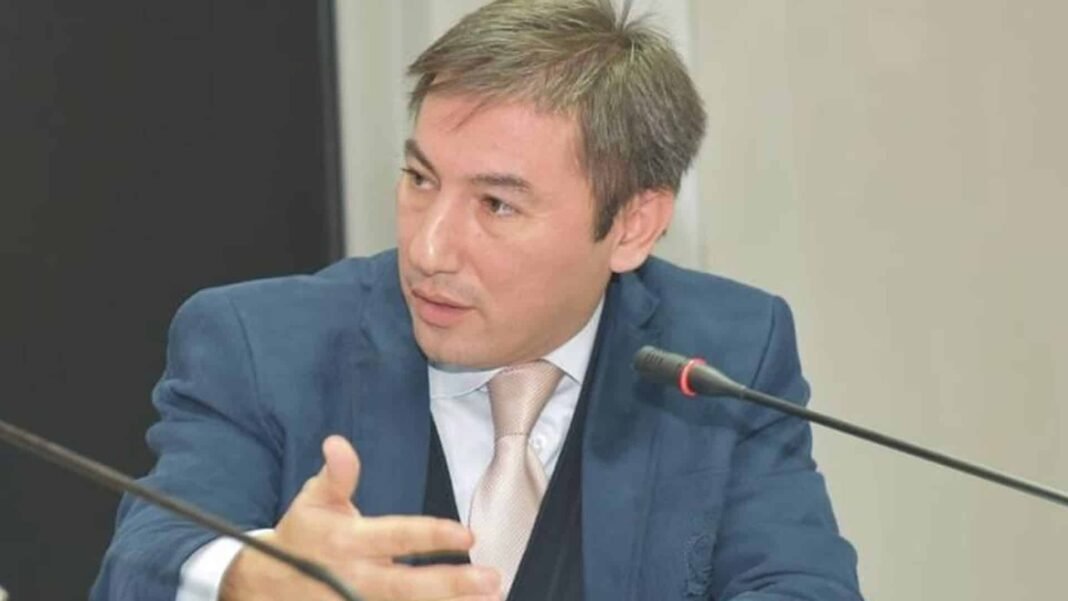
Speaking on the YouTube channel Daily Europe Online, Azerbaijani analyst Ilgar Velizade said India’s move to block Azerbaijan’s status bid at the Shanghai Cooperation Organization (SCO) has boomeranged — undercutting Armenia’s own ambitions and highlighting a regional order that is moving on without the old scripts. The day also brought symbolism: the formal dissolution of the OSCE Minsk Group, which he framed as confirmation that the South Caucasus has entered a post-conflict phase with new rules.
Velizade, a frequent commentator on Eurasian affairs, opened with the images many in the region were sharing — President Ilham Aliyev and Prime Minister Nikol Pashinyan, alongside their spouses, exchanging warm gestures on the sidelines. “It’s a honey-and-tar day,” he joked: sweetness in the air, but also a spoonful of bitterness in India’s veto at the SCO — and Pakistan’s mirror move against Armenia.
“Delayed, not denied”: Azerbaijan and the SCO
Velizade urged against hand-wringing over observer or partner labels. “Azerbaijan already works closely with key SCO states — China, the Central Asian republics, Pakistan,” he said. “Call it delayed membership if you like. The practical cooperation is there.” In his telling, New Delhi’s decision reflected India–Pakistan rivalry, not the merits of Baku’s regional role. And because Armenia has far thinner ties with SCO economies than Azerbaijan, he argued, Yerevan’s loss may be larger than Baku’s.
India’s misread — and a changing map
Why did India swing the axe? Velizade called it a misreading of new regional realities and a desire to “demonstrate an aggressive line” over Pakistani ties with Turkey and Azerbaijan. Ironically, he added, the move delivered a “bear’s service” to Armenian leader Nikol Pashinyan, who has been edging toward broader formats beyond the West. “Those who adapt to the new Caucasus gain; those who don’t, lose leverage,” he said.
Minsk Group: the paperwork goes to the archives
For Velizade, the more historic shift is the Minsk Group’s end. He didn’t treat it as routine housekeeping but as the burial of three decades of formulae — Madrid Principles, “updated” principles, interim schemes — that, in practice, conserved rather than resolved the conflict. “All that paperwork is now de-legitimized and consigned to the archive,” he said. “These structures are often created not to solve conflicts but to freeze them.”
That closure, he argued, flows directly from Azerbaijan’s victory in the 44-day war and the subsequent peace track: “Post-conflict agenda is breaking through.”
Global South consolidation — and Western miscalculation
Velizade pushed back at Western commentary dubbing the Tianjin gathering an “axis of evil.” That language, he said, “comes from people doing medical analyses, not analytical ones,” and only misleads their audiences. In his view, the real trend is a loose consolidation of the Global South — not to reject international law, but to reject how it’s been applied with double standards. Heavy-handed preaching from the West, he added, belongs to the 1950s–60s playbook and ignores how much agency these states now possess.
China’s balancing act with India and Pakistan
Contrary to easy clichés, Velizade said Beijing did not “weaponize” Pakistan against India. He pointed to Indian Prime Minister Narendra Modi’s outreach in China and argued that China’s priority is predictability: maintaining dialogue with New Delhi while sustaining its close partnership with Islamabad. “If you study Chinese diplomacy instead of pasting ‘good guys/bad guys’ labels, the logic becomes clear,” he said.
Why Central Asia is different — and China’s red lines
Asked about hypotheticals — what if Russia attacked a Central Asian state? — Velizade drew a sharp line: such a move, he said, would collapse the entire post-Soviet architecture (CIS, EAEU, CSTO) and isolate Moscow even among partners. Central Asia today operates with its own cohesion mechanisms: regular leaders’ consultations and a Central Asian Charter committing states to mutual support for sovereignty and territorial integrity.
Here, he argued, China’s stance would be far tougher than on Ukraine: President Xi Jinping has repeatedly marked sovereignty in Central Asia as a “red line.” Sanctions from China — unlike Western sanctions buffered by Global South trade — would “hit Russia’s economy in ways we haven’t yet seen,” he said. Military contingencies were left unspoken, but Velizade’s message was clear: the political-economic cost would be prohibitive.
Armenia–Azerbaijan: from images to implementation
Returning to the week’s visuals — Aliyev and Pashinyan in what looked like near-familial ease — Velizade read them as substance, not theatre. “Leaders are discussing the politics of tomorrow,” he said: unblocking communications, sequencing economic and transit projects, and syncing next steps. If that rhythm holds, peace can be durable.
On the Zangezur corridor, he aligned with Baku’s now-standard framing: reopen and everyone gains — north, west, east, south. Armenia becomes a spur on the Middle Corridor, and the region’s logistics finally match its geography.
Pashinyan’s evolution — and Armenian society’s shift
Velizade credited Pashinyan with a steep learning curve. The prime minister who once said “Karabakh is Armenia — period,” now states the opposite; where he once balked at changing Armenia’s constitution, he now talks of full overhaul; where he resisted ending the Minsk format, he has reconciled to it. “He’s had good teachers in the region,” Velizade quipped, adding that military and political realities delivered the lessons.
But the deeper change, he agreed, is inside Armenia. The defeat in the Second Karabakh War and the grinding visibility of the Russia–Ukraine conflict have inoculated much of the public against revanchism. There are no mass protests against making peace with Azerbaijan, he noted; few mourn the Minsk Group. Trade with Turkey (official and unofficial) hums along; charter flights connect Yerevan and Istanbul. Even on sensitive history debates, Pashinyan has cautioned foreign leaders against instrumentalizing “genocide” rhetoric in current politics. “People want normal life,” Velizade said. “This region isn’t Benelux; you survive by making the neighborhood work.”
The bottom line
From Velizade’s perspective, two clocks are ticking. One is India’s — a strategic calibration problem that left New Delhi isolated in a room where Baku and Islamabad still find ways to advance. The other is the Caucasus’ — where post-conflict normalization is edging from images to implementation, the Minsk era is over, and the Middle Corridor logic grows harder to deny.