Azerbaijan.US
Up to 400,000-500,000 residential buildings in Azerbaijan cannot be legalized under current regulations, a senior official from the State Service for Property Issues said this week.
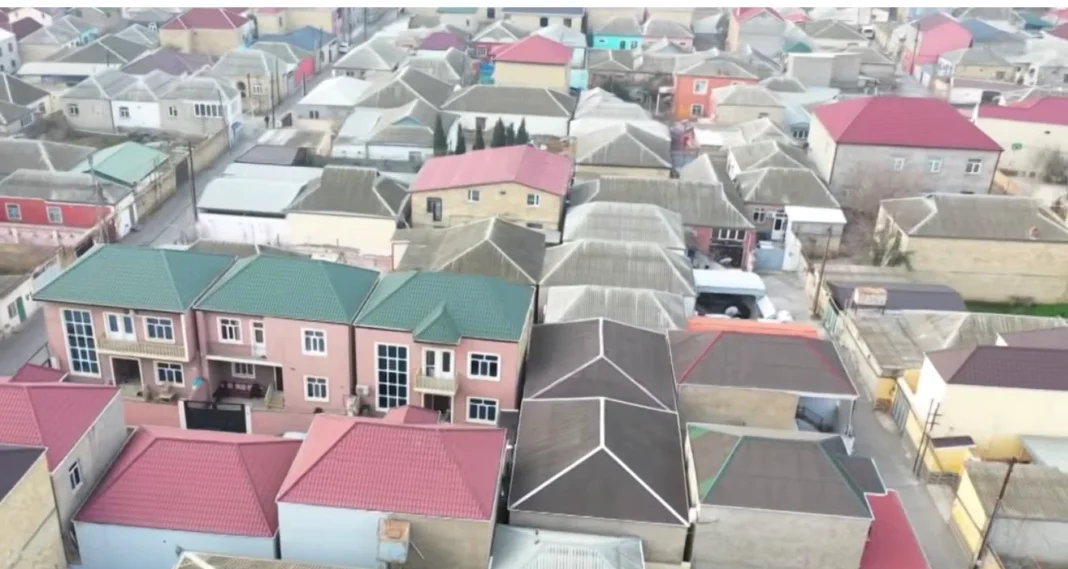
Nigar Alimova, chair of the State Cadastre and Registry of Real Estate, stated that despite recent efforts to formalize illegal construction, a significant number of homes remain outside the legal framework. While more than 4,600 unauthorized structures have been registered in recent years, entire neighborhoods in and around Baku still consist largely of undocumented housing.
According to Alimova, many of these buildings have official address registrations but lack formal ownership certificates, known locally as chykarysh. This legal gap creates ongoing uncertainty for residents and complicates property transactions, inheritance claims, and access to public services.
She noted that legislative changes adopted in 2023 tightened regulations on undocumented properties. Under the revised rules, buildings without ownership certificates are no longer eligible for basic utility connections, including electricity, gas, and water. Exceptions may apply in limited cases, such as properties located within designated protection zones, but these are subject to special legal regimes.
Alimova also confirmed that the deadline for legalizing non-residential structures has expired. Approximately 16,000 applications remain under review, but authorities do not plan to extend the presidential decree that allowed for temporary legalization measures.
“Citizens were given sufficient time and opportunity to submit applications,” she said. “However, the review process revealed that many structures were built on public land or within protected areas, making legalization legally impossible.”
In parallel, Azerbaijan has completed the rollout of a new digital property information system covering Baku, Sumgayit, the Absheron Peninsula, as well as the Khizi and Siyazan regions. The system enables fully digital inventory and registration of real estate assets in these areas, marking a shift toward centralized and standardized property records.
Officials say the digital transition is intended to improve transparency and reduce legal ambiguity, though the issue of large-scale undocumented housing remains a long-term challenge for urban planning and land regulation in the country.

