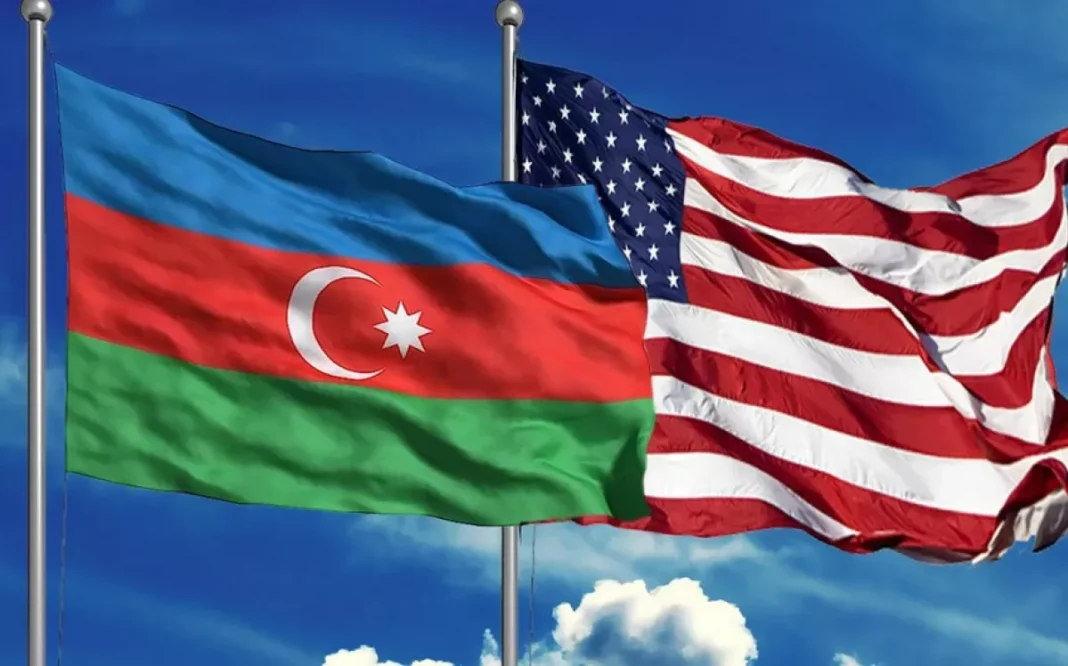
By Azerbaijan.US Editorial Board
For decades, the South Caucasus occupied the outer edges of Washington’s strategic imagination. It was a region filed under clichés – “complicated,” “frozen conflict,” “Russia’s backyard.” Policymakers nodded at the map, repeated the talking points, and moved on.
That era of strategic neglect is no longer tenable.
Azerbaijan – long viewed as a predictable, unassuming partner – is emerging as one of the most important stabilizers in a corridor the United States can no longer afford to ignore. That shift is not about sentiment or regional nostalgia. It is about energy security, supply chains, geopolitical balance, and the new fault lines that Russia’s invasion of Ukraine has forced the world to confront.
Energy Security After Illusions Collapsed
The war in Ukraine didn’t just upend borders. It exposed how fragile Europe had become under the weight of Russian energy dependence. Western capitals spent years assuming diversification was optional – until it was suddenly existential.
When Europe scrambled to replace Russian natural gas, it did not start from scratch.
It turned to Azerbaijan – a partner that had been delivering energy to Europe long before it was fashionable to talk about “energy independence.”
The Baku–Tbilisi–Ceyhan oil pipeline and the Southern Gas Corridor were not accidents of geography. They were deliberate geopolitical decisions, built through risk, capital, and a willingness to stand up to Moscow’s pressure. No state between China and Eastern Europe accomplished anything comparable. And Azerbaijan didn’t do it by exporting conflict or holding neighbors hostage; it did it by projecting stability.
In a region dominated by volatility, this alone makes Baku indispensable.
A Rare Strategic Constant in an Unstable Arc
Washington faces a stark reality across the Eurasian belt:
Russia is isolated and unpredictable.
Iran is adversarial and increasingly aggressive.
Turkey is a NATO ally but increasingly transactional.
Georgia’s political direction is uncertain.
Central Asia remains contested ground between Moscow and Beijing.
Across this diminishing list of reliable footholds, Azerbaijan stands out for three reasons Washington chronically undervalues:
Strategic independence – Baku operates on its own terms, not as anyone’s proxy.
Policy predictability – no sudden swings, no ideological zigzags.
Geoeconomic leverage – control of real infrastructure that matters to global powers.
This combination is extraordinarily rare. In a region defined by power vacuums, Azerbaijan is one of the few actors capable of resisting them.
The Middle Corridor: The West’s Overlooked Link to Eurasia
Long before the term “TRIPP corridor” entered the Washington vocabulary, Azerbaijan had already positioned itself as the backbone of the Middle Corridor – a trade route linking Central Asia to Europe without touching Russian or Iranian territory.
This is not an abstract map study. It has strategic consequences:
Every container that crosses the Caspian through Baku weakens Russia’s dominance over Eurasian trade routes.
Every logistics partnership with Kazakhstan, Uzbekistan, or Turkmenistan reduces China’s leverage over Central Asian infrastructure.
Every mile of railway modernized under Azerbaijani control creates a Western-aligned artery in a region traditionally defined by Russian coercion or Chinese financing.
The Middle Corridor is no longer a secondary route – it is becoming a geopolitical counterweight.
Quiet Diplomacy, Strong Results
American policymakers often focus on loud crises – protests, coups, collapses. Azerbaijan does not fit this narrative. Its diplomacy is deliberately understated:
no flamboyant ideological crusades,
no oscillating foreign-policy doctrines,
no sudden lurches designed to impress CNN or Twitter.
Baku prefers results. It builds alliances quietly, prioritizes infrastructure over speeches, and engages in long-term planning in a region that rarely rewards patience.
Ironically, that steadiness may be exactly why Washington underestimates it.
The Values Question – Addressed Honestly
A predictable objection in Washington concerns governance and human rights. Those debates are legitimate, and they will continue. But if the last four years have taught U.S. policymakers anything, it is that strategic partnership and domestic alignment are not the same thing.
The United States works with many states whose internal systems differ from its own when core interests align. And in the South Caucasus, the alignment with Azerbaijan on energy security, regional balance, and supply-chain access is unmistakably strong.
Ignoring a stabilizing partner because it does not fit an idealized governance template is not strategy – it is self-inflicted blindness.
Urgency the U.S. Has Not Yet Internalized
The real danger for Washington is not hostility – it is inattention.
If the U.S. wants:
non-Russian energy routes,
reliable access to Central Asia,
limits on Iranian reach,
a stable partner bordering Turkey,
alternatives to Chinese-controlled infrastructure,
and a functioning Eurasian supply-chain corridor –
then Azerbaijan is not optional.
It is central.
The strategic question is no longer whether Baku matters – it is whether Washington will recognize its significance before others fill the vacuum. Beijing already sees the opportunity. Moscow is trying to claw back influence. Tehran seeks leverage in the Caspian.
Geopolitical gravity does not wait for Washington to notice it.
A Final Point Washington Should Not Miss
A strong partnership with Azerbaijan is not a gift to Baku.
It is a rational investment in American security during the most fragile era Eurasia has seen since the collapse of the Soviet Union.
History is full of warnings about regions Washington ignored for too long.
The South Caucasus should not become another one.
The question is simple:
Will the United States engage with Azerbaijan now – or only after the cost of neglect becomes irreversible?