By Azerbaijan.US Editorial Board
In a world increasingly defined by prolonged conflicts and geopolitical fatigue, the South Caucasus has emerged as a rare case where diplomacy is beginning to replace confrontation. The recent reset in U.S.-Azerbaijan relations is not accidental. It reflects a broader shift in Washington’s approach-from ideological signaling back to strategic pragmatism.
For several years, bilateral relations suffered from a clear imbalance. Under the Biden administration, U.S. policy in the region was widely perceived in Baku as emotionally driven and disproportionately tilted toward Armenia. Azerbaijan, despite restoring its territorial integrity in line with international law, found itself facing political pressure rather than engagement. The result was predictable: trust eroded, dialogue stalled, and Washington’s influence diminished.
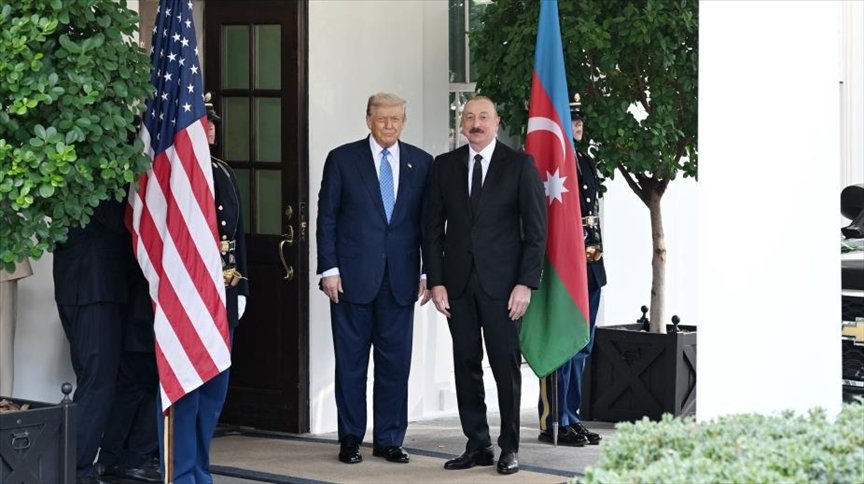
Donald Trump’s return to office altered that trajectory. The suspension of Section 907, renewed public recognition of President Ilham Aliyev as a key regional leader, and the resumption of direct political dialogue signaled a recalibration. This was not about personal rapport or symbolism-it was a recognition of realities Washington can no longer ignore.
Azerbaijan today is not merely a regional actor. It is a central pillar of Europe’s energy security, a critical link in East-West transport corridors, and a stabilizing force in a historically volatile region. Any serious discussion about connectivity, trade routes, or post-conflict normalization in the South Caucasus inevitably runs through Baku.
The visit of President Aliyev to Washington and the launch of a strategic partnership framework marked a turning point. For the first time in years, relations were framed not through moral posturing, but through mutual interests: security cooperation, economic connectivity, energy diversification, and regional stability.
Equally significant was the U.S. role in facilitating progress between Azerbaijan and Armenia. Washington’s mediation-focused on results rather than rhetoric-helped move the peace process forward, including concrete steps toward opening regional transport routes. This approach positioned the United States not as a partisan actor, but as a broker of workable agreements.
Critics often dismiss Trump’s foreign policy as performative or overly personalized. Yet in the South Caucasus, the outcome has been tangible. Reduced tension, revived dialogue, and a clearer strategic roadmap have replaced years of stagnation.
None of this suggests altruism. U.S. foreign policy remains interest-driven, as it always has been. But at this moment, American and Azerbaijani interests align more closely than they have in years. That alignment-rather than ideology-is what gives the current reset its durability.
The normalization of U.S.-Azerbaijan relations is not a diplomatic courtesy. It is a signal that the South Caucasus is re-entering global politics not as a conflict zone, but as a space of opportunity. And that shift may prove far more consequential than any statement or summit communiqué.

