Azerbaijan.US
Azerbaijani transport planners are considering the return of tram lines as part of a broader strategy to ease chronic traffic congestion in the capital, according to transport expert Rauf Aghamirzayev.
Speaking to local media, Aghamirzayev said congestion is an expected challenge for large cities and can only be addressed through a comprehensive, data-driven approach.
As part of that effort, Baku has developed a so-called “digital twin” of the city – a system that aggregates data from multiple sources to analyze traffic flows, simulate scenarios and support evidence-based decisions.
Short trips, heavy pressure
Studies show that a significant share of trips in Baku are short-distance journeys made by private cars. At the same time, an estimated 300,000 to 400,000 vehicles enter the city daily from surrounding areas, placing severe strain on the road network.
To counter this, authorities are expanding alternatives to private transport. Recent measures include dedicated bus lanes, micromobility corridors, and renewed attention to pedestrian infrastructure that had been outlined in state programs but delayed in implementation.
Rail-based transport seen as key solution
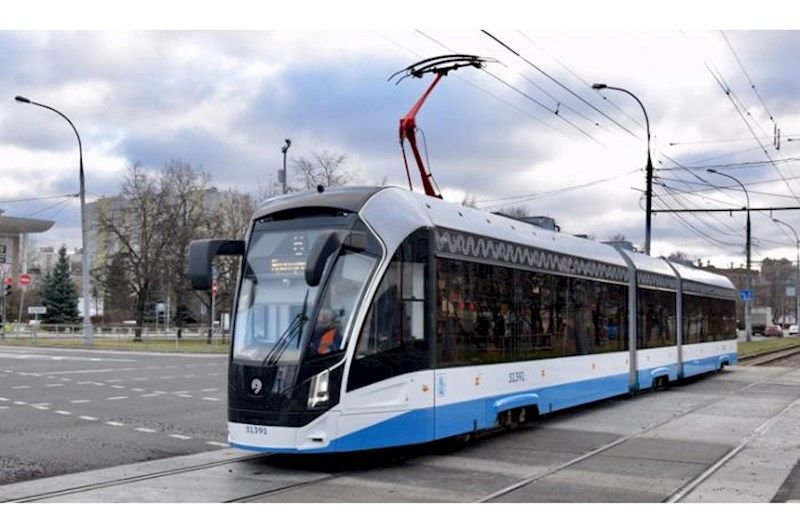
For medium- and long-term relief, Aghamirzayev emphasized the importance of rail-based transport. Alongside metro expansion and suburban electric trains that function as surface metro lines, planners are actively revisiting the idea of bringing back light-rail trams.
“The more developed rail transport becomes, the more realistic an alternative it offers to private cars,” he said. “Serious analytical work is underway, and I believe a final decision will be made in the coming years, followed by the launch of a concrete project.”
Preliminary routes under discussion include a corridor along Azadlig Avenue, connecting the 28 May area with Binagadi, Mehdiabad and Pirshagi stations, as well as a line toward the Sea Breeze residential area. Further extensions could follow at later stages.
An active construction year ahead
Aghamirzayev noted that 2026 is expected to be an active year for transport construction, particularly in the metro sector. A separate program has also been announced for railways, with large-scale rehabilitation works set to begin soon.
According to the expert, only after viable public transport alternatives are fully established will the city be able to significantly reduce traffic congestion and curb reliance on private cars.

