Analysis by Farhad Mammadov (@mneniyefm)
The latest developments in the Middle East – particularly Azerbaijan’s involvement in two key cases, Syria and the Cairo Peace Summit on Gaza – have reignited debate over how far Baku should go in shaping its regional presence.
The Middle East today remains a chessboard of conflicts and shifting alliances – from proxy wars to ideological rifts and collapsed states restructured by external powers.
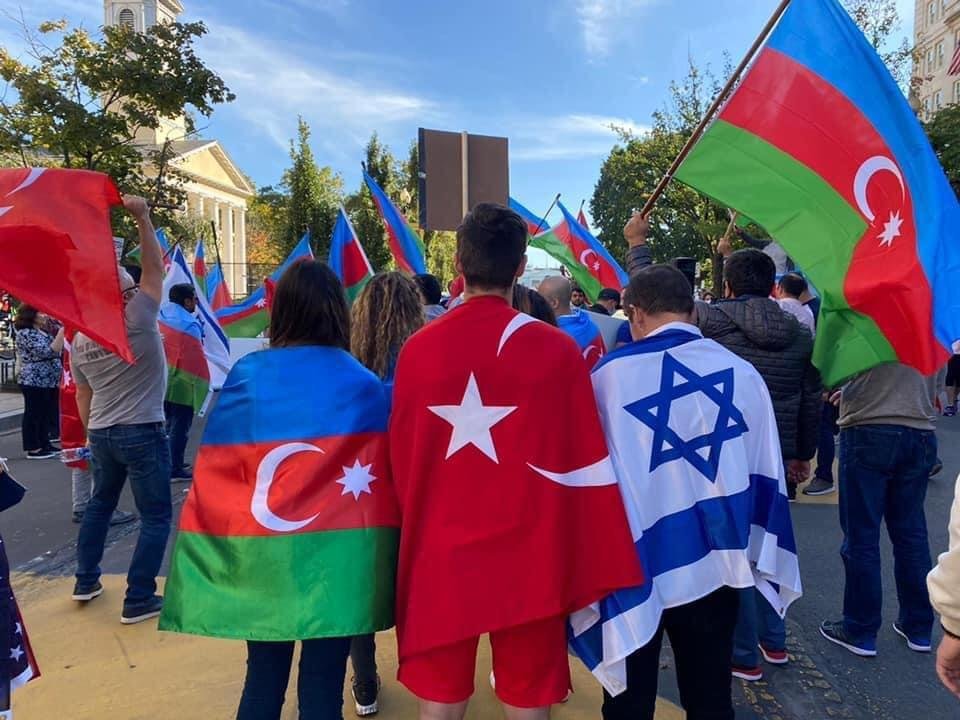
Amid this complexity, Azerbaijan’s primary concern is clear: preventing a direct clash between its ally Turkey and strategic partner Israel.
Between Diplomacy and Deployment
President Ilham Aliyev has repeatedly emphasized Baku’s preference for dialogue, suggesting that Azerbaijan could serve as a platform for mediation between conflicting regional actors.
Yet, recent tensions have raised the stakes: after years of parallel involvement in Syria, the risk of direct military contact between Turkish and Israeli forces is no longer theoretical.
As discussions advance on a multinational peacekeeping mission in Gaza, reports in global media suggest that Turkey and Azerbaijan – alongside Indonesia and Bangladesh – could be among the nations considered for participation.
A Delicate Equation
For Baku, this poses a complex strategic dilemma. Israel strongly opposes the presence of Turkish troops in Gaza, even under a peacekeeping mandate, and any joint deployment could place Azerbaijan in an uneasy position – caught between two critical partners. The risk of confrontation, even symbolic, could ripple across the region.
Meanwhile, the so-called Trump Peace Plan remains under review, with ongoing talks on Gaza’s post-conflict governance, disarmament of Hamas, and a potential transition from a mixed security contingent to a local police force.
Calculated Caution
For Azerbaijan to make a decision, officials in Baku would require clear U.S. guarantees, transparent mission parameters, and defined responsibilities for any potential deployment.
While staying on the sidelines appears safer, avoiding involvement altogether could also weaken Azerbaijan’s regional leverage should tensions between Turkey and Israel escalate.
In this context, Baku’s stance aligns closely with Washington’s, underscoring the growing importance of U.S.-Azerbaijani coordination – a dynamic reinforced by the recent visit of Admiral Brad Cooper to Baku.
A Moment of Strategic Patience
The world has entered a phase without fixed rules, where negotiation among stakeholders defines every outcome. For Azerbaijan, the question is not merely whether to join a mission in Gaza – but how to balance diplomacy and deterrence in a region where every move has consequences.
For now, there is no definitive answer. Talks continue, and the framework for peace – like the region itself – remains under construction.