By Azerbaijan.US Editorial Board
For more than three decades, U.S. policy toward Azerbaijan has been held hostage by a relic of the early 1990 – Section 907 of the FREEDOM Support Act, a law written in the heat of the first Karabakh war and shaped by one of the most powerful diaspora lobbies in Washington.
What began as an emotional response to a conflict is now an obstacle to American strategic interests, European energy security, and the political stability of the South Caucasus.
A recent Forbes article made one truth undeniable: the world has changed.
Section 907 has not.
A Law Frozen in Time
When Congress adopted Section 907 in 1992, the Soviet Union had barely collapsed. Washington had limited information, Armenia skillfully used its diaspora to dominate the narrative, and Azerbaijan was emerging from internal chaos and military defeat.
But history did not stop in 1994.
Azerbaijan rebuilt its statehood
It became a responsible energy partner to Europe and the U.S.
It cooperated with NATO in Afghanistan and Iraq
It supported U.S. counter-terrorism globally
It restored sovereignty over its internationally recognized territories
Yet Section 907 remained – waived year after year, but never repealed.
Why?
Not because it serves U.S. interests, but because an outdated law gives Armenia’s lobby predictable leverage.
The End of the Karabakh Conflict Removes Section 907’s Only Justification
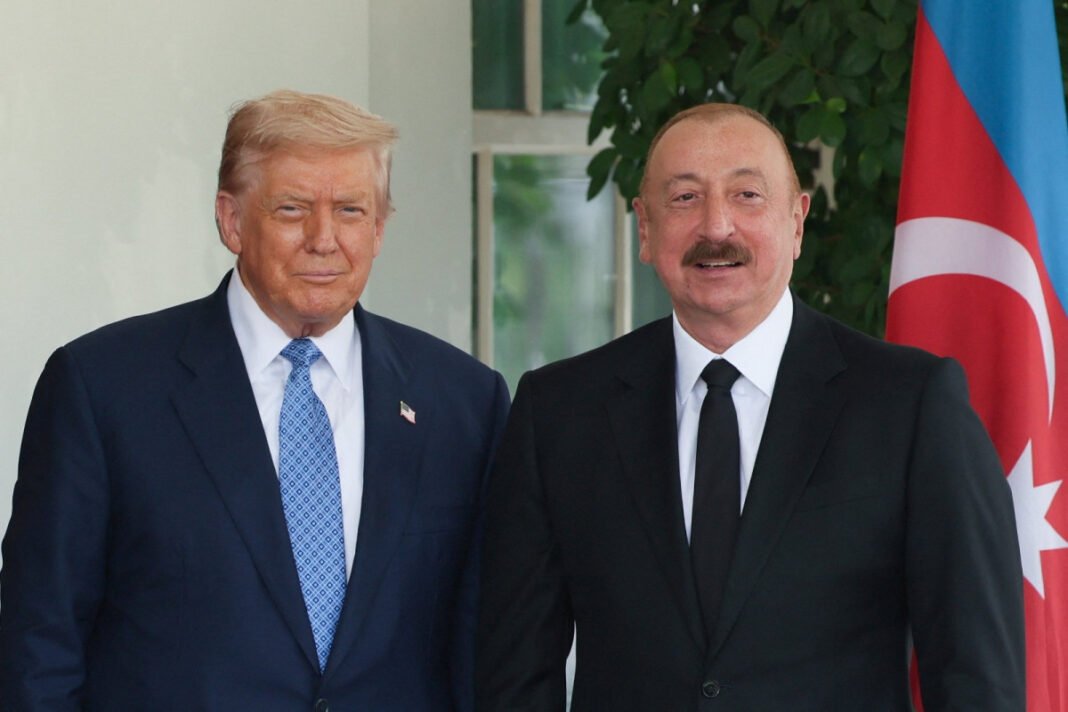
For the first time in 30 years, Azerbaijan and Armenia are negotiating peace without intermediaries. The Washington summit in August, where President Trump hosted Presidents Aliyev and Pashinyan, was a diplomatic breakthrough:
Both sides signed a declaration ending the conflict
The U.S. affirmed the legitimacy of Azerbaijan’s sovereignty
Armenia accepted the new regional reality
Washington committed to long-term engagement
The Forbes article correctly notes that waiving Section 907 paved the way for this diplomatic achievement. Maintaining or expanding cooperation requires removing legal obstacles – not re-weaponizing a 1992 statute for political theatrics.
TRIPP: A Century-Long Strategic Corridor for America
The unveiling of the Trump Route for International Peace and Prosperity (TRIPP) marks the most ambitious U.S.-backed infrastructure project in the region since the Baku–Tbilisi–Ceyhan pipeline.
Under TRIPP:
The U.S. receives 99-year exclusive rights to operate transport and energy corridors across Azerbaijan and Armenia
Washington can build rail, fiber optics, gas, and oil lines
American companies gain first access to Eurasian transit routes
Regional credit ratings rose immediately after signing
This is the type of geopolitical advantage no superpower should willingly give up.
And yet, Section 907 remains the single legal mechanism capable of undermining it.
Azerbaijan Is Not Just a Partner – It Is a Strategic Anchor
The U.S. does not have many reliable entry points into Eurasia. Azerbaijan is one of them.
Energy
Azerbaijan is:
a top energy supplier to Europe
a leader in the Southern Gas Corridor
a producer with one of the world’s highest energy self-sufficiency ratios
Ignoring this reality would mean ceding influence to Russia, Iran, or China.
Rare Earths
As the U.S. and EU scramble to break China’s monopoly on rare earth elements, Azerbaijan’s REE potential has become critical. Few countries offer Washington both political stability and access to such resources.
Geopolitical Balance
Azerbaijan is uniquely positioned:
independent from Moscow
economically integrated with Europe
mistrustful of Tehran’s radicalism
cautious toward Beijing’s ambitions
cooperative with Washington and NATO
This is the profile of a partner-not a country to be constrained by obsolete legislative punishment.
The Armenian Narrative Cannot Define U.S. Strategy Forever
Armenia has long relied on the “victimhood narrative” in Washington.
But the South Caucasus reality has shifted fundamentally:
Armenia lost the war
Armenia dismantled the separatist regime in Karabakh
Armenia now signals readiness for normalized relations
Armenia seeks access to Azerbaijan’s markets and energy transit
The peace process is driven by global actors, not diaspora groups
It makes no sense for the U.S. to cling to a policy shaped by a narrative that even Armenia itself has moved beyond.
Repealing Section 907 Is Not a Gift – It Is a Strategic Correction
The Forbes piece is right to call for a full repeal.
Doing so would:
strengthen U.S.-Azerbaijan cooperation
prevent future lobbying maneuvers from weaponizing the law
secure TRIPP’s implementation
open opportunities for American companies in a fast-developing region
undermine Russia’s and Iran’s influence
reduce EU dependency on hostile suppliers
support long-term peace between Armenia and Azerbaijan
In short, repealing Section 907 is not about rewarding Azerbaijan.
It is about rewarding American interests.
Azerbaijan Has Earned the World’s Respect – Washington Should Recognize That
The last three decades proved something indispensable:
Azerbaijan is one of the few post-Soviet states that demonstrated resilience, modernization, economic growth, energy leadership, and willingness to work with the West.
It is time for U.S. policy to reflect this reality.