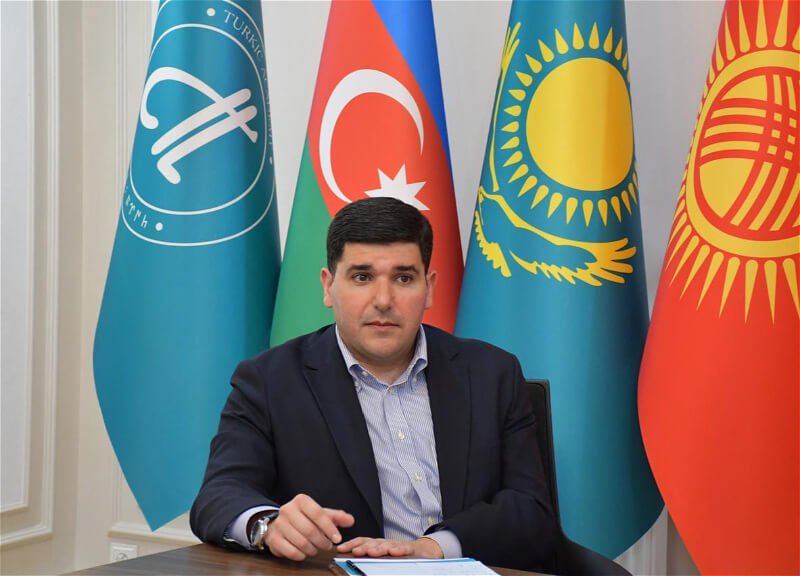
Analysis by Farhad Mammadov (@mneniyefm)
The long-awaited reopening of transport links across the South Caucasus is no longer just a regional infrastructure project – it has become a geopolitical test of who truly shapes the region’s future: Azerbaijan, Armenia, Turkey, the United States, or the European Union.
One of the key outcomes of the Joint Declaration signed in Washington by Presidents Ilham Aliyev and Nikol Pashinyan, under the witness of U.S. President Donald Trump, was a commitment to unblock regional communications, starting with a single strategic route to Nakhchivan – the TRIPP corridor.
Azerbaijan Builds, Armenia Negotiates
While Armenia debates logistics, Azerbaijan is building its section of the railway with its own funds – connecting liberated territories directly to the Armenian border. The final stage is underway. Beyond that, work continues to modernize the Nakhchivan railway and connect it to Turkey through the new Kars–Nakhchivan line, construction of which has already begun and is expected to take four to five years.
Armenia, for its part, has sovereignly agreed to guarantee an unhindered passage through its territory toward Nakhchivan. The route’s operational management will be handled by a U.S.-based company, though talks between Yerevan and Washington have slowed due to the ongoing government shutdown in the U.S.
Who Will Pay for TRIPP?
The estimated cost of the TRIPP project is around $300 million.
Of that, $140 million has already been reserved by the United States, but the remaining $160 million is still unfunded. Yerevan, unable to finance the project alone, has turned its gaze toward the European Union and international financial institutions, hoping Brussels will step in.
Azerbaijan, too, has called on the EU to invest – especially in modernizing the Nakhchivan railway, a key component of the corridor. The recent visit of EU Special Representative for the South Caucasus Clare Grono to Nakhchivan was widely seen as a signal of growing European interest – but so far, no concrete commitments have followed.
The EU Talks Strategy, Others Deliver Results
Brussels continues to speak of its Global Gateway initiative and EU–Central Asia summits, emphasizing connectivity and sustainable trade. Yet in reality, the EU has not clarified where, how, or how much it plans to invest in the South Caucasus.
The resources are there – the political will is not.
While Azerbaijan and Turkey are actively building, and Washington coordinates technical oversight, the EU remains stuck in consultation mode.
The Price of European Hesitation
This strategic indecision risks undermining Europe’s influence in the region.
As Baku has made increasingly clear, if Brussels fails to engage meaningfully in post-conflict reconstruction, demining, and regional infrastructure, Azerbaijan will turn elsewhere – to partners who move faster and speak less.
The choice before Europe is simple: either become an active stakeholder in shaping the new South Caucasus, or watch others redraw its map without it.
If the European Union truly wants to be seen as a global player rather than a global commentator, the time for declarations is over. It’s time to invest – or be left behind.