Azerbaijan.US
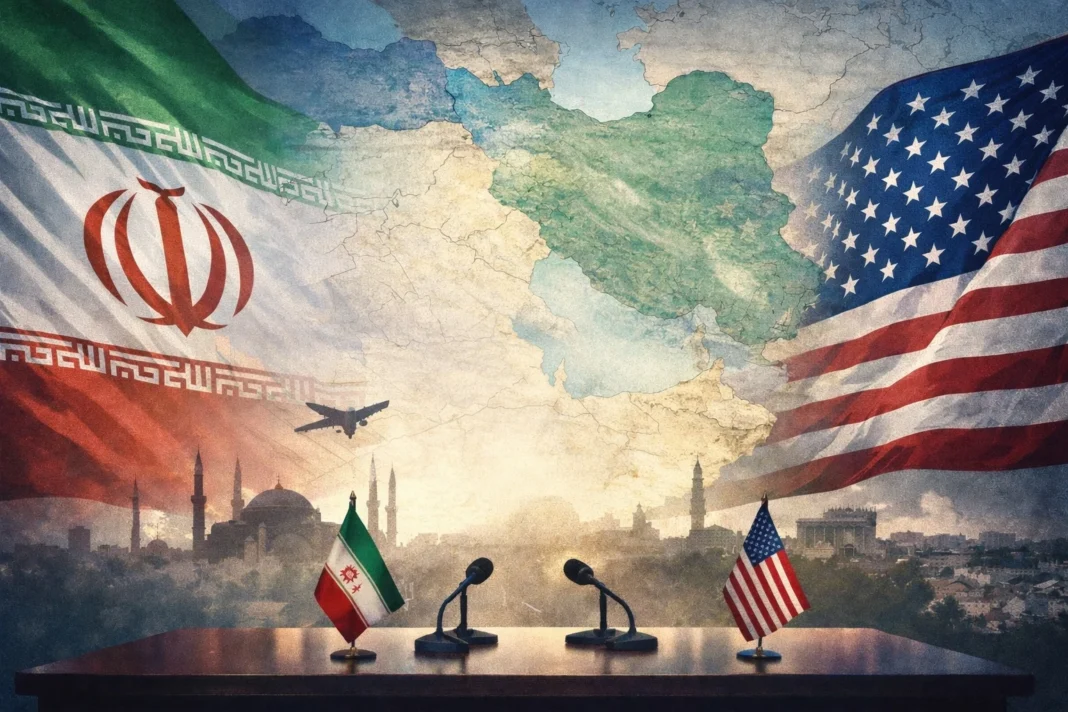
Iran has sent an unexpected diplomatic signal to Washington, indicating that the door to negotiations is no longer closed. President Masoud Pezeshkian announced that he has formally instructed Iran’s Foreign Ministry to begin preparations for possible talks with the United States.
The move comes after months of heightened rhetoric and escalating tensions, and is being interpreted by analysts as a meaningful change in tone rather than a symbolic gesture. In a statement published on social media, Pezeshkian said the directive was issued in response to a proposal from the U.S. president, emphasizing that any dialogue must be conducted “on the basis of fairness, mutual respect, and national interests,” without threats or coercion.
The language marks a clear departure from Tehran’s recent hardline messaging. While Iranian officials had previously framed engagement with Washington as futile or dangerous, the president’s remarks now suggest that diplomacy is once again being treated as a viable option.
Istanbul as a potential venue
According to regional diplomatic sources, preliminary contacts could take place in Istanbul, with Turkey emerging as a key facilitator. Tehran is expected to be represented by Abbas Araghchi, while the U.S. side may be led by President Donald Trump’s special envoy Steve Witkoff.
Turkey’s role is not accidental. Ankara maintains active channels with both Tehran and Washington and has increasingly positioned itself as a regional mediator. In diplomatic circles, there is also speculation that Qatar and Egypt could join the process, with a broader multilateral format potentially involving Saudi Arabia at a later stage.
Red lines remain firmly in place
Despite the softer rhetoric, Iranian officials have made clear that core positions remain unchanged. Ali Shamkhani, adviser to Iran’s Supreme Leader, reiterated that Tehran sees no justification for removing enriched uranium from the country, underscoring that Iran does not intend to fully abandon its nuclear program.
At most, Iranian sources suggest Tehran could consider reducing uranium enrichment levels from 60 percent to 20 percent – but only in exchange for tangible concessions from Washington. Proposals circulating in international policy circles about transferring Iran’s uranium stockpiles to a third country, including Turkey, remain firmly rejected by Tehran.
Such scenarios also raise concerns in Ankara. Turkish analysts warn that hosting or transporting Iranian nuclear materials could pose long-term security and legal risks, making Turkey cautious about any role that goes beyond mediation.
Diplomacy under military pressure
The diplomatic opening is unfolding alongside continued military signaling. President Trump recently stated that U.S. naval assets are moving closer to Iran, reinforcing Washington’s strategy of combining diplomatic outreach with deterrence.
That tension was underscored by a recent incident in the Arabian Sea, where U.S. forces shot down an Iranian drone that approached the aircraft carrier Abraham Lincoln. The Pentagon confirmed the incident, though the White House stressed that diplomatic options remain on the table.
Domestic pressure inside Iran
Inside Iran, the stakes are high. According to Reuters, ongoing economic strain and sporadic protests have made the prospect of military escalation particularly risky for Tehran. Analysts note that renewed conflict could trigger broader internal unrest, turning negotiations into a matter of domestic stability as much as foreign policy.
Against this backdrop, Pezeshkian’s directive is increasingly viewed as a calculated attempt to ease external pressure while managing internal vulnerabilities.
Whether this diplomatic opening leads to a substantive agreement or merely buys time remains uncertain. What is clear, however, is that Tehran has adjusted its tone – and in the Middle East’s volatile landscape, even a shift in language can carry strategic weight.

