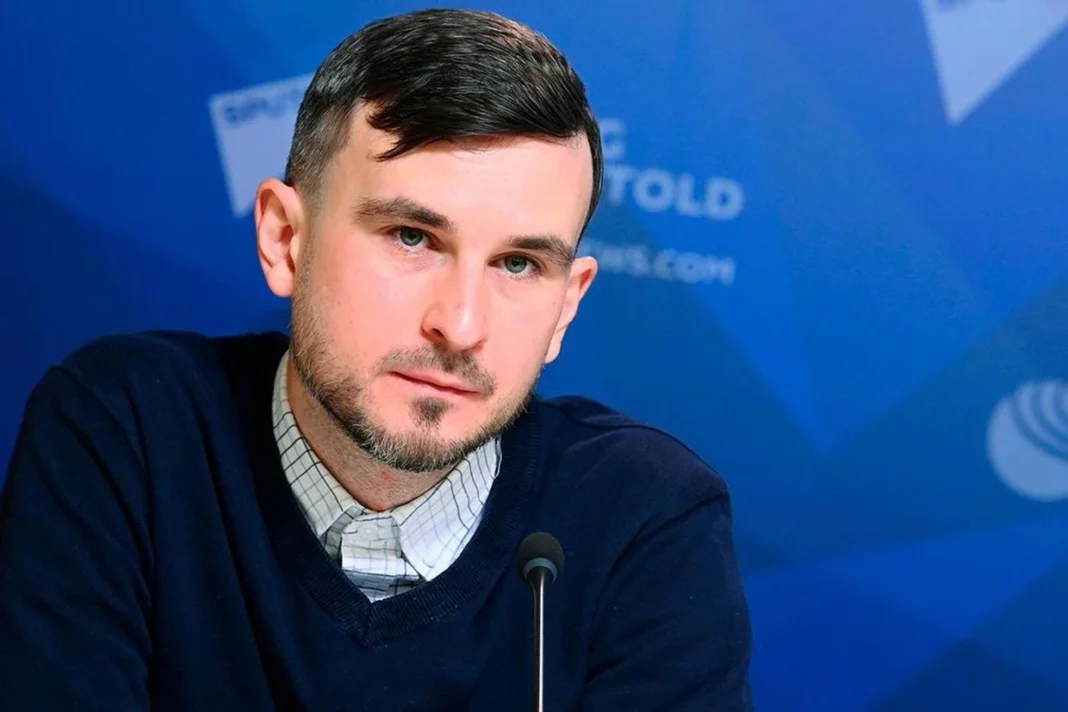
Igor Kartavykh, executive director and editor-in-chief of Sputnik Azerbaijan, has arrived in Moscow after being released from detention in Baku, according to RIA Novosti and other Russian media reports.
Speaking at Moscow’s Vnukovo airport, Kartavykh said:
“I feel fine – I’m glad to be back home.”
Stay Ahead with Azerbaijan.usGet exclusive translations, top stories, and analysis — straight to your inbox.
Why Was He Arrested?
Kartavykh and several of his colleagues were detained in late June 2025, following a raid on the Sputnik Azerbaijan offices in Baku. Azerbaijani authorities accused the staff of fraud, illegal business activity and money-laundering, invoking multiple articles of the Azerbaijani Criminal Code.
A court in Baku’s Khatai District initially ordered four months of pre-trial detention for the suspects.
The arrests came amidst a deepening diplomatic rift between Azerbaijan and Russia, triggered by a December 25 2024 crash of an Azerbaijan Airlines jet near Aktau, Kazakhstan, in which 38 people died.
Azerbaijan accused Russian air-defence systems of being responsible. The Kremlin’s subsequent acknowledgment of responsibility and promise of compensation followed only after Moscow-Baku relations worsened.
Release and Return
On October 9 2025, Presidents Vladimir Putin and Ilham Aliyev held talks in Dushanbe, Tajikistan. The release of Kartavykh was quietly confirmed just days later. According to Reuters, his move from prison to house arrest and subsequent travel back to Russia was linked to the bilateral thaw.
A Kremlin aide, Yury Ushakov, told Kommersant that Kartavykh’s release was coordinated by presidential aides on both sides and came in exchange for an Azerbaijani national held in Russia.
Broader Implications
Kartavykh’s case is widely seen as part of a larger diplomatic game between Moscow and Baku. Analysts say the arrests and releases mirror tit-for-tat detentions and exchanges of citizens that escalate when bilateral ties sour. One expert described the media arrests as “a signal of leverage” used by both governments.
The fact that a Russian state-media executive was detained in Azerbaijan – and released only after a summit-level encounter – raises questions about media freedom and geopolitical pressure. For Azerbaijan, the case illustrates how foreign media operations can become entangled in diplomatic spats. For Russia, the release offers a visible win in a period of recovering ties.
What’s Next?
While Kartavykh is now back in Russia, the legal status of the charges against him remains unclear. Azerbaijan’s Prosecutor General’s Office has not formally closed the case.
Observers note that the wider context – including Russia-Azerbaijan cooperation in energy and regional security – may have influenced his release more than legal processes.
For Russia-Azerbaijan relations, the swap underscores a shift: from public recrimination to discreet negotiation. Whether this marks a lasting reset, or simply a pause in tension, remains to be seen.

