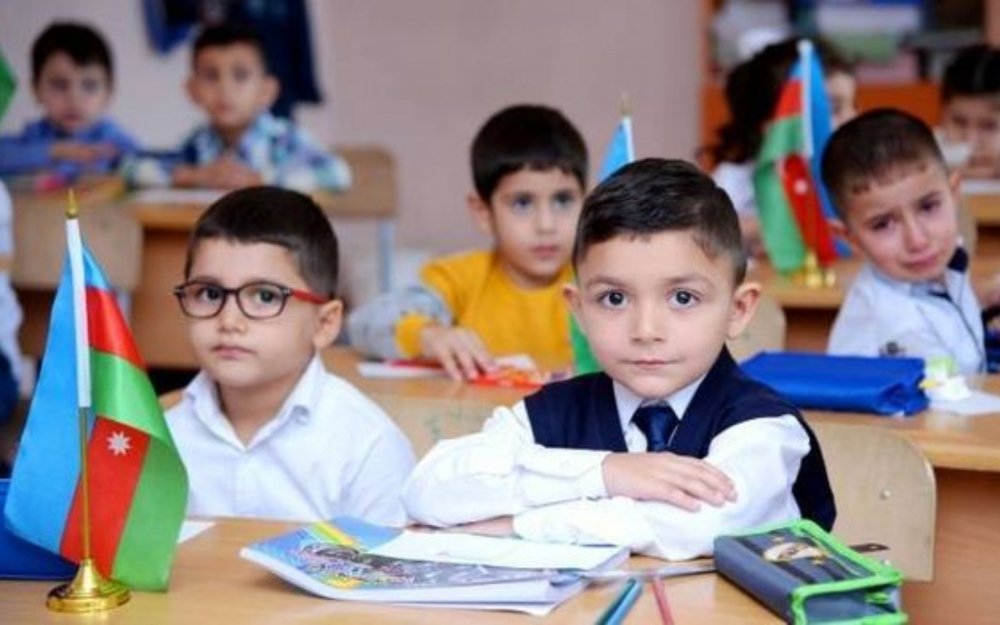
As of the 2025 academic year, Azerbaijan’s general education system includes 1,619,335 students, with approximately 100,000 receiving instruction in Russian. This accounts for 6.18% of the total student population, according to data reported by APA.
Interestingly, the number of ethnic Russians living in Azerbaijan is estimated at just 71,000—suggesting that the majority of Russian-language students are ethnic Azerbaijanis. Currently, 17 schools in Azerbaijan offer full education in Russian, and 340 others have Russian-language streams.
Double Standards in Language Education?
While Azerbaijan accommodates Russian-language instruction, comparisons with Russia and Iran highlight a striking asymmetry. Despite an estimated three million Azerbaijanis living in Russia, there are no schools offering education in the Azerbaijani language. Similarly, in Iran, where estimates suggest up to 40 million ethnic Azerbaijanis reside, mother-tongue education in Azerbaijani is virtually non-existent. These realities are often criticized as violations of cultural and linguistic rights.
A Sensitive Balancing Act
Azerbaijani MP Jeyhun Mammadov cautions against drawing direct comparisons with Russia or Iran, stating that Azerbaijan is a tolerant, multicultural nation:
“We cannot shut down all Russian-language schools overnight. The Ministry of Science and Education has clarified this. The number of Russian-speaking students isn’t overwhelming. Besides, in today’s information warfare, we need professionals who understand and speak Russian fluently.”
Mammadov added that a sudden closure of Russian-language schools could leave many educators unemployed and disrupt the education system:
“This is why a gradual phase-out is more appropriate. Over time, interest in these schools will naturally decline. For now, we must remain patient and stand with our state. Our focus should be on protecting the rights of Azerbaijanis in Russia and countering the increasing pressure they face.”
Why Do Azerbaijani Parents Choose Russian Schools?
Education expert Sona Aliyeva points out that many ethnic Azerbaijani families voluntarily opt for Russian-language education, citing regional and global relevance of the Russian language and better career prospects:
“There’s a perception that knowing Russian gives students a competitive edge both locally and internationally. The fact that Azerbaijan has 17 fully Russian-language schools and 340 schools with Russian sections reflects a liberal and tolerant language policy.”
By contrast, Russia and Iran offer a much more restrictive approach to minority language education. This suggests that Azerbaijan’s policy is relatively inclusive and open, while in countries like Russia and Iran, assimilationist strategies and centralized language policies dominate.
Long-Term Outlook
Aliyeva forecasts that the share of students in Russian-language education in Azerbaijan—currently around 6%—will likely remain stable or slightly grow in the near term. However, she notes that in the long run, as national identity strengthens and Azerbaijani language policy deepens, demand for Russian-language education may gradually decline.
Still, a complete shutdown of Russian-language schools is not advised, she argues:
“These institutions help preserve the rights of the small Russian community and support Azerbaijan’s long-standing multilingual education tradition. Meanwhile, the absence of Azerbaijani-language schools in Russia and Iran—despite the large Azerbaijani populations there—reflects a lack of legal and institutional support for minority languages.”
Conclusion
Azerbaijan’s current model reflects a delicate balance—it protects national language priorities while demonstrating openness and pluralism. In a region where minority language rights are often restricted, Azerbaijan’s approach stands out as relatively tolerant, even as calls grow to ensure Azerbaijani remains at the core of national identity.
🛈 Notably, Azerbaijan has no schools offering instruction in Persian or other unofficial languages.

