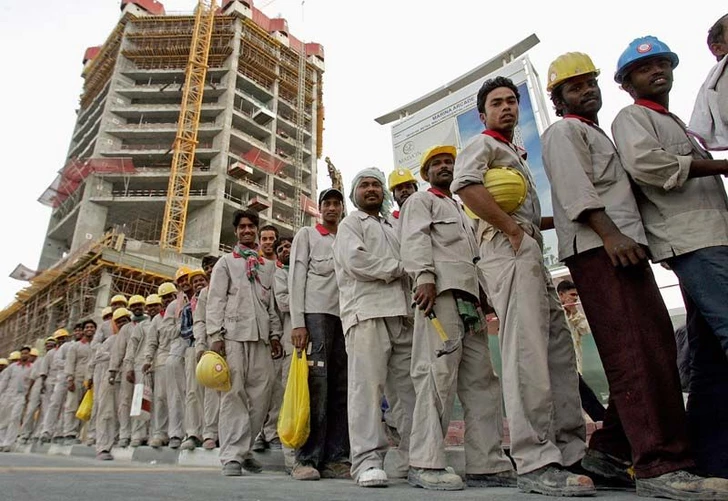
Moscow, July 9 — Russia is considering bringing in up to 1 million skilled workers from India by the end of the year to address a growing shortage of qualified labor in industrial sectors, according to Andrey Besedin, head of the Ural Chamber of Commerce and Industry.
In an interview with regional outlet EAN, Besedin said that India is expected to send a significant number of specialists to various Russian regions, including the Sverdlovsk region, where a new Indian consulate is opening in Yekaterinburg to support the initiative.
“From what I’ve heard from my Indian colleagues, 1 million specialists may come to Russia, including the Sverdlovsk region, by the end of the year,” Besedin stated.
Stay Ahead with Azerbaijan.usGet exclusive translations, top stories, and analysis — straight to your inbox.
He added that the Russian industrial sector is under pressure to scale up production, but is constrained by a shrinking labor pool. A portion of the workforce has been deployed in the military operation in Ukraine, and young Russians are increasingly reluctant to work in factories — a trend Besedin attributes to a long-standing “ideological mistake” in national labor policy.
In addition to India, talks are also underway with Sri Lanka and North Korea to explore labor migration agreements. However, Besedin acknowledged that such partnerships could be “more complex.”
The incoming workers are expected to be placed primarily in metallurgy and machinery manufacturing, sectors that require highly skilled technical labor.
Skepticism from Lawmakers
However, the ambitious scale of the plan has drawn criticism from lawmakers in Moscow. Yaroslav Nilov, Chair of the State Duma Committee on Labor and Social Policy, questioned the feasibility of the proposal.
“The quotas for foreign labor are far below 1 million. These numbers seem odd,” Nilov told NEWS.ru, though he acknowledged that Russia does face a pressing need to supplement its workforce with foreign labor.
The plan reflects Russia’s broader challenge in sustaining industrial productivity amid demographic decline, military mobilization, and a tight domestic labor market.
If implemented, the move could mark one of the largest bilateral labor migration initiatives between Russia and India in recent history.