As Azerbaijan and Armenia begin shaping new formats of cooperation in the South Caucasus, Moscow has again accused the West of meddling in the region.
First Deputy Chairman of the Russian Duma’s CIS Affairs Committee Viktor Vodolatsky claimed that the European Union and European intelligence services are allegedly seeking to “undermine the statehood” of Azerbaijan, Armenia, and Georgia – and to “dissolve their historic roots” in order to turn them into a “herd” managed from abroad.
Such rhetoric, however, is difficult to view outside the broader political context.
Yes, relations between Baku and Brussels have at times been uneven – European institutions have occasionally used sharp language in their assessments. But does that truly mean the EU seeks to weaken Azerbaijan’s sovereignty? Or are these accusations another attempt by Russia – now watching its influence shrink – to sow doubt as it recedes from the region?
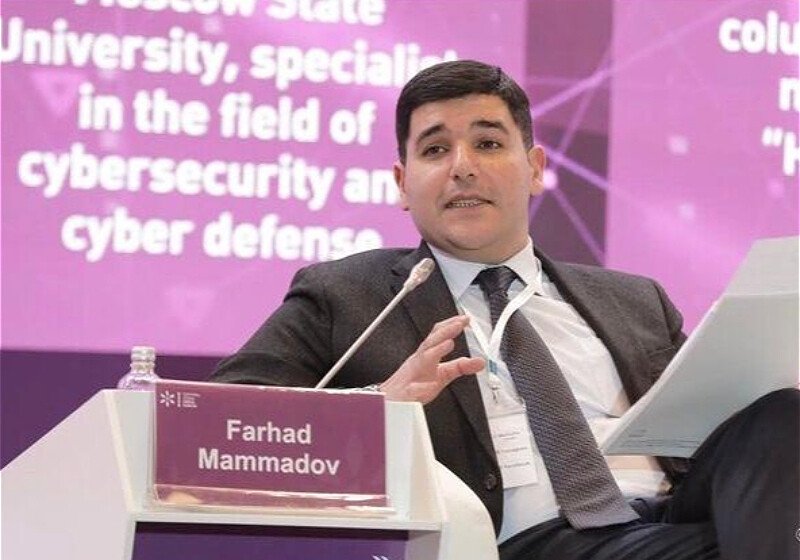
Political analyst Farhad Mammadov, commenting for Minval Politika, says these remarks reflect Russia’s observer status in the new geopolitical order rather than that of an active participant.
“After the Washington meeting – where Presidents Ilham Aliyev and Nikol Pashinyan, with U.S. President Donald Trump’s mediation, issued a joint statement – a new phase of Azerbaijani-Armenian engagement began,” Mammadov noted. “It is essentially a bilateral format in which the United States participates only in one element – the project to reopen communications.”
According to him, this framework is based on direct dialogue between the two countries, without assigning any external power – including the U.S. – the role of arbiter or guarantor.
Mammadov emphasized that the European Union also plays a role, but on a different level: as a diplomatic and economic partner interested in stability. The EU, he said, does not seek to replace regional actors but rather to support the de facto peace until it can be formalized de jure through a signed treaty.
“The EU has both the resources and the interest to assist in maintaining stability,” he explained. “Its engagement is not destructive but complementary to the peace process.”
The analyst noted that Moscow’s accusations against the West intensified only after Russia found itself excluded from the main negotiation platforms.
Today, mediation between Baku and Yerevan belongs to other players, while Russia lacks a clear or attractive strategy that could meet the expectations of either side.
“Russia can neither offer anything substantive nor clearly articulate a position that would interest Azerbaijan or Armenia,” Mammadov said.
He stressed that Azerbaijan has enough sovereignty to manage the involvement of external actors on its own terms – both in its domestic policy and in the peace process with Armenia.
“Baku itself moderates international engagement. Neither the EU nor the U.S. can impose scenarios that contradict Azerbaijan’s national interests.
So claims about threats to its statehood are simply not serious,” he concluded.
Ultimately, talk of Western “subversion” in the South Caucasus looks less like a security warning and more like a rhetorical substitute for Russia’s waning influence.
In reality, regional dynamics are far more complex – and demand sober analysis, not slogans.

