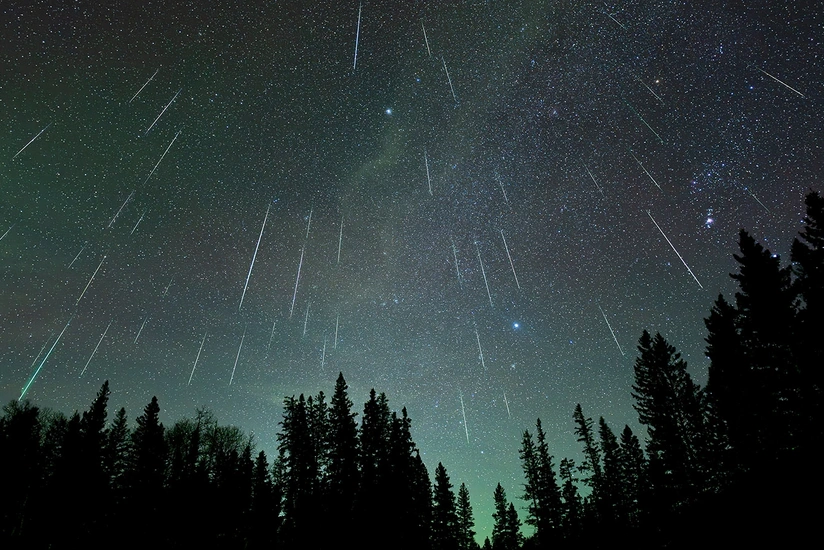
One of the brightest winter meteor showers – the Geminids – began its activity today, December 4, and will continue until December 17. According to the Astrophysics Department of Baku State University, the shower will reach its peak on the night of December 13–14.
The Geminids are named after the constellation Gemini, where their radiant – the point from which the meteors appear to originate – is located.
In Baku, the shower will be visible from 18:18 to 07:22. The most favorable time to observe it will be around 02:30 on December 14, when the radiant climbs to 82° above the horizon. Under clear skies, viewers in the capital may see up to 119 meteors per hour.
This year’s conditions are especially good: the peak coincides with the new moon, meaning moonlight will not interfere with visibility. The meteors will enter Earth’s atmosphere at roughly 35 km/s, resulting in longer burn times and a higher number of bright fireballs compared to many other meteor showers.
Unlike most major meteor showers, the Geminids do not originate from a comet. Instead, they come from the asteroid 3200 Phaethon, discovered in 1983. Phaethon travels as close as 20 million kilometers to the Sun, heating up to about 700°C. This intense heat causes its surface material to fracture and shed dust. When Earth passes through this dense dust trail each year, the Geminid meteor shower occurs.
The intensity of the Geminids has increased significantly over the past five decades. In the early 1900s, only about 20 meteors per hour were recorded – today, the number can reach 120 per hour, due to the growing density of Phaethon’s dust stream.