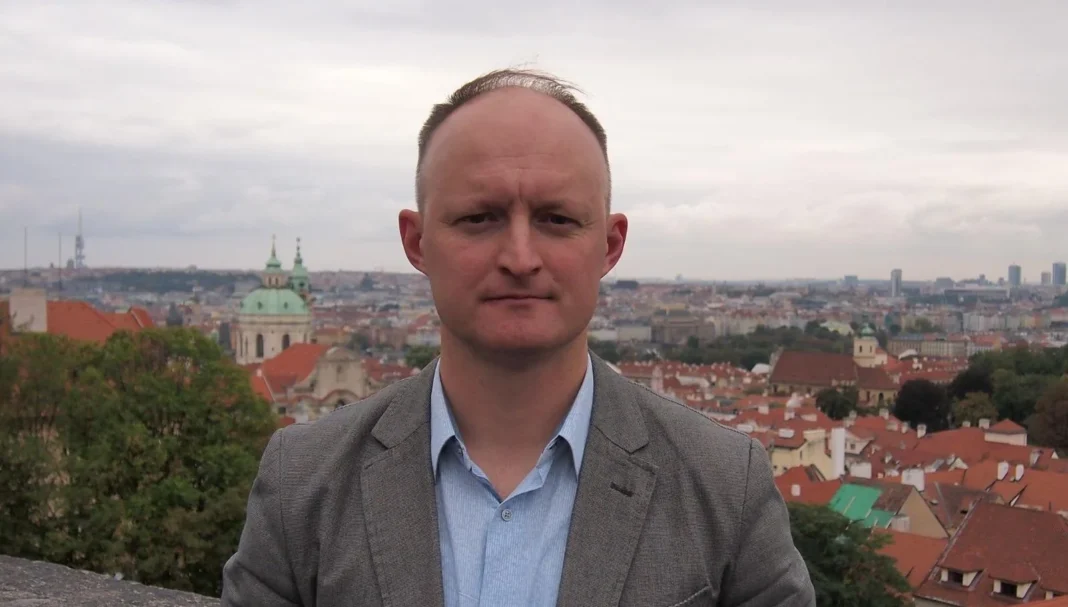
Political analyst Vladimir Kopchak says Vladimir Putin needed his meeting with Ilham Aliyev in Dushanbe more than Baku did, and the optics showed it.
Speaking on Novosti Kavkaza’s weekly wrap, Kopchak argued that the Kremlin now treats Azerbaijan as its most valuable asset in the South Caucasus while assuming Armenia “has nowhere to go.”
Dushanbe, not Moscow or Baku, became the venue of choice because Putin’s travel options have narrowed; a neutral stage also muted domestic and regional sensitivities.
The conversation, he noted, revolved around the downing of the Azerbaijani passenger jet-an episode that continues to define public memory of the crisis. Putin’s public line cast the moment as a reminder that he had already apologized late last year rather than a fresh expression of remorse.
For a global audience, Kopchak said, the distinction collapsed into a single headline-“Putin apologized”-and the information battle was lost.
He claimed Baku holds technical evidence pointing to a Pantsir-S1 strike and that the crash site in Kazakhstan made a cover-up impossible, not least because local footage and rapid access by outside specialists undercut Moscow’s early narratives. Those are his assertions; Moscow has not presented a full investigation accepted by all sides.
Behind the optics, Kopchak believes the Kremlin arrived in Dushanbe with a transactional list. Energy and logistics dominated: gasoline amid refinery outages, pieces of the North–South transport corridor, and progress on Iran’s Resht–Astara rail link that could rewire regional freight in ways useful to Russia.
He also floated the prospect of “relabeling” gas via third countries to ease deliveries into Europe, an idea that has shadowed sanction regimes since 2022 and periodically reappears in regional rumor mills.
None of that, he suggested, signals a restoration of the old order. Rather, it reveals Moscow feeling for workarounds while taking a reputational hit it cannot fully repair.
Kopchak tied the choreography to quieter bargaining over detainees. In his telling, Moscow pushed hard for two Russian media figures he portrays as security-linked, while Russia may have entertained humanitarian gestures on its side.
The claims are unverified in public, but he said these exchanges explain why some of the most contentious issues-such as a notorious murder case in Yekaterinburg-barely surfaced in the official readouts.
He also flagged a line from Putin likely to rankle in Baku: describing Azerbaijan as a “Russian-speaking country.” However intended, Kopchak said, the phrase sounded like familiar imperial shorthand and will not be forgotten.
For Azerbaijan, he sees two pressure points Moscow could test if the détente frays: squeeze the Azerbaijani diaspora inside Russia or probe the president’s circle through influence operations.
Either would invite pushback, he argued, because Baku has learned to replace Russian imports via Turkey and others and is unlikely to trade strategic autonomy for short-term calm. That calculus, he said, is visible in the parallel tightening of the Ankara–Baku–Tbilisi triangle.
Regular meetings among the defense ministers and long-standing industrial ties are not yet a treaty, but Kopchak reads them as the bones of a security architecture in which Turkey-not Russia-acts as the donor of stability.
He remains skeptical of Moscow’s quick talk about reviving a “3+3” format in Baku or Yerevan, predicting Putin would avoid showing up in person even if the summit materializes.
The Dushanbe week also carried a wider frame. Kopchak pointed to Sharm el-Sheikh, where Azerbaijan and Armenia were present at Middle East talks while Israel and Hamas were not, as evidence of a diplomatic model that legitimizes coercion by rewarding hostage-takers.
In his view, a Trump-era blueprint for Gaza risks codifying impunity and will haunt the region even if a cease-fire holds. On Ukraine, he said, Kyiv’s immediate needs remain air defense and permission to strike Russian military infrastructure as the Kremlin gears up for another winter campaign against the power grid.
Four winters into a war of attrition against transformers, substations and bridges, he warned, both sides are preparing for escalatory choices the public may not yet be ready to contemplate.
In the narrow ledger of Dushanbe, Kopchak’s argument is that Baku banked leverage while giving little away. Russia gained a stage to say it had already apologized and to test energy and transit proposals that suit its constraints.
Azerbaijan kept its options open on rail and pipeline corridors, signaled that words like “Russian-speaking” do not define its sovereignty, and maintained a working channel that does not pretend to restore yesterday’s relationship.
Whether that balance holds will depend less on set-piece meetings than on what happens this winter-on Ukrainian skies, on Middle Eastern shores, and on the rails and roads that now decide power as much as speeches do.