Yerevan, September 20, 2025
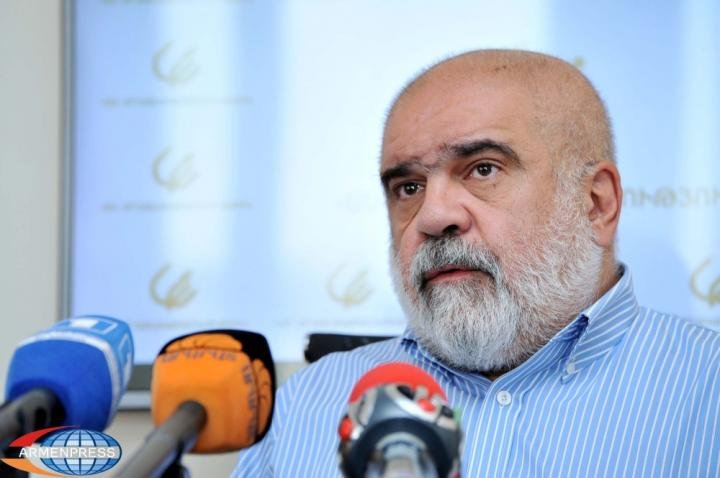
The optics from the Shanghai Cooperation Organization (SCO) summit – a widely shared photo of China’s Xi, Russia’s Putin and India’s Modi – are less a one-off photo-op than a marker of a shifting world system, argues political scientist Alexander Iskandaryan, director of the Caucasus Institute.
In a wide-ranging interview to Euromedia24 Youtube channel, he said the global order is settling into polycentric competition, where regional powers – from Turkey to India and Brazil – shape outcomes far more than in the post–Cold War era.
SCO: platform, not rulebook
Iskandaryan cautioned against inflating the SCO’s institutional weight. Unlike the EU or the EAEU, the SCO has few binding rules; it is a table for interaction among heavyweights that often disagree (China – India – Pakistan) yet still transact. For small and mid-sized states, simply “being in the room” matters – especially for building economic ties with China and tapping the “Middle Corridor” across the Caspian.
Armenia’s positioning: beyond binary “civilizational choices”
The era of picking a single patron and “sticking to it” is over, he said. Armenia should avoid theatrical “civilizational choices” (Russia vs. West) and instead work systemically with all poles – the EU, U.S., Russia, Iran, Turkey, India, China – leveraging contradictions where useful and cooperation where possible. Russia, Iran and Turkey are geographic facts that won’t vanish; policy must reflect that permanence.
U.S. role and the Washington declaration
Iskandaryan described the Aug. 8 Washington declaration as a declaration of intent, not a finished peace or transport deal. He sees a broader shift in the U.S. narrative – from promoting democracy everywhere to brokering stability where it suits American interests, regardless of regime type. How that translates on the ground in the South Caucasus remains to be designed.
The corridor debate: form vs. sovereignty
Baku wants one specific, efficient east – west road link; Yerevan insists on retaining control over what moves across its territory. Iskandaryan said the solution is likely technical rather than theological – for example, “sealed” procedures or end-to-end electronic controls that let each side claim its core talking point (no Armenian contact vs. Armenian oversight). He likened it to Kaliningrad transit via Lithuania: it works because procedures were engineered to calm political anxieties.
Still unknowns: who builds, who pays, who polices. If a private concession were truly “just a company operating under Armenian law,” there’d be no need for leaders’ signatures; if border-control functions are outsourced, laws would need changing. That process has only begun.
Turkey – Azerbaijan alignment tightened
Since 2020, Ankara’s South Caucasus policy tracks closely with Baku’s, he said. Turkey may favor opening the Armenian border in principle, but in practice waits for green lights from Baku. Concessions on symbols (like removing Mount Ararat imagery) are politically misdirected – they don’t address what actually drives Turkish or Azerbaijani positions.
EU mission, Russian bases, Iranian sensitivities: a crowded map
Armenia today hosts or is scrutinized by multiple, rival security actors: the EU monitoring mission, Russian troops and border guards, and growing Iranian concerns about any Western security footprint near its frontier. Layering another outside guarantor onto this patchwork is non-trivial and demands careful choreography.
Peace prospects: paper vs. reality
Iskandaryan doubts a full peace treaty within the next 10 months. Even if pressure produces a signature, it will more likely be a memorandum, not a comprehensive accord. For Armenia, he said, “political forms of security” (documents, delimitation, procedures) are necessary while military capacity is rebuilt – years, not months. For Azerbaijan, which feels strong after battlefield gains, there is little incentive to rush.
Domestic politics: “peace vs. war” will be the campaign frame
Inside Armenia, the ruling party will likely run on a peace-first narrative (“we deliver stability; opponents risk war”). That storyline can be fueled by symbolic milestones – handshakes, site visits, draft texts – even if underlying files remain unresolved.
The big lesson
The South Caucasus won’t fall tidily into one power’s orbit, Iskandaryan concluded. Outcomes will depend on how Russia emerges from the Ukraine war, Iran’s trajectory, Turkey’s choices, and the U.S. – EU evolution. For Armenia, survival and progress hinge on “adult policy”: granular, patient, legally and technically competent statecraft – less slogan, more engineering.