Tbilisi, September 28, 2025
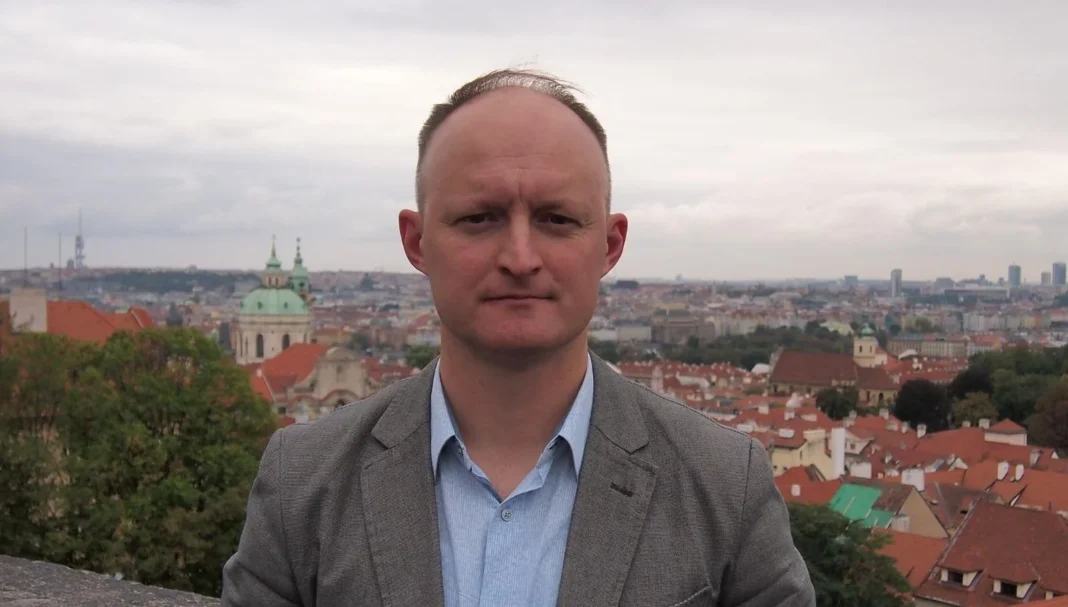
Political analyst Vladimir Kopchak says Azerbaijan’s leadership has locked in a post-war narrative rooted in international law, while Armenia’s government is pushing a peace agenda primarily for domestic electoral gain.
Speaking on the Novosti Kavkaza YouTube channel, Kopchak described a shifting regional landscape in which Moscow’s leverage is shrinking and “the old hook” of the Armenia-Azerbaijan conflict no longer holds the South Caucasus in place.
Kopchak argued President Ilham Aliyev’s address was deliberately constructed to “explain to the audience what Azerbaijan did-and that it did so within international law.” In contrast, he said, Prime Minister Nikol Pashinyan’s remarks were tinged with grievance and calibrated for Armenia’s internal politics ahead of elections expected in 2026.
“The opposition has nothing to beat a peace agenda with,” Kopchak noted, suggesting that framing relations with Baku around normalization is the ruling team’s best campaign asset after years of crisis.
According to Kopchak, signals from Baku’s policy and media ecosystem point to a broader pivot: the “fear narrative” about Armenia is receding. He cited recent commentary from presidential aide Hikmet Hajiyev, who stated the Karabakh file and the war track with Armenia are “closed.”
That, Kopchak said, encapsulates the “new normal”-not a pause but a structural change in which Azerbaijan no longer functions within the framework Russia preferred for the region.
“War between Azerbaijan and Armenia-one way or another-was the double-edged hook Moscow used to hold the South Caucasus,” he said.
“That hook has been removed.” In his view, the Kremlin’s response has been a mix of sporadic pressure and performative statements, reflecting a broader admission that its soft-power game across the post-Soviet space has failed. What remains, he argued, is largely coercion: “Moscow offers no positive agenda-only ‘fear us, and maybe you’ll get some carrots.’”
Kopchak was also critical of Russia’s military footprint in Armenia, calling it an “atavism”-especially if Yerevan normalizes ties with Ankara and Baku. He said the presence looks increasingly untenable in a scenario where embassies open and borders are demarcated and delimited, pointing specifically to the Syunik–Nakhchivan area as the most likely first mover in technical border work linked to new transit projects. “When the practical lines go down on the map, the question becomes obvious: why are the Russians needed there?”
On Pashinyan’s political calculus, Kopchak highlighted the premier’s simultaneous Western outreach and continued-if discreet-communication channels with Moscow.
“He plays on the revanchists’ field while keeping lines to the Kremlin,” Kopchak said, describing it as an election-season tactic: “Let us run the 2026 ballot by our rules, and you’ll have a predictable winner to deal with.”
Kopchak also touched on episodes he sees as part of a wider pressure toolkit aimed at Azerbaijan, including reputational hits tied to arrests around SOCAR and economic disruption coinciding with energy-sector incidents in the region. He stopped short of asserting direct orders from Moscow but said “the subtext is obvious” in how timing and narratives align. Even so, he argued, Russia’s levers are thinning: “Azerbaijan has both resilience and options-symmetric or otherwise.”
On the risk of a sharp rupture, Kopchak suggested Baku has little incentive to provoke escalation and is positioned to manage shocks-from hypothetical repatriation flows of ethnic Azerbaijanis from Russia to information warfare and cross-border incidents. “It would be a challenge, not a catastrophe,” he said of potential stress scenarios, adding that Azerbaijan’s overall readiness is higher than that of most post-Soviet peers.
Looking ahead, Kopchak framed the region’s trajectory as a race between technical normalization-demarcation, new corridors, and economic integration-and legacy interference. With the Karabakh file declared closed by Baku and a peace-first narrative now electorally useful in Yerevan, the analyst believes momentum favors consolidation. “What used to be called ‘new normal’ is simply normal,” he concluded.
“The public rhetoric and the instruments countries use now finally match what’s happening on the ground.”
Source: Novosti Kavkaza (in Russian). Full video here