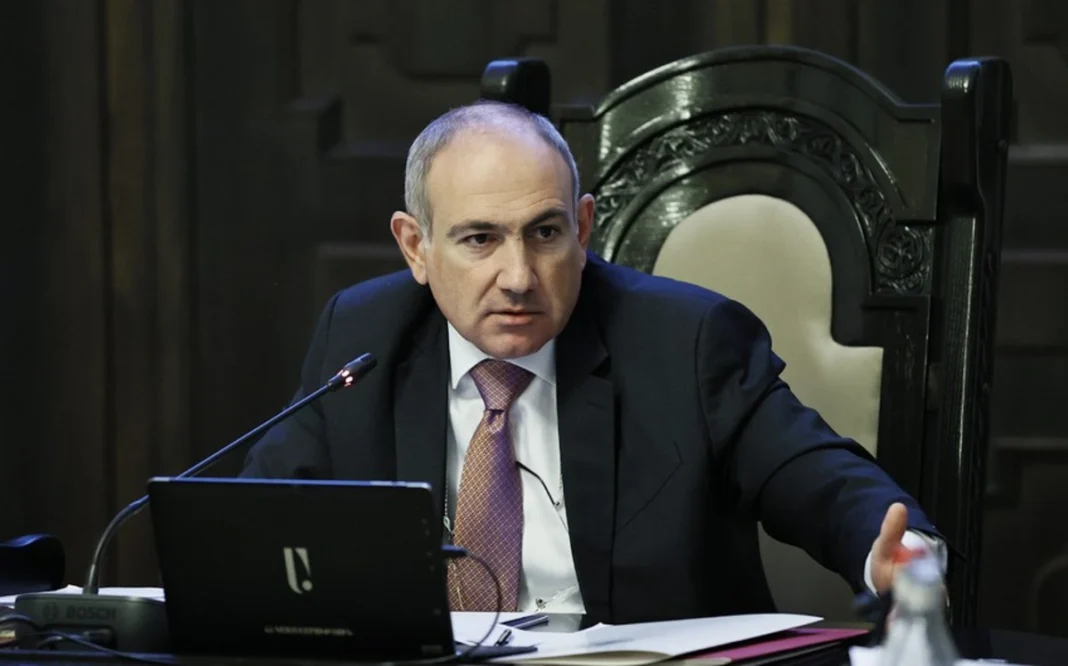
Yerevan, August 18, 2025 – Armenian Prime Minister Nikol Pashinyan announced that “peace has been established” between Armenia and Azerbaijan following the signing of U.S.-brokered documents in Washington. In a televised address, Pashinyan described the outcome as a “completely new reality” for the South Caucasus, urging both nations to reject revenge and hostility.
The Armenian leader hailed the signing of the joint declaration with Azerbaijani President Ilham Aliyev and U.S. President Donald Trump as a turning point:
“The documents signed in the United States are a watershed moment. After this, we live in a completely different South Caucasus,” Pashinyan said, calling the development a success for Yerevan, Baku, and Washington.
Stay Ahead with Azerbaijan.usGet exclusive translations, top stories, and analysis — straight to your inbox.
As part of his message, Pashinyan confirmed that he and Aliyev would jointly nominate Trump for the Nobel Peace Prize.
The Washington Documents
On August 8, Aliyev and Pashinyan signed a joint declaration at the White House, together with Trump, outlining seven principles aimed at restoring relations and establishing peace. The text does not include final details but confirms that the two sides have initialed the long-negotiated peace treaty, committing to its eventual ratification.
The declaration also included a joint request to the OSCE to formally dissolve the long-defunct Minsk Group, a structure once central to mediation efforts in the Karabakh conflict.
The draft treaty itself had been agreed upon earlier in the spring, though Azerbaijan insisted that Armenia amend its constitution to eliminate clauses implying territorial claims. Pashinyan had previously announced plans to replace Armenia’s constitution with a new, “regional” framework.
Prisoners and Refugees
In his address, Pashinyan acknowledged the sensitive issue of Armenian prisoners still held in Azerbaijan. He said Yerevan had pushed to include their release in the peace text, but refrained once it became clear that referencing the issue in the treaty could delay ratification.
He also made a blunt statement about the displaced:
“The people, like me, understood that without closing the Karabakh question, peace is impossible. The issue of Karabakh was used by some forces to undermine our independence and sovereignty. As for the refugees, I consider their return unrealistic, and I view the continued discussion of this issue as dangerous.”
A New Chapter for the Region
For Pashinyan, declaring peace marks the official closure of the Karabakh question, once central to Armenia’s politics. He characterized the conflict as a historic burden that hindered statehood and development.
While Yerevan celebrates the symbolic breakthrough, the hard work of ratification and implementation still lies ahead. For Baku, the declaration represents the culmination of decades of insistence that territorial disputes be removed from Armenia’s political framework.
As both governments frame the U.S.-brokered deal as historic, regional observers note that much will depend on whether the fragile consensus can withstand domestic backlash and external pressures.