By Azerbaijan.US Editorial Board
The corruption scandal that has stalked Ukraine’s political elite for months exploded again this week – and this time it reached the president’s closest confidant.
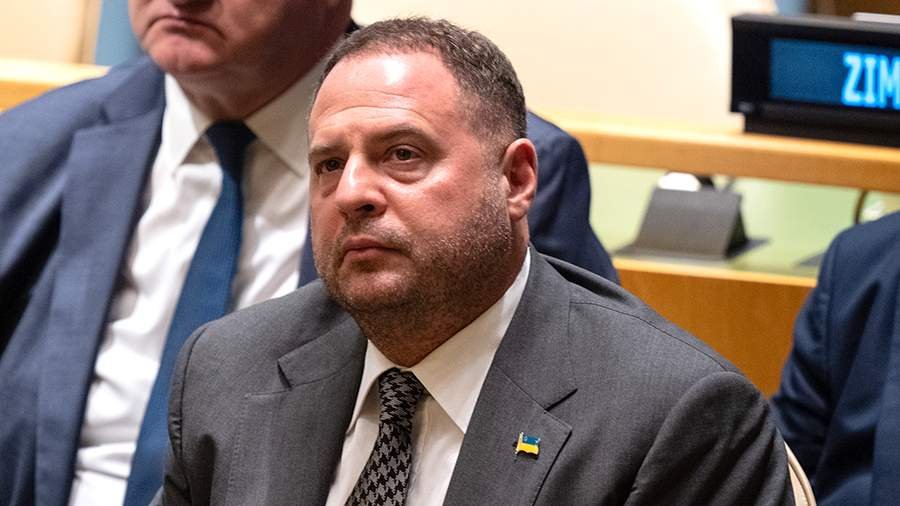
On the morning of November 28, Ukraine’s National Anti-Corruption Bureau (NABU) raided the home of Andriy Yermak, President Volodymyr Zelensky’s powerful chief of staff and arguably the second most influential figure in the country.
By evening, Zelensky signed a decree accepting Yermak’s resignation. The speed of his removal – and the symbolism behind it — has triggered the most uncomfortable question for Kyiv’s leadership: if Yermak has fallen, how long can Zelensky remain standing?
A Raid With a Political Echo
The NABU raid was part of a widening investigation centered on businessman Timur Mindich, long known in Kyiv as “Zelensky’s wallet.” Recordings allegedly made in Mindich’s apartment suggested the involvement of several high-ranking officials in corrupt deals. One voice in those tapes was identified only as “Ali Baba,” a nickname observers quickly linked to Yermak – a play on his initials “A.B.”
The raid made immediate international headlines. Though other senior figures were mentioned in the probe, none matched Yermak in stature. For years he served as Zelensky’s gatekeeper, strategist, negotiator and enforcer – the de facto shadow prime minister. His downfall is therefore more than a personal drama; it represents a potential rupture in Ukraine’s power structure.
NABU has not yet announced charges. Its director, Semen Kryvonos, said only that the investigation has entered “a public stage” and aims to reveal how much money was stolen and where it ended up – whether in Swiss villas, apartments abroad or hidden accounts.
Why Zelensky Let Go So Quickly
Public pressure played a role. A poll released by Sociopolis – just days before the raid – showed 70% of Ukrainians believed Yermak was involved in corruption and supported his dismissal. Calls for his resignation had been rising for months, especially after earlier leaks tied Mindich’s operations to high-level officials.
Still, Zelensky initially resisted. As recently as this month, he was sending Yermak on high-profile diplomatic missions, including talks with U.S. officials in Geneva. That trip, however, produced its own controversy after Yermak appeared wearing a $50,000 Audemars Piguet watch – not the wisest choice for a man under scrutiny for unexplained wealth.
But the deeper reason for Zelensky’s sudden pivot may lie elsewhere — not in Kyiv, but in Washington.
A Quiet Ultimatum From Washington?
NABU and the Specialized Anti-Corruption Prosecutor’s Office (SAPO) were created with strong U.S. and EU backing; an FBI liaison reportedly works inside NABU’s headquarters. The Mindich probe emerged just as Washington put forward a new peace framework that requires Kyiv to make concessions it had long resisted.
According to this interpretation – widely discussed in Kyiv’s political circles – the timeline was no coincidence:
NABU launches an investigation targeting Zelensky’s inner circle.
The U.S. unveils its peace plan demanding compromises from Kyiv.
The investigation goes quiet, as if waiting for Kyiv’s response.
Ukraine signals reluctance, lobbying European capitals for support.
The raids resume – this time against Yermak himself.
A senior U.S. defense official arrives in Kyiv the next day.
The message, critics say, was unmistakable:
accept the American plan, or expect more consequences.
Faced with that pressure, Zelensky moved quickly: Yermak was out within hours.
Who Will Replace Yermak – and Does It Even Matter?
Zelensky has directed a new delegation of officials – including Chief of the General Staff Andriy Hnatov, NSDC Secretary Rustem Umerov, and diplomats – to lead negotiations with Washington. Speculation has already begun about Yermak’s successor: some say Prime Minister Yuliya Svyrydenko may shift to the presidential office; others predict Digital Transformation Minister Mykhailo Fedorov will take the role.
But these chessboard predictions may ultimately be irrelevant. The deeper strategic question is whether Zelensky himself can maintain control as external pressure rises and corruption scandals engulf his entourage.
The Zelensky Question
Washington has shown signs of frustration. Moscow, meanwhile, has repeatedly stated that Zelensky now lacks legitimacy to sign any peace agreement. And Europe – still paralyzed over frozen Russian assets and facing its own political fragmentation – is hardly a reliable shield.
Zelensky’s dilemma is stark:
If he accepts the American plan, he may preserve some wealth and secure personal safety after leaving office.
If he resists, betting on European support or political maneuvering, he risks becoming the next target of NABU – or of political forces far less forgiving.
As former Russian president Dmitry Medvedev characteristically put it, the “corrupt system around the expired Kyiv clown is collapsing.” For once, even critics in the West are beginning to echo the sentiment – though in more diplomatic language.
A System Near Collapse
In Ukrainian politics, no fall happens in isolation. Yermak’s downfall is not the end of the scandal – it is likely only the first phase of a deeper reshuffling, one shaped less by domestic forces and more by international leverage.
Whether Zelensky can survive that process will depend entirely on his next move.
But the lesson of Ukrainian politics holds:
when the system starts eating its own, nobody is safe.