By Azerbaijan.US Editorial Board
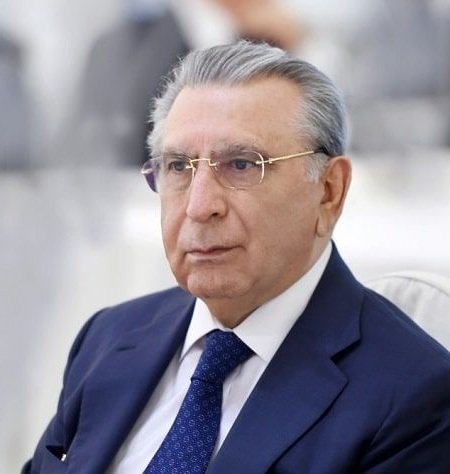
The arrest of Ramiz Mehdiyev, Azerbaijan’s longtime political strategist and former head of the Presidential Administration, marks a symbolic end to the country’s old guard – the generation that bridged Soviet bureaucracy and modern statehood.
For more than three decades, Mehdiyev was known as Azerbaijan’s “grey cardinal” – a behind-the-scenes operator who shaped policy across two presidencies, from Heydar Aliyev to Ilham Aliyev.
His influence stretched far beyond the walls of the Presidential Administration, shaping the ideological and administrative core of the Azerbaijani state.
Now 87, Mehdiyev faces charges of treason, attempt to seize power, and money laundering – accusations that would have seemed unimaginable a decade ago.
While the case is officially framed as a legal matter, politically it reflects something deeper: the institutional shift away from Soviet-era governance culture toward a more centralized, technocratic model of control.
The move underscores the consolidation of a new political generation in Baku – one defined not by revolutionary loyalty or party hierarchy, but by pragmatic governance, digital management, and international adaptability.
Mehdiyev’s fall serves as both a warning and a watershed moment: the last of the “Soviet-trained administrators” is being written out of the present tense.
For years, he embodied a bureaucratic system that valued discipline and secrecy over transparency and reform. His gradual sidelining since 2019 – when he was moved from the Presidential Administration to head the National Academy of Sciences – signaled the beginning of that transition. His arrest completes it.
In the broader regional context, the event mirrors a familiar pattern: post-Soviet states gradually dismantling their own power networks, redefining governance not through revolution but through internal renewal.
Ramiz Mehdiyev’s legacy will likely remain controversial – a man who once defined the architecture of power, now standing as a symbol of its transformation.

