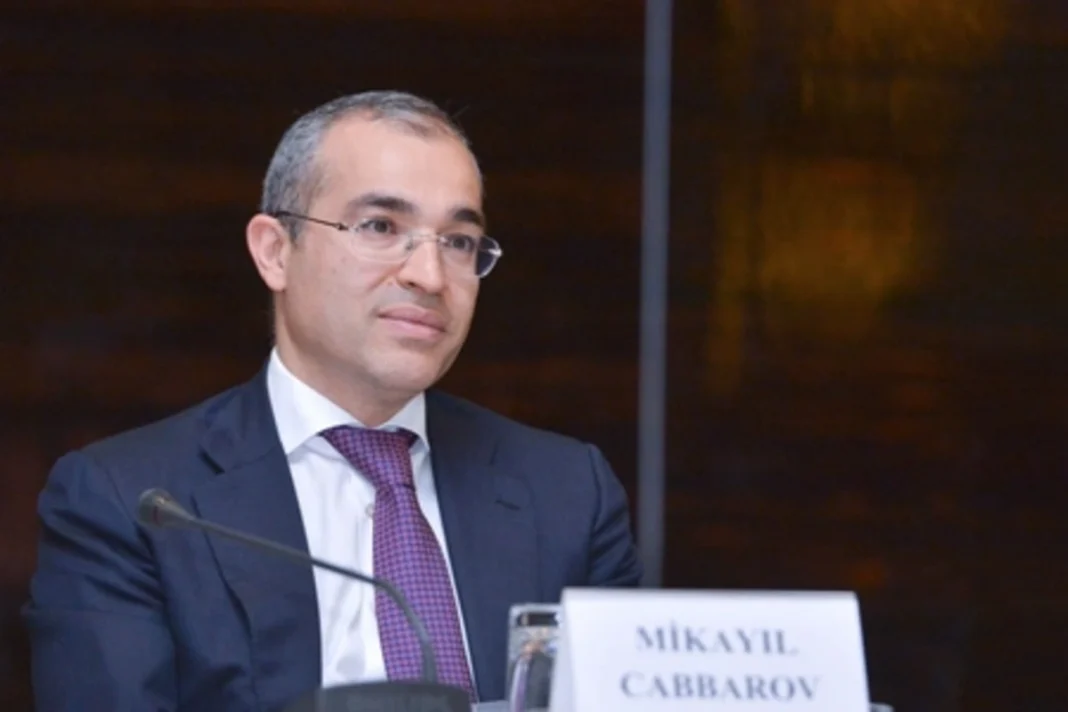
Azerbaijan’s non-oil private sector has nearly doubled its number of formal employment contracts since 2019, surpassing one million, Economy Minister Mikayil Jabbarov announced during the parliamentary debate on the 2026 state budget.
Jabbarov attributed the growth to major payroll tax reforms that exempt wages up to 8,000 manats from income tax, creating what he called “a powerful transparency effect” in the labor market.
According to the minister, from January 2019 to November 2025, the number of labor contracts in the non-oil private sector increased by 481,400, raising the sector’s share of all contracts from 38.5% to 54.2%.
Non-oil economy becomes the main engine of growth
The minister emphasized that from 2019 to 2025:
nominal non-oil GDP doubled,
real non-oil GDP grew 1.4 times,
the sector’s share of the national economy reached 70.2%.
Average annual GDP growth in the non-oil sector is expected at 6%, exceeding the strategic target of 5%.
Fastest-growing industries over seven years include:
ICT – 11%,
non-oil manufacturing – 9.7%,
transport and logistics – 7.8%.
Tax base expands without raising tax rates
Jabbarov stressed that the state budget’s rising non-oil revenues were achieved without tax hikes, but through improved transparency and better administration.
The wage fund in the non-oil private sector tripled between 2019 and 2025, while the number of active taxpayers doubled to more than 845,000.
The minister also defended a phased increase in income tax for private-sector wages, noting that even by 2028 a 7% tax rate would still be half of the previous 14%.
Green energy, logistics and major development projects
Azerbaijan has attracted about $2.8 billion in foreign and domestic investment for eight solar and wind power plants with a combined capacity of around 2 GW, either completed or scheduled for completion by 2027.
Jabbarov highlighted progress on the “Caspian–Black Sea–Europe” and “Central Asia–Azerbaijan” green energy corridors, describing them as key pillars of the country’s future export potential.
Transit cargo volumes (excluding pipelines) increased 2.5 times from 2019 to 2024, reaching 14.5 million tons, supported by investments in the Alat port and broader transport corridors.
He also noted major construction and tourism projects, including the Sea Breeze tourism zone and a large-scale urban development partnership with UAE-based Modon Holding.
A roadmap for the next strategic phase
Jabbarov outlined the key growth drivers for Azerbaijan’s upcoming strategic period:
becoming a regional energy and trade hub,
green energy and green investment,
transport, transit and logistics,
non-oil industries, including mining and petrochemicals,
real estate and construction,
the Alat Free Economic Zone,
digital economy and AI integration,
tourism and entertainment,
export of IT, financial, medical and other services.
He added that sustainable long-term growth would depend on boosting productivity across all sectors and adopting high technologies and artificial intelligence.

