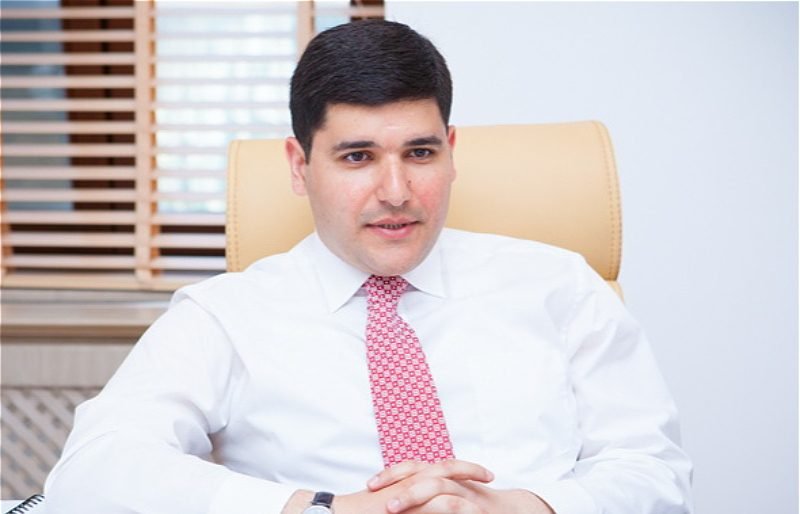
Baku — On Novosti Kavkaza, analyst Farhad Mammadov argued that President Ilham Aliyev’s recent interview with Al Arabiya marked a turning point: Azerbaijan is laying down a pragmatic “new normal” in its relations with Russia, grounded in historical clarity, transactional pragmatism, and a broader Eurasian strategy.
History called by its name
Mammadov underlined that Aliyev’s reference to the 1920 Red Army invasion as an occupation was not new in Baku’s narrative. It has been embedded in textbooks and the 1991 independence declaration. The novelty, he argued, lies in Moscow’s attempt to reframe this episode as “civil war” or “voluntary entry.” For Azerbaijan, the issue is settled: “History is a precise science. Occupation must be called occupation.”
Russia’s reaction — and the MGIMO diversion
Some Russian commentators tried to twist Aliyev’s words into a critique of Heydar Aliyev’s Soviet-era career. Mammadov dismissed this as propaganda noise, pointing out that Azerbaijan does not erase its Soviet past — it owns it, including its own national commemoration of Victory Day. What Baku rejects, he stressed, is Moscow’s habit of lecturing neighbors while dodging its own unresolved national identity between “imperial” and “federal.”
A “new normal” with Moscow
According to Mammadov, relations with Russia are moving out of an emotional phase into structured pragmatism:
If no Aliyev–Putin meeting happens on the sidelines of upcoming summits (such as in China), expect heightened risks of escalatory episodes, like the Ekaterinburg tensions.
If a meeting takes place, it could frame a more transactional relationship focused on economics — but without rolling back Azerbaijan’s red lines.
Mammadov noted that Baku has already raised sensitive issues directly with Russian officials: reports of Azerbaijanis facing workplace purges, business pressure, and Moscow’s evasion over the AZAL tragedy narrative, which contrasts with Azerbaijan’s own precedent of swift apology and compensation after downing a Russian helicopter.
Kremlin “contrast showers”
Mammadov described Russian policy as a mix of rival “towers” and a central authority that prefers to let contradictions run unchecked. The result, he said, is a “contrast shower” diplomacy — swings from warmth to pressure designed to unsettle. Azerbaijan’s answer: respond constructively to constructive steps, firmly to destructive ones, and avoid being pulled into factional games.
SCO: not a bloc, but a platform
Looking ahead to the Shanghai Cooperation Organization (SCO) summit, Mammadov noted that both Azerbaijan and Armenia have signaled interest in membership. The obstacle, he said, lies not in principles but in India–Pakistan rivalries: Baku’s closeness to Islamabad and Pakistan’s non-recognition of Armenia complicate the calculus.
Still, he stressed, SCO is not a military bloc like NATO; it is a platform for security dialogue and economic initiatives, especially digital integration promoted by China. That, he argued, leaves space for countries to participate in SCO while maintaining Western partnerships.
After Minsk Group: locking in peace
Mammadov welcomed the dissolution of the OSCE Minsk Group as the clearest sign yet that the peace process is moving forward. With U.S.-witnessed statements already on the table, he warned that any Armenian government that tries to walk back recognition of territorial integrity will collide not only with Baku but with Washington’s memory of the pledge.
Regional scaffolding
For now, Mammadov sees value in practical trilaterals — Azerbaijan–Türkiye–Georgia, Azerbaijan–Uzbekistan–Turkmenistan, and even possible Azerbaijan–Georgia–Ukraine or Romania (Constanța) formats — to keep commerce and transit alive. Over time, he believes, deterrence will shift to larger global actors, with triangles focusing more on geo-economics.
The takeaway
Mammadov’s through-line is blunt: Azerbaijan will not play Moscow’s games of historical denial or factional intrigue. It will call history by its name, set facts that force reactions, and build balance through multiple platforms — GUAM, SCO, trilaterals — while making peace with Armenia irreversible.
“No imposed culture, no coercive footprint. Trade is fine. Pressure is not,” Mammadov concluded.

