Baku, September 17, 2025
Political analyst Ahmed Alili says Baku, Yerevan and Tbilisi are converging on a pragmatic regional agenda, while Moscow’s leverage over Azerbaijan has waned.
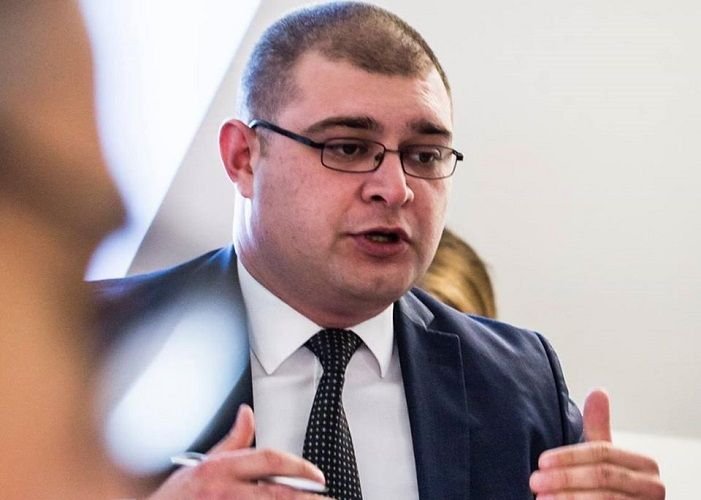
In an interview with the Echo Baku YouTube channel, Ahmed Alili – political analyst and author of the Telegram channel View from the Central Park – argued that a “common political identity” is taking shape in the South Caucasus.
“We’re seeing the three capitals act in sync more often – not because someone is orchestrating it, but because they’ve understood that, in today’s turbulence, working together pays,” he said.
Alili cited the recent joint refusal by Azerbaijan, Armenia and Georgia to take part in Russia’s “Intervision” song contest as a symbolic example of that trend. The old regional template – “Georgia as the most pro-Western, Armenia deeply embedded in Russian projects, and Azerbaijan balancing” – is giving way, he added, to a more hard-nosed, region-first approach.
Pashinyan’s Moscow trip: expectations and limits
Prime Minister Nikol Pashinyan’s upcoming visit to Moscow will be “a difficult conversation,” Alili said, predicting heavy emphasis from the Kremlin on the “historic” dimension of Russian-Armenian ties. Yerevan’s task, in his view, is to explain the new balance after Washington and Brussels stepped up engagement, and to calm Russian and Iranian anxieties without derailing the current track.
Zangezur/Megri/TRIPP: “Name is secondary – passage is key”
On cross-border connectivity – whether labeled Zangezur, Megri or the US-backed TRIPP concept – Alili’s line is blunt: “The title doesn’t matter; the functionality does.”
He argued that the 8 August announcements in Washington gave the corridor agenda its own momentum and, crucially, removed Karabakh as a tool of pressure on Baku. Any further movement will be driven by a Baku–Ankara–Washington axis with EU support, he said.
Why Moscow’s tools work less on Baku
Alili contends Russia’s ability to pressure Azerbaijan has diminished. Baku’s robust Russian-language media ecosystem and the outlook of the Azerbaijani diaspora in Russia “blunt information campaigns,” while gestures like stripping citizenship from individual community figures “don’t change the strategic picture.”
By contrast, he noted, Armenian media and influencers remain more embedded in Russian platforms, which gives Moscow greater room to shape opinion inside Armenia.
Diaspora narratives have lost traction
With Yerevan publicly recognizing Azerbaijan’s territorial integrity and aligning the draft peace text closer to Baku’s version, long-standing diaspora talking points in Western capitals are “simply less usable,” Alili said. “When official Yerevan says ‘yes,’ it’s hard to demand that Western diplomats say ‘no’.”
2026 risks – and who wants what
Looking ahead to Armenia’s 2026 parliamentary elections, Alili called an abrupt policy reversal in Yerevan the main risk to the peace track. He framed today’s lineup as follows: Azerbaijan, Turkey, the United States and the EU broadly back the current configuration; Russia and parts of Iran’s establishment do not (though President Pezeshkian’s team signals a more moderate line, he noted).
Asked whether Baku might consider a forceful move if the process sours, Alili said the logic has changed: decisions now sit with a coalition of states and direct Baku–Ankara–Washington channels, not with unilateral gambits.
The South Caucasus is edging toward a “regional-first” mindset. Fewer symbolic battles, more infrastructure; fewer external vetoes, more local agency.
If that holds, Alili argues, the region moves closer to a durable peace – and further from being a board for other people’s games.