Political analyst Azad Isazade says Moscow is shifting tactics in the South Caucasus, using familiar public figures to influence Armenian opinion and delay a peace settlement with Azerbaijan.
In a wide-ranging interview for the YouTube channel Echo Baku, Azerbaijani political analyst Azad Isazade argued that Russia has entered a new phase of information maneuvering in the South Caucasus.
According to him, the Kremlin is no longer capable of projecting hard power in the region and is now leaning heavily on so-called “soft-power proxies” to slow rapprochement between Armenia and Azerbaijan.
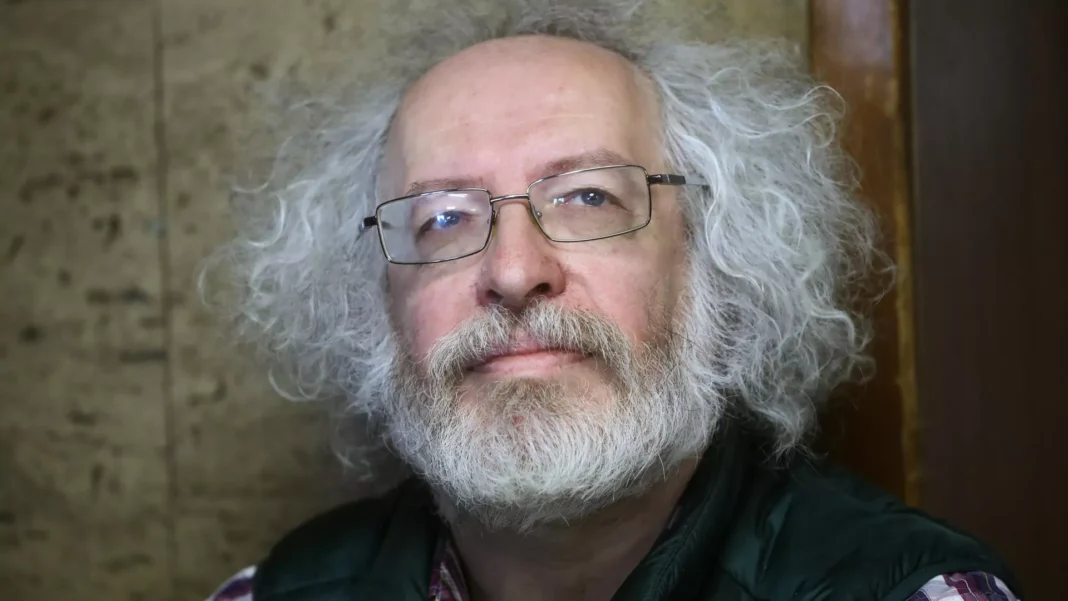
The most visible example, he said, is the recent visit of Russian media veteran Alexei Veneditkov to Yerevan – a trip that immediately drew attention across the region. Veneditkov, long known as a contradictory figure inside Russia’s liberal circles, gave a string of interviews urging Armenians not to “rush” toward peace with Azerbaijan and Turkey. His message was consistent: Russia could still “help” Armenia, and the Karabakh question was “not closed” for Moscow.
Isazade notes that this narrative mirrors the Kremlin’s long-standing strategic goal – to keep Armenia dependent, uncertain, and politically tethered to Russia.
“This is not a new policy,” he said. “It is simply being executed by people who are not formally connected to the Russian state, but whose messaging aligns perfectly with it.”
Although Veneditkov carries the legal label of “foreign agent” in Russia, Isazade cautions against taking that status at face value. In his view, it serves more as a credibility mask, allowing Moscow to deploy him as an informal emissary without the burden of official ties.
“This is classic soft power,” he said. “When Russia cannot act through troops or peacekeepers, it acts through trusted messengers.”
Targeting Armenian public opinion
Isazade believes the messaging strategy is aimed squarely at Armenian society, not the Armenian government. The Kremlin’s objective, he argues, is to reignite anxieties that took root after the 2020 and 2023 conflicts – fears of strategic isolation, loss of security guarantees, and shifting geopolitical alignments.
“Armenia’s internal debate today is extremely fragile,” Isazade said. “The Kremlin wants Armenians to question whether peace with Azerbaijan is safe, or even legitimate, without Russia’s involvement.”
He noted that this tactic is not limited to Veneditkov’s interviews. A broader network of Russian-language outlets seen as anti-Kremlin – including the Russian editions of Meduza, Deutsche Welle, and others – have simultaneously been publishing sharply negative analyses about Azerbaijan’s regional ambitions and Baku’s role in the peace process.
“These platforms present themselves as opposition to Putin,” he said, “but on the issue of the South Caucasus, their narratives often match the Kremlin’s interests.”
Why now? Elections, geopolitics, and shifting leverage
According to Isazade, timing matters. Armenia is entering a period of heightened political tension ahead of parliamentary elections expected in 2026. Moscow, he argued, wants to “fracture” Armenian public discourse early – creating distrust toward any agreement with Baku and ensuring that no Armenian government can move toward a Western-backed peace architecture without facing internal backlash.
“The Kremlin understands that hard power no longer works in the region,” he said. “It is trying to re-enter the political space of Armenia through influence, nostalgia, and emotional pressure.”
Limited impact on the ground – for now
Still, Isazade doubts these efforts will significantly change Armenia’s strategic direction. The shock of recent years, he said, has reshaped Armenian public opinion in ways Moscow underestimated. Many Armenians, he argues, now recognize that confrontation with Azerbaijan carries high risks – including the prospect of fighting on Armenian territory itself, something that did not happen in the earlier Karabakh wars.
“There is a growing understanding in Armenia that long-term stability requires engagement with neighbors, not perpetual hostility,” he said.
The road ahead: slow, uneven, but not reversible
Isazade described the ongoing Baku–Yerevan dialogue as delicate and incremental – “a chess match where every move is mirrored.” He noted that Azerbaijani officials, including presidential aide Hikmet Hajiyev, have recently emphasized that Azerbaijan has no territorial claims on Armenia and considers the war effectively over. That message, he said, reflects a broader policy of “reciprocity”: Azerbaijan adjusts its rhetoric depending on signals coming from Yerevan.
According to Isazade, the peace process will not move quickly. Societal wounds remain deep, mistrust remains high, and political actors in both countries still use aggressive language for domestic audiences. But the general trajectory, he believes, is clear: “The region is cooling down. Societies are not ready for friendship yet, but they are tired of conflict.”
He concluded the interview with a restrained optimism: “It won’t be fast. It won’t be easy. But step by step, with careful negotiation and clear signals, the South Caucasus can move toward a different future.”