Since regaining independence, Azerbaijan’s state-building process unfolded under severe constraints – territorial occupation, the risk of civil war, and a deep economic crisis. These realities shaped decision-making and imposed strict limits on the country’s external economic policy.
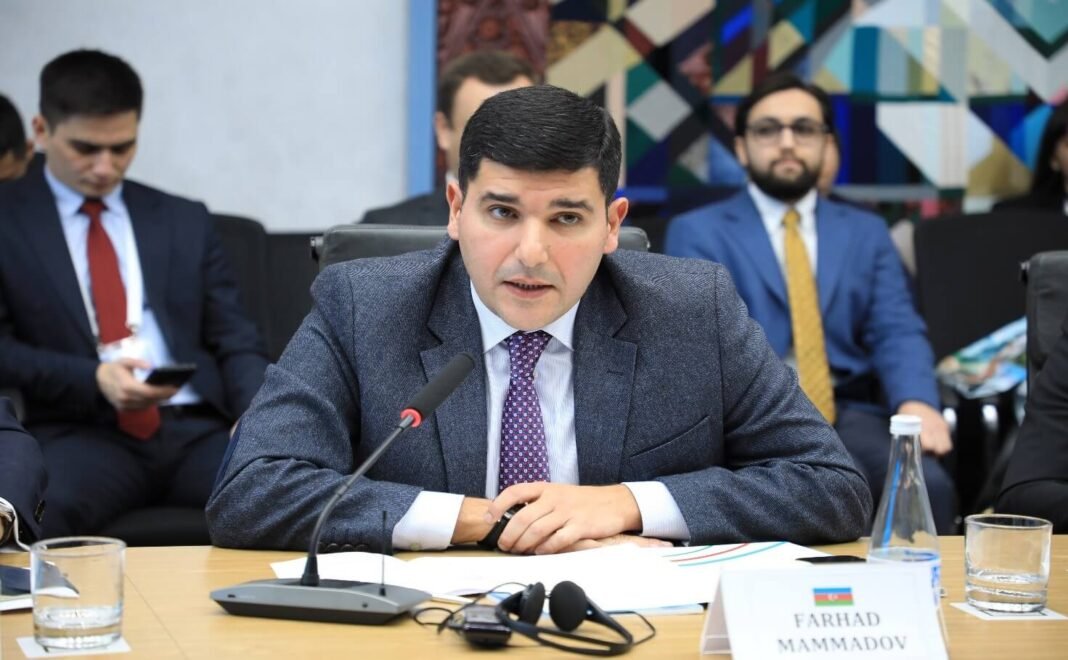
That assessment was outlined by Farhad Mammadov, chairman of the South Caucasus Studies Center, in a commentary published on Telegram channel mneniyefm, Azerbaijan.US reports.
Mammadov argues that Azerbaijan’s foreign economic choices over the past three decades were driven less by ideology than by necessity – and that the current geopolitical moment is opening new opportunities.
Staying outside customs unions
Azerbaijan deliberately avoided joining customs unions, despite repeated offers.
The European Union promoted the Eastern Partnership framework, which included an Association Agreement and a Deep and Comprehensive Free Trade Area (DCFTA). Russia, in turn, sent multiple delegations proposing Azerbaijan’s accession to the Eurasian Economic Union and its customs structures.
Both initiatives, Mammadov notes, ran into the same obstacle: the unresolved conflict and the lack of international recognition of Azerbaijan’s territorial occupation at the time. Baku also chose not to join the World Trade Organization, without which participation in customs unions would have been impractical.
Instead, Azerbaijan prioritized bilateral relations and the implementation of large-scale strategic projects.
“Just imagine,” Mammadov writes, “how Azerbaijan could have defended its interests during and after the 44-day war if it had been bound by obligations within the EAEU or by an EU Association Agreement.”
Costs – and strategic autonomy
This approach came at a cost. During periods of sanctions and trade fragmentation, smaller states integrated into large customs spaces often benefited from access to vast markets. Such arrangements can stimulate development, Mammadov acknowledges, but they also restrict foreign policy autonomy and can trigger conflicts if a country later seeks to exit.
These limitations were felt most acutely in the non-oil sector. Oil and gas exports, he notes, function independently of preferential trade regimes.
A post-conflict opening
The gradual establishment of a peace agenda with Armenia – and the prospect of deeper stabilization after Armenia’s parliamentary elections – is creating space to rethink Azerbaijan’s external economic strategy.
According to Mammadov, the government is now moving to reassess long-standing frameworks and explore new directions.
One emerging trend is a possible accession to the World Trade Organization, while continuing to avoid binding customs unions. Several neighboring countries follow a similar model, allowing for the creation of targeted free trade arrangements without sacrificing strategic flexibility.
New geographic priorities
Traditionally, Azerbaijan’s economic engagement focused on:
the West (energy),
and the North (non-oil trade).
Today, the East (Central Asia and China) and the South (the Middle East) are gaining prominence. Maintaining balance among these vectors is essential, Mammadov argues, along with developing secure transport corridors that allow Azerbaijan not only to serve as a transit route, but to participate directly in value chains.
Recent government activity reflects this shift. For more than a week, two Azerbaijani ministers have been in the United States holding meetings with energy companies and major technology firms. The economy minister has been touring Middle Eastern states, while ties with Central Asia continue to deepen.
The southern and eastern directions are seen as particularly promising because they lack rigid customs unions, harmonized standards, or overarching regulatory frameworks – allowing cooperation on a bilateral basis.
“It is difficult,” Mammadov writes, “but it must be done.”
Labor migration and return flows
Labor migration has also reemerged as a strategic issue, especially in the Middle Eastern and European directions. At the same time, Azerbaijanis living in Russia are increasingly expected to return, a trend the government must be prepared to absorb by integrating returnees into the domestic economy.
The next deadline: 2029–2030
Mammadov identifies 2029–2030 as a critical milestone – the point by which new infrastructure projects of the post-conflict period should be completed.
Azerbaijan has already passed through phases of monetary stability and fiscal consolidation. The next stage, he argues, must be defined by economic activity.
“Rationality, efficiency and economic dynamism,” Mammadov concludes, “can and should become the new trends.”
Over the next two to three years, new economic patterns will begin to take shape, gradually defining Azerbaijan’s future profile. This will not be easy amid global economic, technological and sanctions-driven confrontation among major powers. But, he argues, Azerbaijan must carve out its own path to development.
The space to do so exists – both externally and within the country itself.